
(Disclaimer: This post contains affiliate links. If you purchase through these links, Homeoration earns a small commission at no extra cost to you.)
The average American spends 26 years of their life in bed. Most bedrooms are not designed for that reality. They are designed to look good in a photograph—to read as stylish, considered, or aspirationally minimal in the two seconds it takes to scroll past them on Pinterest. Then you actually sleep in them and wonder why you feel vaguely unsettled every time you walk in.
Japandi bedroom design solves a different problem. Not how the room looks—how the room feels. And specifically how it feels at 10 PM, when you are tired and the last thing you need is a room that asks something of you before you can rest.
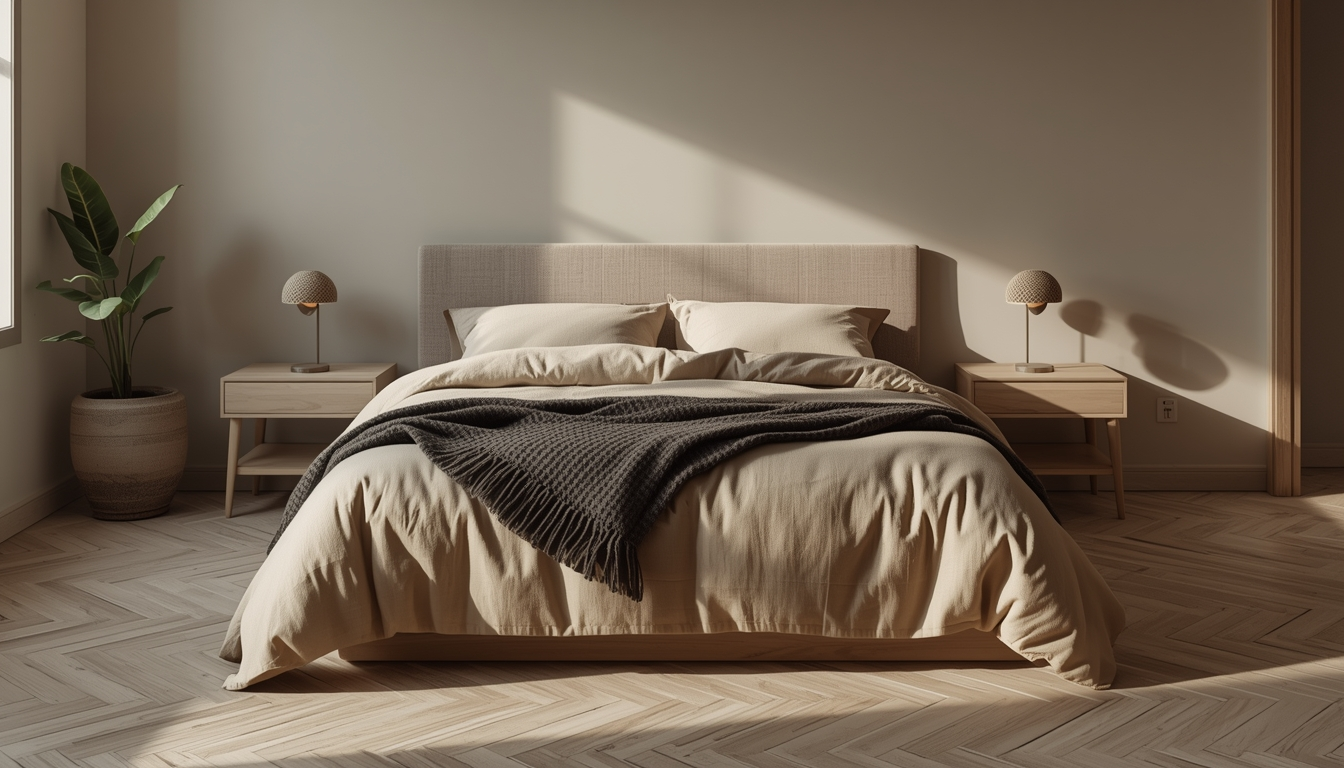
This guide covers the complete Japandi bedroom for 2026—the furniture approach, the color system, the bedding that ages beautifully, the lighting that makes rest feel possible, and the specific editing philosophy that separates a Japandi bedroom from a simply empty one.
Table of Contents
What Actually Makes a Japandi Bedroom Feel Calm
The calm in a well-designed Japandi bedroom is not accidental and it is not aesthetic. It is the result of reducing what environmental psychologists call cognitive load—the background processing your brain does when it registers visual information.
Every object in a room is a piece of unresolved visual data. A dresser covered in products, a nightstand with seven items, a chair holding clothes—each one is a small task your brain registers and files. In a room with 300 objects, that processing never fully stops. You are never fully at rest. You are simply at rest relative to being awake.
A Japandi bedroom reduces this load deliberately. Not by making the room empty—an empty room creates its own unease—but by ensuring that every object in the room is resolved. It is there intentionally, placed thoughtfully, and surrounded by enough space that the eye can settle on it and move on rather than scanning constantly for something it cannot name.
The result is not visual minimalism. It is neurological quiet.
Three design principles produce this effect in practice:
- Proportion over decoration: In a Japandi bedroom, furniture is sized correctly for the space. The clearance around the bed (minimum 24 inches on each side, 36 inches at the foot) is as designed as the bed itself. The space around objects is part of the composition.
- Natural materials over synthetic ones: The specific warmth of a Japandi bedroom comes from materials that absorb light rather than reflecting it—matte wood, linen bedding, raw ceramic. Synthetic materials under artificial light create a subtle visual harshness.
- Intention over accumulation: The defining question of Japandi bedroom design is not “does this look good?” but “does this earn its place?”
The Japandi Bedroom Color System
Color in a Japandi bedroom is a psychological tool, not a decorative choice. The palette is built entirely on warm undertones—wall colors, bedding tones, and wood finishes that share the same yellow, green, or red base so that every surface in the room speaks the same tonal language.
- Walls: Warm whites and greiges are the primary colors. Benjamin Moore White Dove OC-17 works beautifully for rooms with good natural light. Sherwin-Williams Accessible Beige SW 7036 provides deeper warmth and works in every light condition.
- Color Drenching: For the most serene effect in 2026, painting the walls, ceiling, and trim in the same warm neutral (like Benjamin Moore Pale Oak OC-20) eliminates harsh lines and turns the entire room into a single warm envelope.
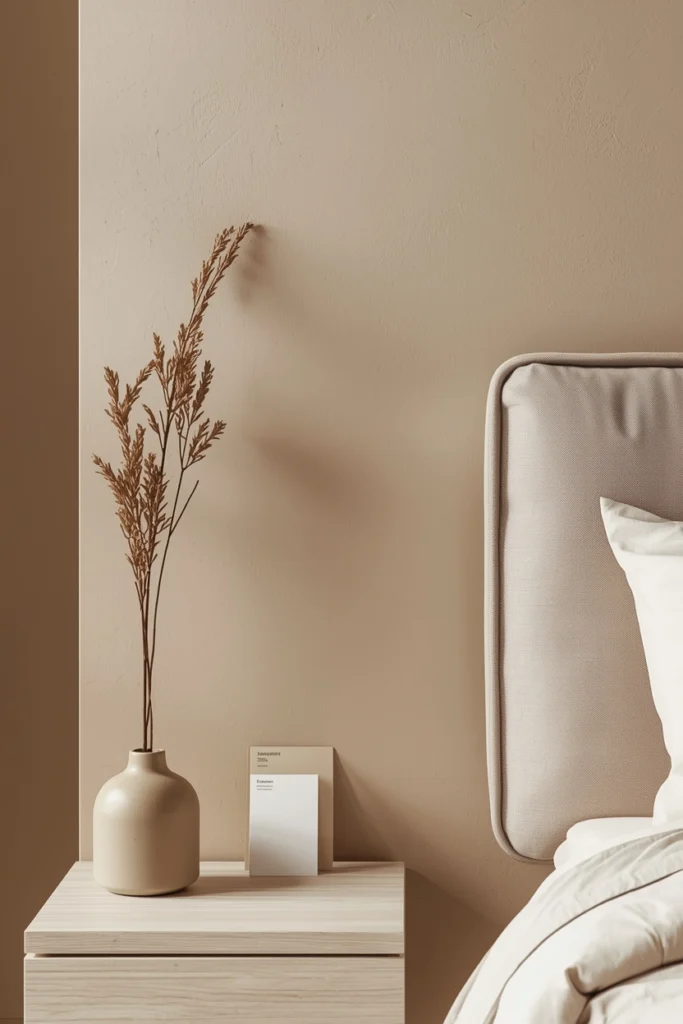
- The Undertone Rule: Every color in the room must have a warm undertone. A blue-toned white wall with warm oak furniture creates a subtle but persistent dissonance.
Japandi Bedroom Furniture: What Stays, What Goes
The Bed Frame
The bed is the room in a Japandi bedroom. Every other furniture decision exists in relationship to it. It must be chosen first, positioned correctly (always centered on the longest uninterrupted wall), and dressed with quality.
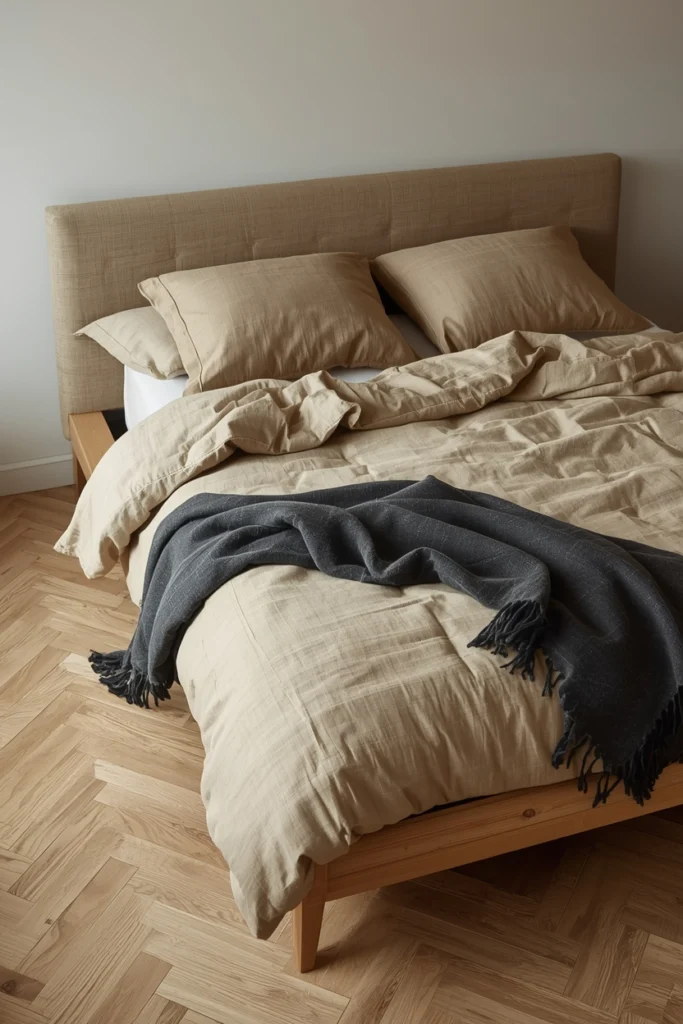
The Japandi bed frame in 2026 is low-profile, platform-style, and made from solid natural wood (white oak, walnut, or ash). The low height references the Japanese tradition of sleeping close to the floor—a design decision that makes ceilings feel higher.
The Headboard Rule: A headboard is not optional. A bed without one looks unanchored. It should be upholstered in linen or bouclé in the same warm tonal family as the bedding.
Top Picks for US Homes:
- West Elm Andes Bed (White Oak): Platform base, solid wood, clean profile at a mid-range price point.
- Article Tessu Bed (Walnut): Low-slung, Japanese in character, excellent proportions for smaller bedrooms.
- Pottery Barn Toulouse Bed (Linen): Upholstered headboard option for rooms where more textile warmth is needed.
The Nightstand
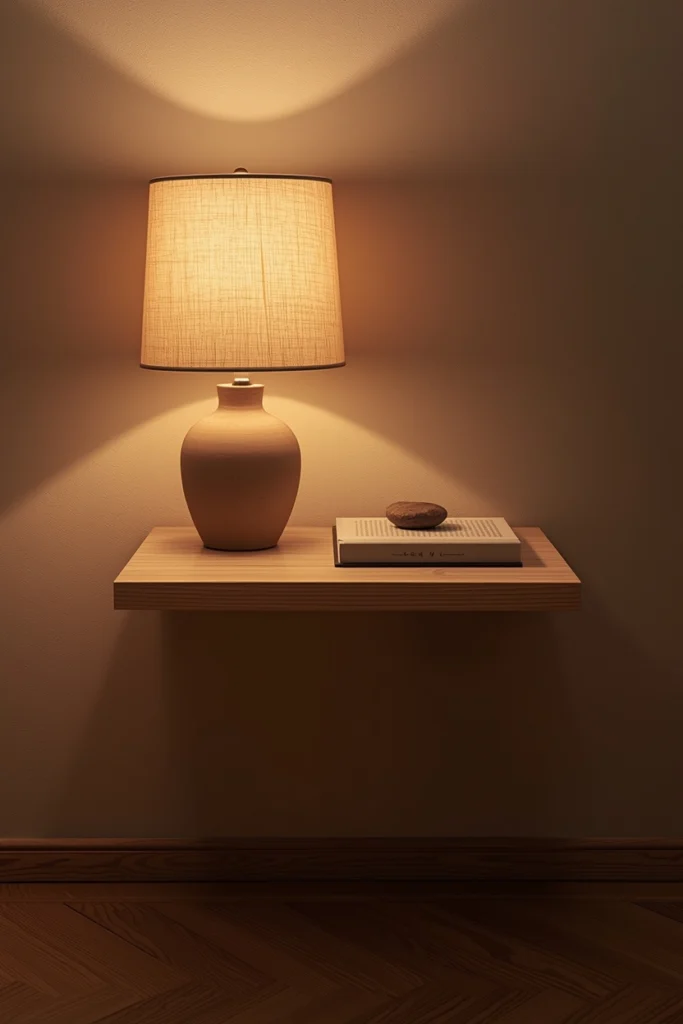
The Japandi nightstand should be small (approximately 16×16 inches) because it holds three items only: a lamp, a book or glass of water, and one small object of meaning. Clutter on the nightstand is the most common failure point in a Japandi room.
- Pro Tip: Wall-mounted floating nightstands are the most resolved option, keeping the floor completely clear beneath.
The Dresser Question
In a true Japandi bedroom, the dresser is optional. A floor-to-ceiling built-in wardrobe on one wall (like the IKEA PAX system) holds everything and reads as architecture rather than furniture. If a dresser is necessary, it should:
- Be no taller than 36 inches.
- Have deep drawers (six deep drawers hold more than eight shallow ones).
- Maintain a clear surface of no more than three items.
What Leaves the Room Entirely
- Exercise equipment
- A television
- A work desk
- Unread books
- The “bedroom chair” (replaced by a single hook on the back of the door for tomorrow’s outfit)
The Japandi Bedroom Textile System
Textiles are where the warmth of a Japandi bedroom lives—not warmth as temperature, but warmth as the quality of a room that feels like it wants you to stay in it.
The Bedding Approach
The correct Japandi bedding system has four elements and nothing more:
- A Fitted Sheet: 100% linen or Tencel in a warm neutral. Linen wrinkles naturally, and those wrinkles are the visual evidence of a natural material.
- An Oversized Duvet: A king duvet on a queen bed creates a generous, enveloping quality.
- Two Euro Shams: Positioned flat against the headboard. No decorative cushions, no bolster, no additional pillow styling.
- One Throw: Draped naturally across the lower third of the bed. It should contrast with the duvet in texture (e.g., chunky merino wool on a smooth linen duvet).

Top Bedding Picks for US Homes:
- Parachute Home Linen Duvet Cover: The US benchmark for Japandi bedding quality.
- Brooklinen Linen Core Sheet Set: Mid-range price, excellent quality, warm neutral tones.
- Coyuchi Organic Cotton Duvet: For warm sleepers who prefer cotton; 100% organic.
The Rug
The bedroom rug should be large enough that both feet land on it when you get out of bed (typically 8×10 or 9×12 for a queen or king).
- Material: Natural wool, jute-wool blend, or sisal. Nothing synthetic.
Japandi Bedroom Lighting: The Architecture of Rest
Lighting is structural. The sources you choose determine whether the room feels like a genuine rest environment or a well-lit storage space.
- The Overhead Light Rule: Used only when getting dressed or cleaning. It is never the primary light source and must be on a dimmer.
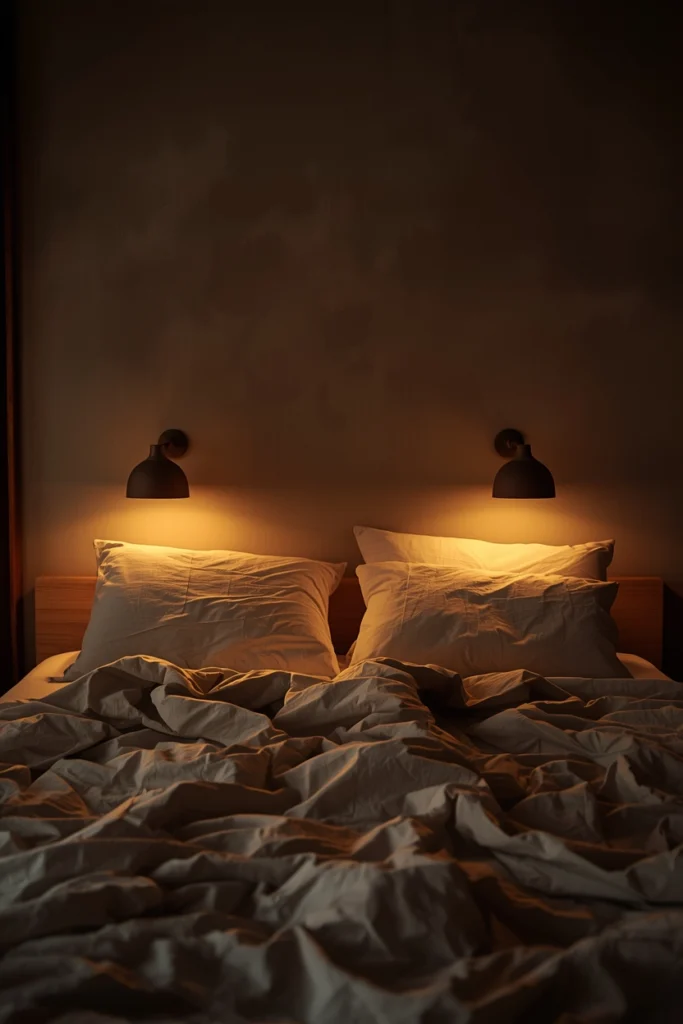
- The Bedside Lamp Standard: The primary light source. The center of the lampshade should sit at shoulder height when seated in bed (24–28 inches from the mattress).
- Bulb Specification: Always 2700K or below to mimic the warm golden light of late afternoon.
- Lamp Base Material: Handmade ceramic in matte stone, warm gray, or natural clay.
Japandi Bedroom Plants: The Biophilic Layer
The Japandi approach to plants is architectural rather than abundant.
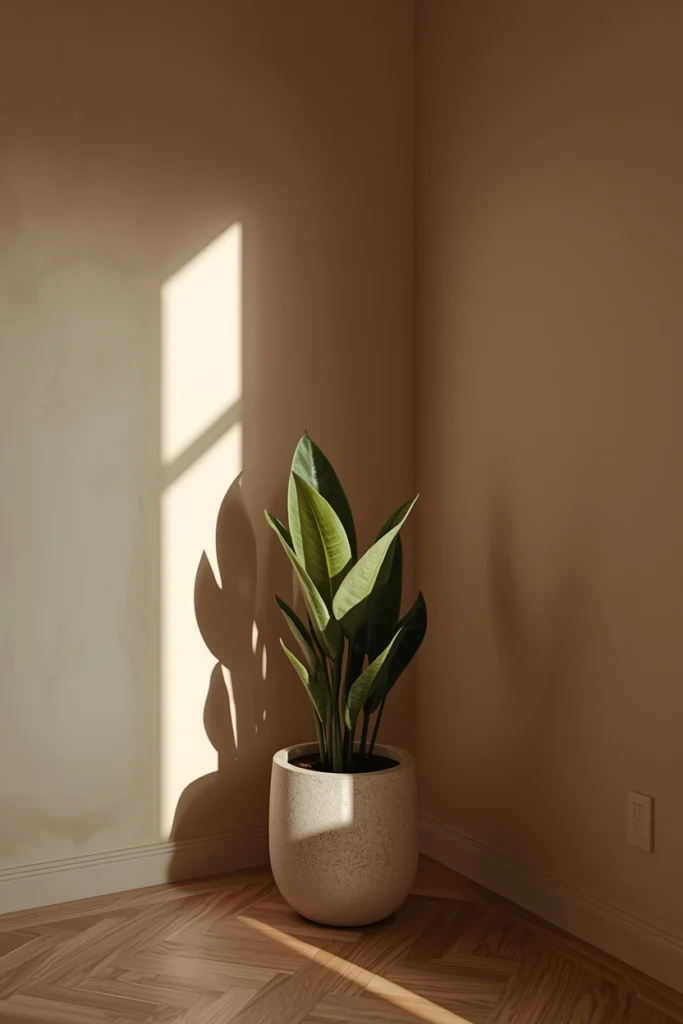
- Snake Plant (Sansevieria): Architectural, indestructible, and highly effective for air purification.
- Rubber Plant: Large, sculptural, and dark-leaved for visual contrast against warm walls.
- Dried Botanicals: A single dried cotton stem or pampas branch requires zero maintenance and carries the wabi-sabi quality of beautiful impermanence. For the full philosophy behind bringing natural imperfection into your home, the wabi-sabi home decor guide covers dried botanicals, handmade ceramics, and the Japanese concept of beautiful impermanence in full detail.
- Pot Rule: Always natural—matte ceramic, raw stone, woven seagrass. Never plastic.

The Japandi Bedroom Edit: A Practical Process
The most important Japandi bedroom skill is not styling; it is editing.
- Remove before you add: Clear the bedroom of everything that does not serve sleep, rest, or getting dressed.
- Assess what remains: Look at what is left. How much storage is actually needed? This assessment determines every subsequent purchase.
- Replace only what is needed: Address specific gaps (like inadequate lighting) without refilling the room back to its previous density.
- Maintain the edit daily: Three items on the nightstand. Nothing on the floor.
Frequently Asked Questions
What is the difference between a Japandi bedroom and a minimalist bedroom? Minimalist bedrooms prioritize reduction—removing objects until only the essential remains. Japandi bedrooms prioritize intention—ensuring every object that remains is chosen for its beauty, function, or meaning. A minimalist bedroom can feel cold without careful material choices. A Japandi bedroom is always warm because the natural materials—linen, wood, ceramic, wool—create tactile warmth that no amount of reduction can eliminate.
How do I make my existing bedroom more Japandi without buying anything? Start with the edit. Remove everything from every surface and return only three items per surface maximum. Move your bed to the center of the longest uninterrupted wall. Close the wardrobe doors. Remove any items from the floor. Turn off the overhead light and use only the bedside lamps for an evening. These four changes cost nothing and produce an immediate Japandi atmosphere from whatever you already own.
What bedding works best in a Japandi bedroom? 100% linen in a warm neutral—oat, flax, or warm white. The linen should be stonewashed for softness and left unironed. Parachute Home and Brooklinen are the two most reliable US brands for Japandi-quality linen bedding at accessible price points. One oversized duvet, two euro shams flat against the headboard, one throw across the lower third of the bed—that is the complete system.
The Finished Bedroom: A Room That Rests You
The most restful bedroom you will ever sleep in is not the most expensive one. It is not the one with the highest thread count or the most considered furniture selection. It is the one where the room itself has been given permission to stop.
That is what Japandi bedroom design is actually asking you to do—not to buy more carefully, but to stop accumulating. To look at what is already in the room and ask what genuinely belongs there and what has simply never been asked to leave.
When you make that edit—even partially, even starting with one surface—the room changes before anything new arrives. The furniture that remains looks more considered. The light feels warmer. The whole space exhales.
If you share your home with guests, the same principles apply with even greater clarity. A well-edited Japandi guest room—one that holds only what a guest genuinely needs—communicates care more effectively than a room full of decorative effort.
Start tonight. One surface. Let the room tell you what it needed all along.
Shop This Look
- The Bed Frame: Farmhouse King Bed with Headboard and Storage Bench (~$499–899). Platform base, solid wood, clean profile.
- The Linen Duvet Cover: BESTOUCH Home Linen Duvet in Flax (~$79–99). The US benchmark for Japandi bedding. Gets softer with every wash.
- The Linen Sheet Set: LBRO2M Linen Core Sheet Set in Sand (~$129–169). Excellent quality at a mid-range price point.
- The Merino Throw: Chunky Merino Wool Throw (~$85–120). One throw, draped across the lower third of the bed—not folded.
- The Ceramic Bedside Lamp: Handmade Stoneware Lamp (~$180–250). Warm linen shade, 2700K bulb mandatory.
- The Wall-Mounted Nightstand: LEYAOYAO Rattan Nightstand Set of 2 (~$149). Keeps the floor completely clear beneath.
- The Snake Plant: Costa Farms Snake Plant, Live Sansevieria Indoor Houseplant in 4-Inch Decorative Pot (~$15–55). Low maintenance, architectural, air-purifying.
- The Wool Bedroom Rug: CAMILSON Easy Jute Rug 10×14 (~$150–300). Size up—both feet should land on it when you step out of bed.
[…] grounding principles also apply beautifully to bedrooms, especially in calm Japandi bedroom ideas designed for rest and […]