
(Disclaimer: This post contains affiliate links. If you purchase through these links, Homeoration earns a small commission at no extra cost to you—it helps keep this content free.)
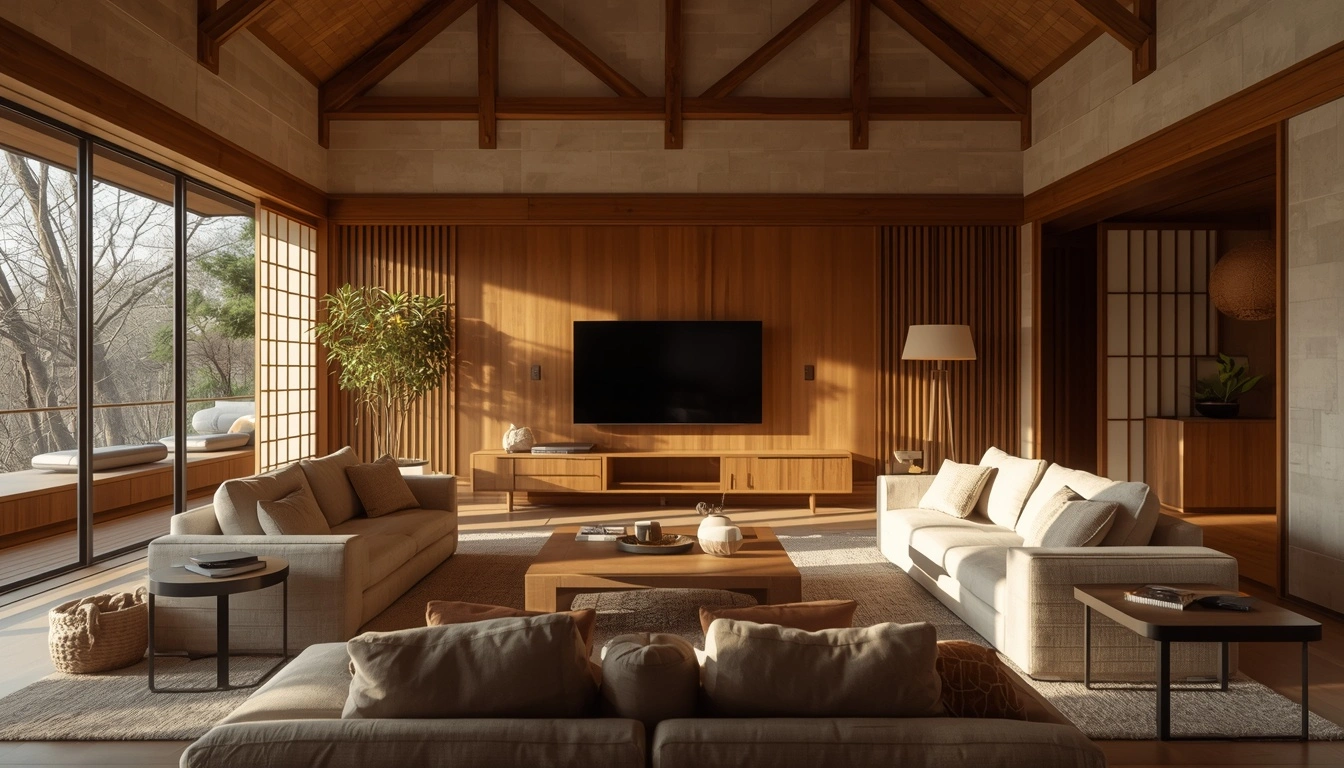
Living rooms are often designed to be seen, not felt, leaving you with spaces that look impressive on Pinterest but keep your nervous system on high alert. A true Japandi living room solves this by prioritizing architectural restraint, tactile warmth, and visual silence over decorative clutter. This guide breaks down the exact furniture dimensions, color palettes, and layout rules you need in 2026 to build a living room that actually rests you.
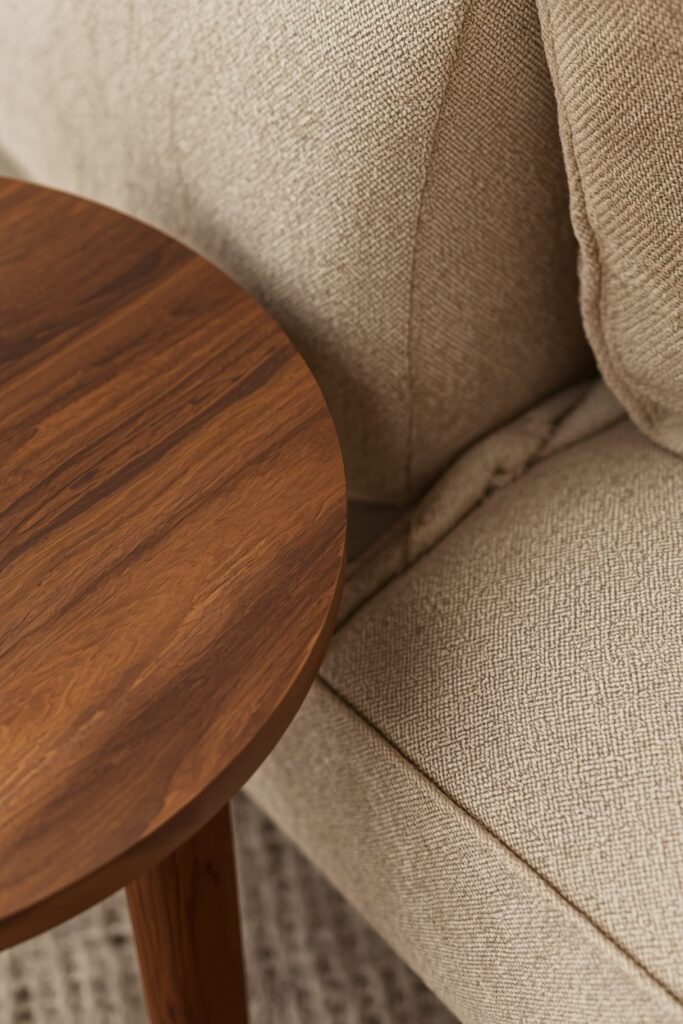
Table of Contents
Why Japandi Living Rooms Feel Different
Most interior design philosophies focus on addition—adding more art, more pillows, more layers. Japandi design, which marries Japanese minimalism with Scandinavian functionalism, is the art of intentional reduction.
When you walk into a beautifully executed Japandi living room, you experience what environmental psychologists call mental peace. The calm is not an accident; it is the result of reducing your brain’s “cognitive load.” In a traditional living room filled with 500 small objects, your brain is constantly scanning and processing visual data. In a Japandi room, every object has earned its place, leaving plenty of negative space (the Japanese concept of Ma) for your eyes—and your mind—to rest.
The Three Core Pillars of Japandi Design:
- Proportion: Furniture sits lower to the ground, increasing the perceived height of the ceiling.
- Tactility: Because color is muted, visual interest is created entirely through raw, natural textures (wood, stone, linen).
- Restraint: If an object does not serve a strict functional purpose or hold deep personal meaning, it leaves the room.
The Japandi Living Room Color System
Color in a Japandi space is a psychological tool. You are not trying to create an “accent wall” or a bold visual statement. You are trying to create an envelope of warmth.
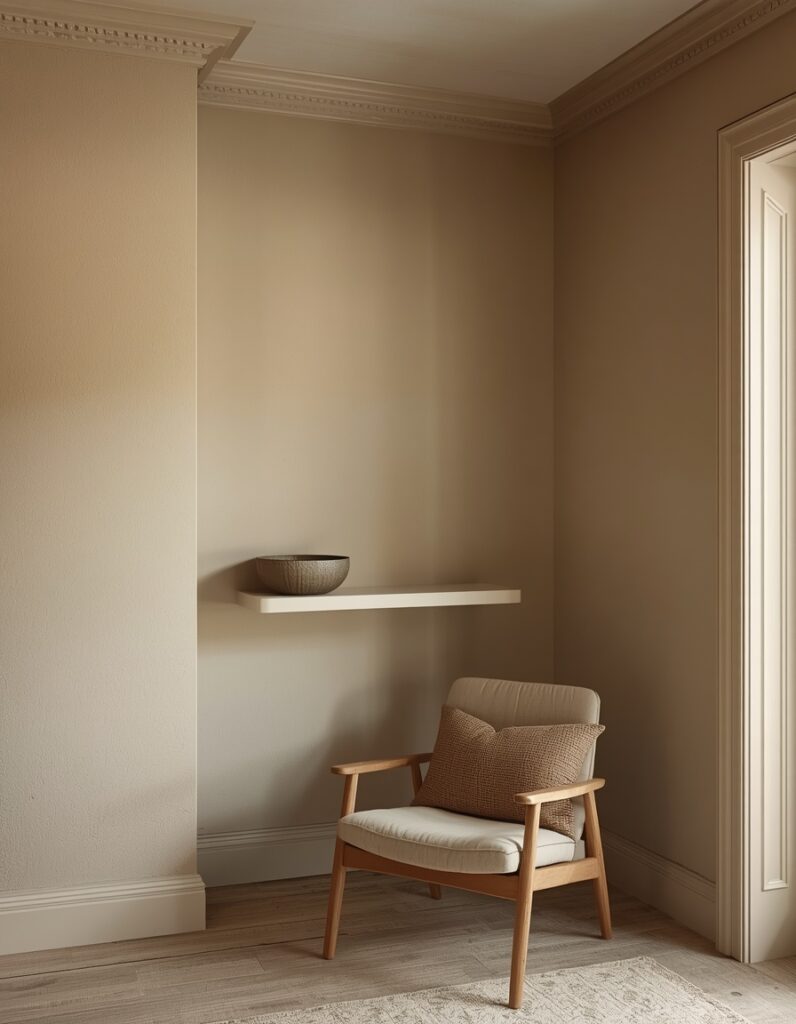
In 2026, the harsh, sterile whites of early minimalism are gone. The Japandi palette is built entirely on warm undertones—colors that share a yellow, green, or red base so that the room feels like it is glowing from within, even on a cloudy day.
The Definitive 2026 Japandi Palette:
- The Foundation: Warm whites and greiges. Benjamin Moore Pale Oak (OC-20) or Sherwin-Williams Accessible Beige (SW 7036).
- The Depth: Muted, earthy contrast colors used sparingly. Think faded olive greens, raw terracotta, or charcoal grey.
- Color Drenching: For maximum calm, paint your walls, baseboards, and ceiling in the exact same warm neutral. This eliminates the harsh, contrasting lines of white trim and turns the room into a seamless, calming sanctuary.
The Furniture Edit: Low, Grounded, and Intentional
The furniture you choose dictates how people behave in the room. In a Japandi living room, the furniture is specifically designed to make you feel grounded.
The Sofa Rule
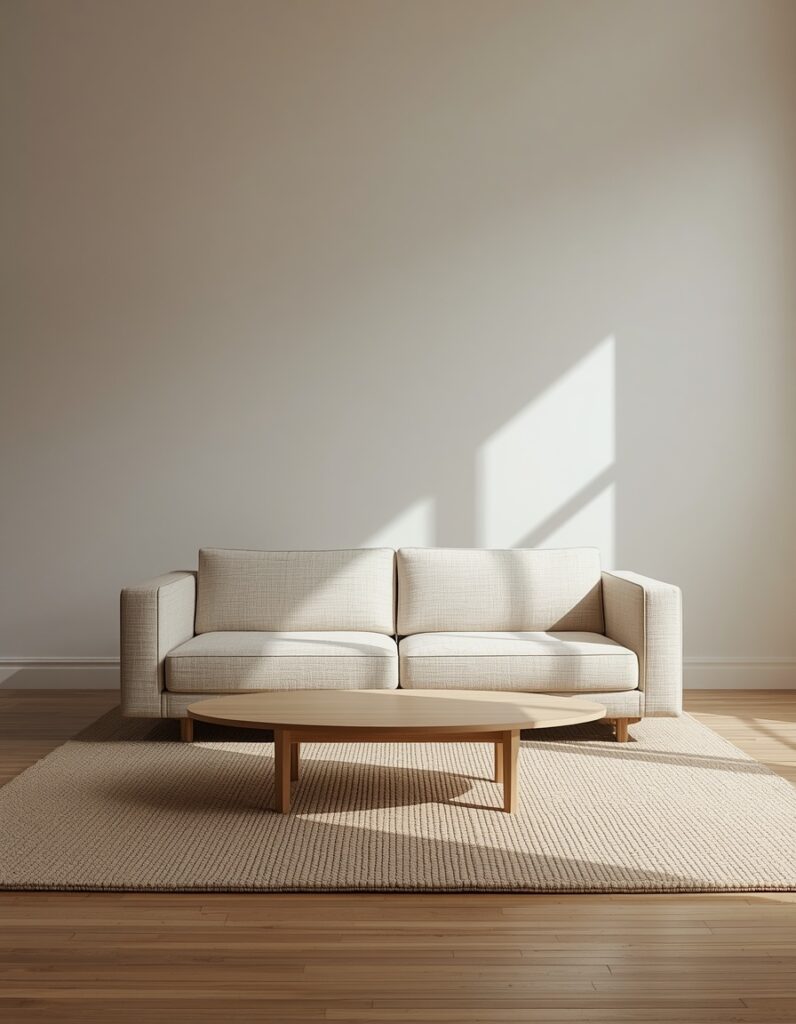
The sofa is the anchor of the living room, and its proportions must be perfect. A Japandi sofa is low-profile (the seat should sit around 15 to 17 inches off the ground) with clean, horizontal lines.
- Material: Avoid synthetic velvets or cold leathers. Opt for 100% linen, textured cotton, or a subtle bouclé in a warm oat or sand tone.
- Legs: The sofa should either sit flush to the floor in a modular style, or sit on simple, solid wood plinth legs (white oak or walnut).
Affiliate Pick — The Japandi Sofa:
The West Elm Harmony Sofa or the Article Sven in Birch Ivory are the US benchmarks for Japandi proportions at a mid-range price. They offer deep, comfortable seating without the visual bulk of traditional rolled-arm couches.
The Coffee Table
If the sofa is fabric, the coffee table must be a hard, natural material to create textural tension.
- Shape: Organic, asymmetrical shapes or perfect, severe geometric circles work best. Avoid standard rectangles with sharp, dangerous corners.
- Material: Solid raw oak, dark stained walnut, or matte travertine stone.
The Accent Chairs
Do not buy a “matching” sofa and chair set. Your accent chairs should introduce a new material to the room. If your sofa is upholstered in linen, choose a lounge chair with a solid wood frame and woven cane or leather strapping to add architectural interest.
Room Layout Blueprints: Solving Awkward Spaces
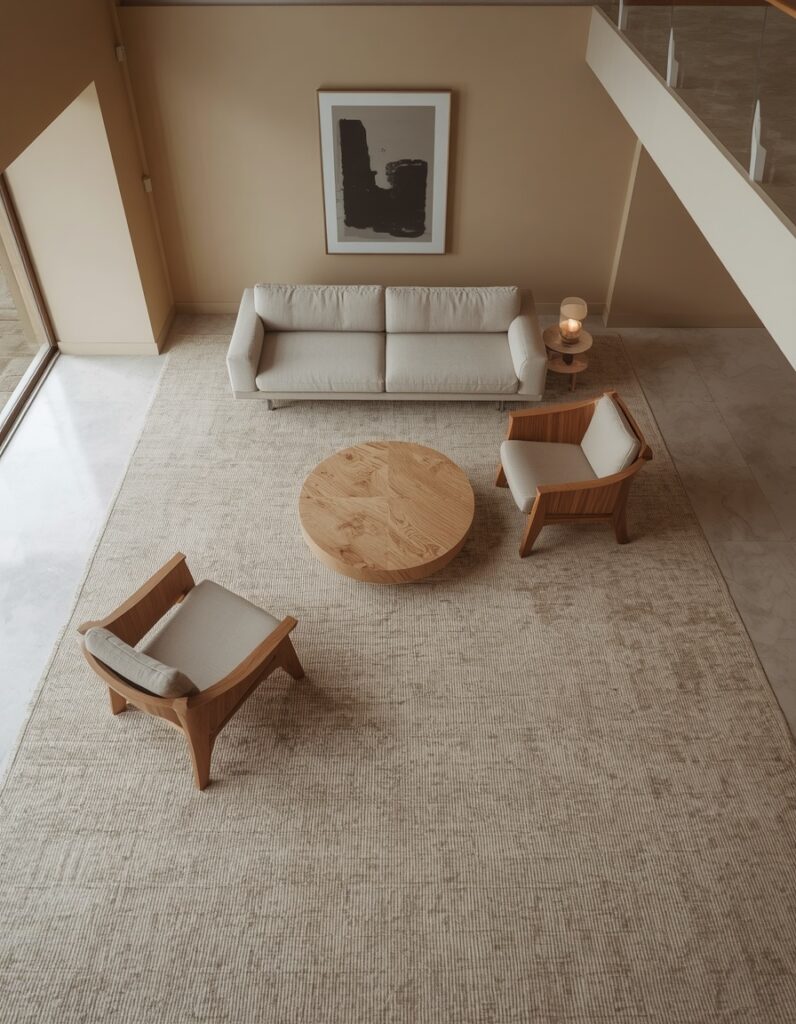
The most beautiful Japandi furniture will still feel chaotic if the room layout forces you to navigate around awkward corners or disrupts the natural flow of movement. In minimalist design, negative space is not just empty room—it is the pathway that allows a room to breathe.
The Floating Furniture Rule The biggest mistake in living room layouts is pushing all the furniture flat against the walls. This creates a “waiting room” effect and leaves a massive, dead void in the center of the room. Instead, pull your sofa and accent chairs at least 12 to 18 inches away from the walls. Floating the furniture closer together creates an intimate conversation zone and makes the room feel larger because the eye can travel behind the pieces.
Solving the Narrow Living Room If your living room is long and narrow, do not use a massive L-shaped sectional. It will act as a visual roadblock. Instead, use a single, low-profile three-seater sofa facing two light, sculptural accent chairs. Use a round organic coffee table to break up the harsh straight lines of the narrow walls.
The Open-Plan Zoning Strategy In an open-plan home, the living room needs invisible boundaries. Use your furniture to build walls. The back of your sofa should face the dining or kitchen area, acting as a low physical divider. Anchor the entire living zone with an oversized, textured rug to clearly signal where the living space begins and ends.
The “TV Above the Fireplace” Dilemma If your architecture forces the TV to sit above the fireplace, your layout is naturally fighting the Japandi rule of “low and grounded.” To fix this, balance the height. Keep your seating incredibly low, but add tall, architectural branches in a floor vase beside the fireplace to bridge the gap between the floor and the screen, drawing the eye naturally upward without straining.
Struggling with a narrow room or an open floor plan? Read our complete guide to Japandi Living Room Layouts here.
Lighting: Designing a Circadian Glow
Overhead lighting is the enemy of a Japandi living room. Pointing a bright, 4000K LED light directly down onto your furniture creates harsh shadows, flattens the textures in the room, and signals to your brain that it is time to work.
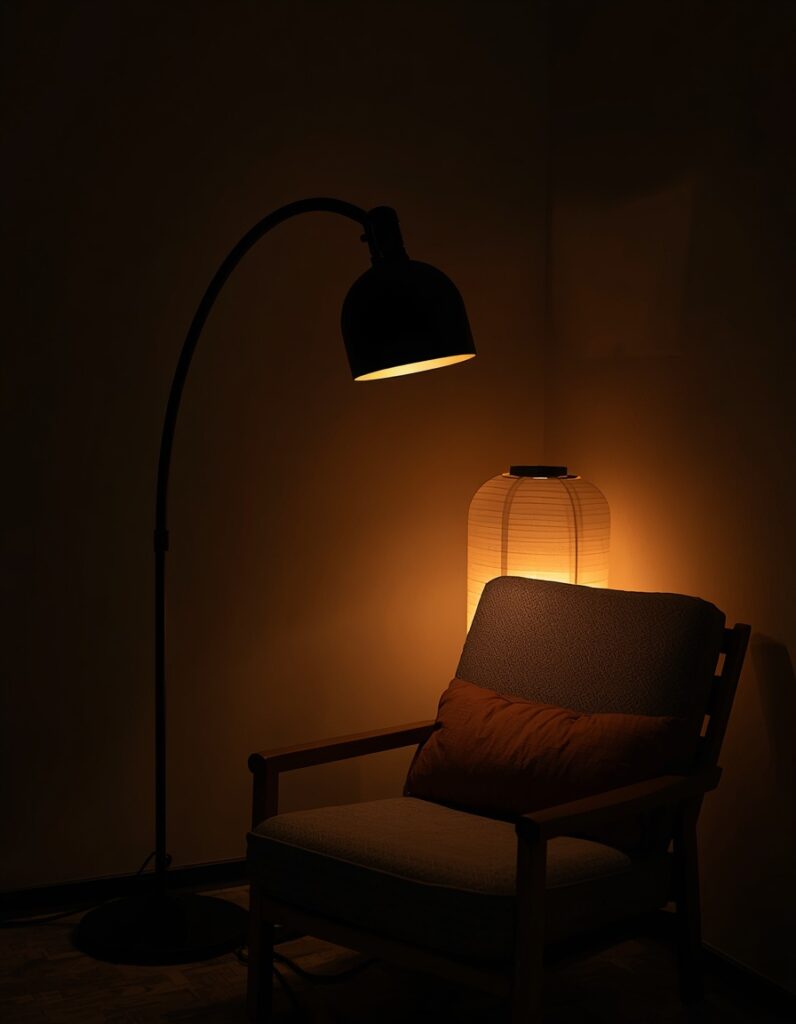
The Japandi Lighting Rules:
- Ban the Overheads: Use overhead lighting only for cleaning.
- Pools of Light: Use floor lamps, table lamps, and wall sconces to create soft “pools” of light around the room at eye level. This draws people in and makes the room feel incredibly cozy at night.
- Strict Bulb Temperatures: Every bulb in the room must be 2700K or warmer. This mimics the golden hour of sunset and tells your circadian rhythm it is time to relax.
- Sculptural Fixtures: When the lamps are turned off during the day, they should look like art. Choose lamps with matte black metal arms, rice paper shades (like the classic Noguchi lanterns), or raw, unglazed ceramic bases.
The Foundation: Flooring and Rug Proportions
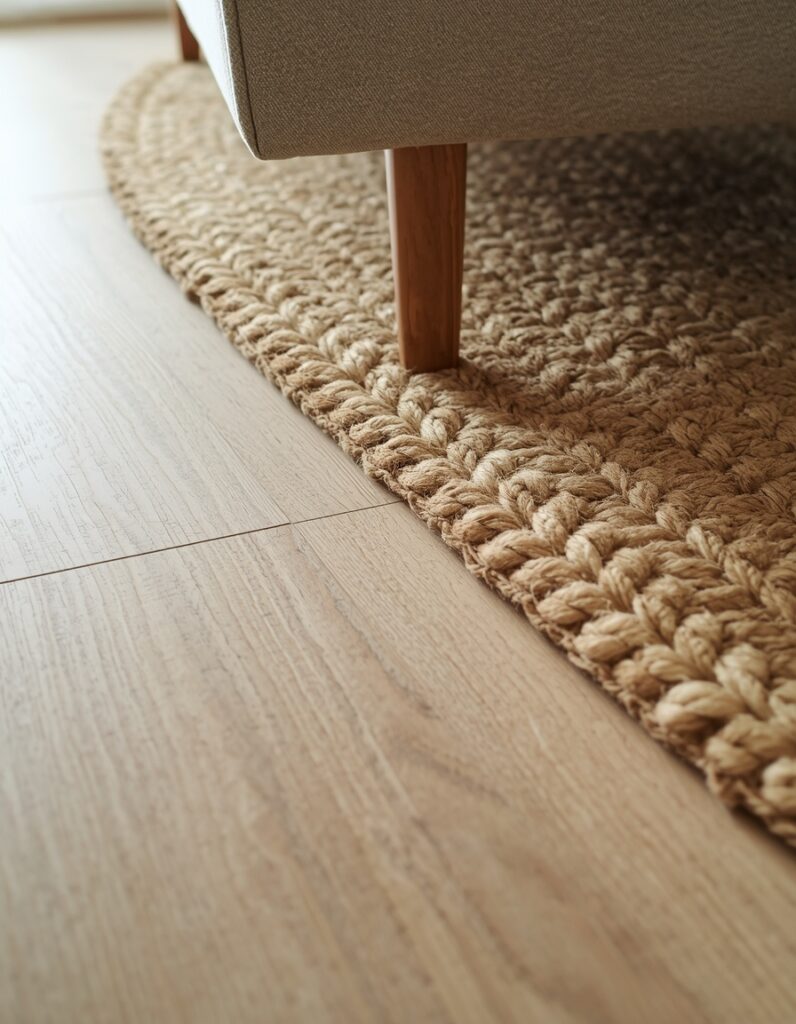
The floor is the largest surface area in your living room. If the foundation is wrong, the entire Japandi aesthetic will struggle to settle.
Wood Tone Discipline The ultimate Japandi foundation is wide-plank European white oak. It has a natural, muted warmth that perfectly bridges Japanese minimalism and Scandinavian lightness. If you have existing red oak or dark mahogany floors, you do not need to tear them out, but you must neutralize them. Use massive, neutral-toned rugs to cover the high-contrast flooring, leaving only a small border of the original wood exposed.
The Matte Finish Mandate Glossy polyurethane floors destroy visual silence. They reflect overhead lights, show every speck of dust, and look distinctly artificial. If you are refinishing floors or choosing new ones, insist on an ultra-matte or hard-wax oil finish. The floor should look raw and untouched, allowing the natural grain to absorb light softly.
The Mathematical Rug Rule A rug that is too small makes the room look cheap and fragmented. A Japandi living room requires a rug large enough that the front legs of every piece of seating sit comfortably on it.
- For an 84-inch sofa, you need a minimum 8×10 rug.
- If the room allows, a 9×12 rug creates a sprawling, luxurious sense of calm.
- Texture over Pattern: Avoid busy geometric prints. Choose solid colors with deep, heavy textures like braided jute, hand-tufted wool, or a low-pile linen blend.
The Textile Layer: Adding Visual Warmth
Because a Japandi room lacks heavy patterns and bright colors, it will feel cold and sterile if you do not layer in high-quality textiles. You need materials that absorb light rather than reflect it.

- The Rug: This is not the place for synthetics. You need a large, natural fiber rug to anchor the space. A heavy, hand-knotted wool rug or a soft jute blend adds massive amounts of visual warmth to the floor. Ensure it is large enough that the front legs of all your furniture sit on it.
- Window Treatments: Heavy, dark blackout curtains feel suffocating in a living room. Use sheer, natural linen curtains hung as high to the ceiling as possible to filter the sunlight and make the room feel taller.
- Pillows & Throws: Do not karate-chop your pillows. Let them sit naturally. Mix a smooth linen pillow with a heavy, chunky merino wool throw to create textural contrast.
Window Treatments: Filtering the Light
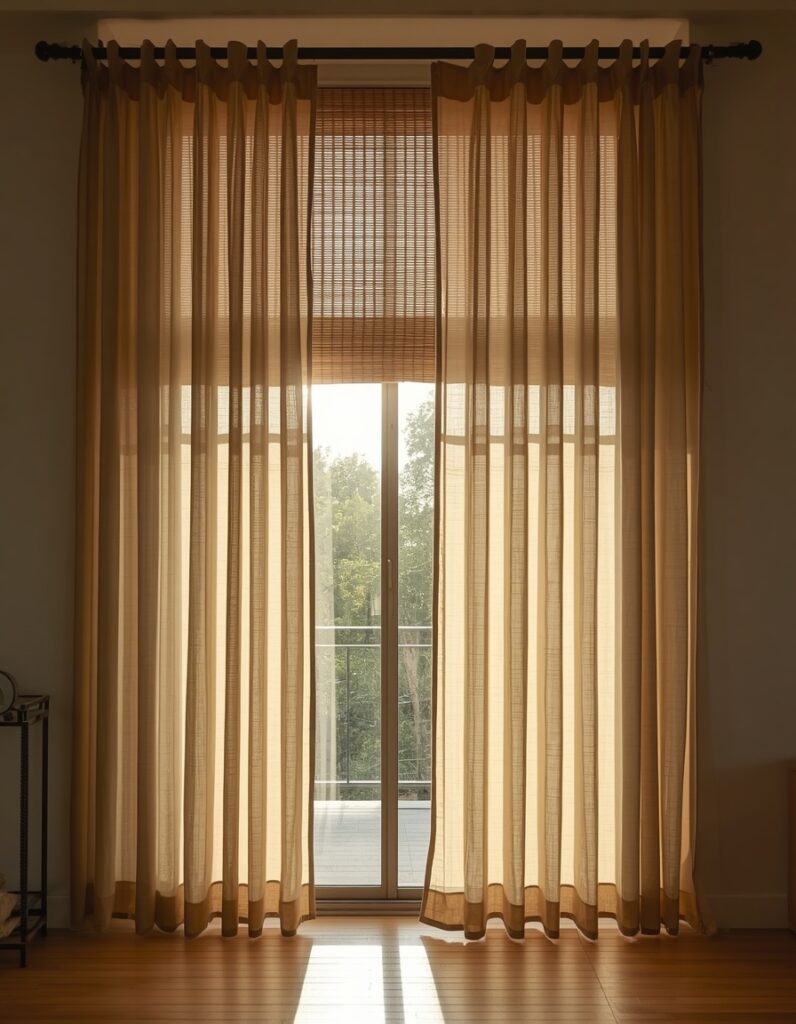
Heavy, blackout drapes or harsh plastic blinds instantly kill the airy, grounded feeling of a Japandi space. The goal of window treatments here is not to block out the world entirely, but to soften the light as it enters the room.
The Sheer Linen Standard Your primary window treatment should be 100% sheer or semi-sheer linen panels in a warm white or oat tone. When the sun hits linen, it diffuses the light, casting a soft, golden-hour glow across your plaster walls and wood furniture. It provides privacy while maintaining a connection to the natural world outside.
The Ceiling-Mount Trick Never mount your curtain rod directly on the window frame. To make your ceilings feel taller and the room feel grander, mount a matte black curtain rod directly into the ceiling (or just one inch below the crown molding). Extend the rod 8 to 12 inches past the sides of the window. When the curtains hang straight down to the floor, the window will appear massive, and the vertical lines of the fabric will draw the eye upward.
Layering with Woven Woods If you need genuine privacy or light-blocking at night, layer woven wood or bamboo Roman shades behind the linen curtains. The natural bamboo introduces another layer of organic texture to the room, perfectly complementing the white oak and matte ceramics.
The “Ma” & The Art of Styling
The final step is styling, and this is where most people ruin their minimalist efforts. In Japanese culture, Ma refers to the pure, intentional empty space between things. The space around the object is just as important as the object itself.
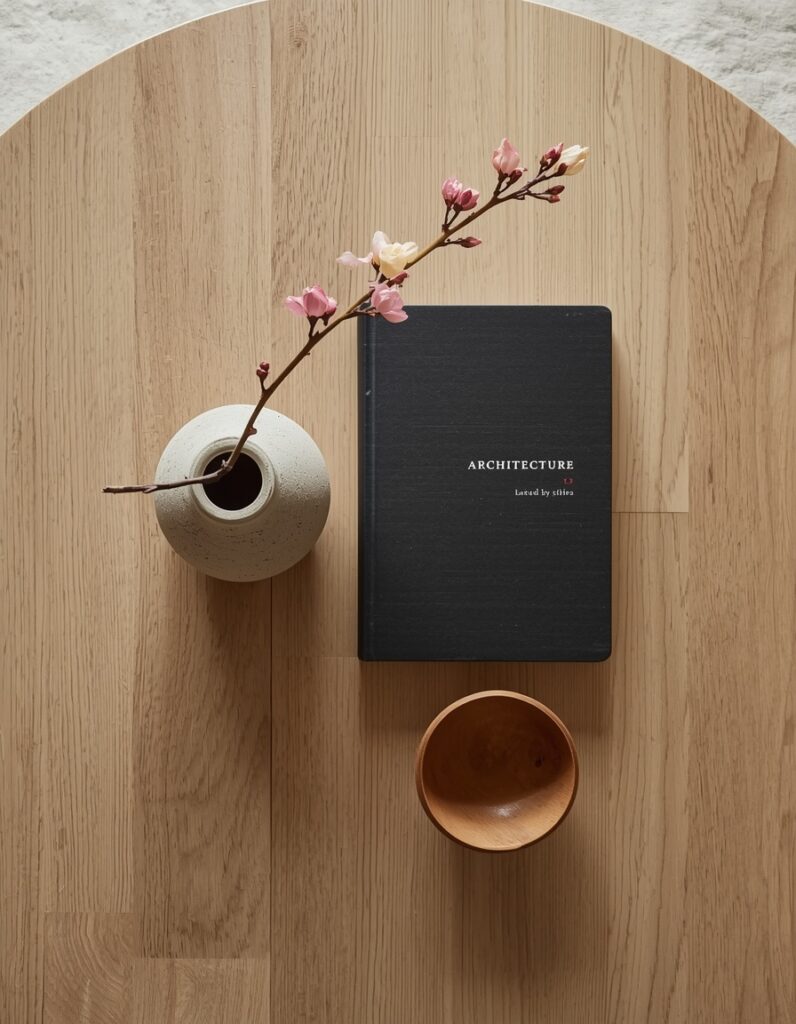

How to Style a Japandi Room:
- The Rule of Threes: On any surface (a coffee table, a console, a floating shelf), group items in odd numbers. Three is the magic number.
- Nature is the Best Art: Bring the outside in using architectural plants. A single, tall Olive tree or a black ceramic vase holding one dried, sculptural branch (like Manzanita or Willow) is far more effective than a dozen small, cluttered house plants.
- Hide the Tech: Use a slatted wood TV console to hide all cables, routers, and remotes. Visual silence means removing the blinking lights of modern technology from your sightline.
Frequently Asked Questions
How do I make my living room look Japandi on a budget? You do not need high-end designer furniture to achieve this look. Start by removing excess clutter and aggressively editing your decor down to three meaningful items per surface. Paint your walls in a warm, budget-friendly neutral (like Sherwin-Williams Accessible Beige). Swap out harsh, cool-toned lightbulbs for warm 2700K bulbs, and introduce affordable natural textures through jute rugs and linen-blend cushion covers. The feeling of calm comes from restraint, not price tags.
What is the difference between Japandi and Wabi-Sabi? While they share similar roots, Japandi is a bit more structured. Japandi combines the clean lines and functionalism of Scandinavian design with Japanese elegance, resulting in a very tailored, smooth, and refined minimalism. Wabi-Sabi is a Japanese philosophy centered entirely on the beauty of imperfection—embracing rough, raw edges, asymmetrical shapes, and visibly aged materials. A Japandi room might have a perfectly smooth oak table, while a Wabi-Sabi room would feature a table with raw, uneven live edges.
Does a Japandi living room have to be beige? No. While warm whites, oats, and greiges form the foundation of the style, a Japandi room needs contrast to feel grounded. You can introduce muted, earthy tones like faded sage green, terracotta, or deep charcoal. The key is that every color must have a warm, muddy undertone rather than a bright, saturated hue.
The Finished Living Room
A Japandi living room is not a showroom. It is a tool for living better.
When you remove the excess, dial in the warm lighting, and surround yourself with honest, natural materials, the living room stops asking for your attention and finally starts supporting your rest. Start with the edit. Clear the surfaces, turn off the overhead light, and let the room breathe.
Shop This Look
- The Japandi Sofa: [West Elm Harmony Sofa] (~$1,599) or [Article Sven in Ivory] (~$1,299). Deep seats, low profiles, beautiful natural fabrics.
- The Organic Coffee Table: [Lucca Round Solid Oak Coffee Table] (~$499). Raw wood grain, low-slung, soft edges.
- The Ambient Lighting: [Brightech Sparq Arc Floor Lamp in Matte Black] (~$85–120) via Amazon. Perfect for positioning an over-shoulder reading light behind the sofa.
- The Noguchi Alternative: [Rice Paper Table Lamp] (~$45) via Etsy. The ultimate soft, diffused Japandi light source for a console table.
- The Textural Rug: [Natural Wool Jute Blend Area Rug] (~$200–400) via Amazon. Thick, tactile, and grounds the room.
- The Architectural Plant: [Nearly Natural 6ft Olive Tree] (~$120). Zero maintenance, perfect muted green leaves, highly architectural.
- The Ceramic Accent: [Bloomingville Matte Charcoal Vase] (~$35) via Amazon. The perfect vessel for a single dried branch on your coffee table.
[…] unwind, not a space to impress. These principles extend beyond the bedroom and can also be seen in Japandi living room ideas that focus on balance, warmth, and […]
[…] you’re exploring Japandi design across your home, you may also enjoy our guide on Japandi Living Room Ideas for creating calm, balanced interiors beyond the […]
[…] you’re new to the style, start with our guide on Japandi Living Room Ideas to understand the foundation before refining […]
[…] you’re new to the style, begin with our complete guide to Japandi Living Room Ideas, then return here for small-space execution […]
[…] layout; if you are just starting your journey, I recommend bookmarking our comprehensive guide on Japandi Living Room Ideas to see how these elements […]
[…] to decorate, every piece must have “tactile weight.” As we discussed in our guide to Japandi Living Room Ideas, the goal is functional minimalism—where the decor serves the atmosphere, not just the […]