
Bedding is the primary element in a Japandi bedroom that you interact with every night, and its selection is predominantly influenced by its appearance in photographs.
This approach is misguided, as the choice of material is particularly significant. Linen and cotton exhibit distinct behaviors that become apparent within a week: their ability to retain creases, their comfort during the heat of July, and their aging process over five years. Moreover, the contrast between high-quality linen and inferior linen is noticeable from across the room, which is not the case for most other textiles.
Thus, the focus should be on fiber, weight, and layering, in that specific order. The color palette can be summarized in a single sentence.
The short answer: Choose stonewashed linen in a heavyweight, roughly 165 to 190 GSM, in oat, flax, or undyed natural. Linen creases by design and that is the point. Cotton percale is the cooler, crisper alternative if visible rumple bothers you. Skip sateen, which has a sheen this style does not want.
Linen or cotton
Takeaway: Heavyweight stonewashed linen at 165 to 190 GSM is the default, because weight is what separates soft rumple from a wrinkled mess. Cotton percale is the cool, crisp alternative. Avoid sateen for its sheen.
Linen is the default here, and for reasons beyond appearance.
It is roughly 30 percent stronger than cotton as a fiber, it gets softer with every wash rather than wearing thin, and it moves moisture and air well enough to be genuinely comfortable across seasons. A good linen set outlasts a good cotton set by years.
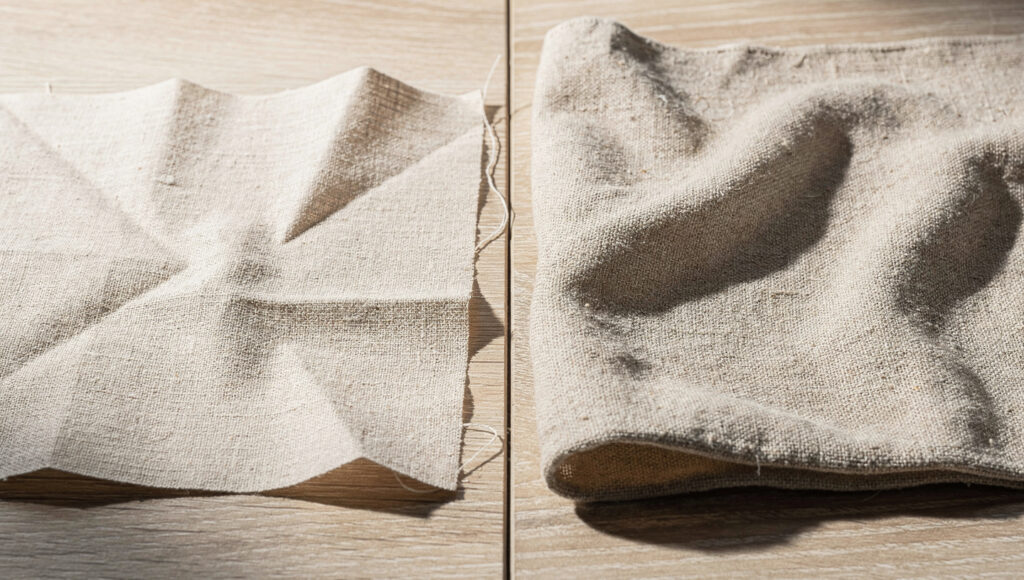
What matters when buying it is weight. Lightweight linen, below about 150 GSM, creases into sharp untidy folds and reads as wrinkled rather than relaxed. Heavyweight linen at 165 to 190 GSM drapes with soft rumple, which is the look people actually mean when they say linen bedding. If a listing does not state a GSM figure, assume it is on the light side.
Stonewashed or garment-washed matters too, because unwashed linen arrives stiff and takes months of use to soften. Pre-washed linen is comfortable from the first night.
Cotton is the honest alternative rather than a compromise, and the weave decides everything.
Percale is a plain one-over-one weave that feels crisp, cool, and matte. It suits this style well and is the better choice if you sleep hot or genuinely dislike creasing.
Sateen has more threads on the surface, producing a smooth, slightly lustrous finish. It is comfortable and it has a sheen that fights every matte surface in a Japandi room. Skip it.
On thread count: above roughly 400 the number stops meaning much and often indicates multi-ply yarn counted twice. Weave and fiber quality matter considerably more.
Sheets
Sheets get less attention than duvet covers and they touch you more.
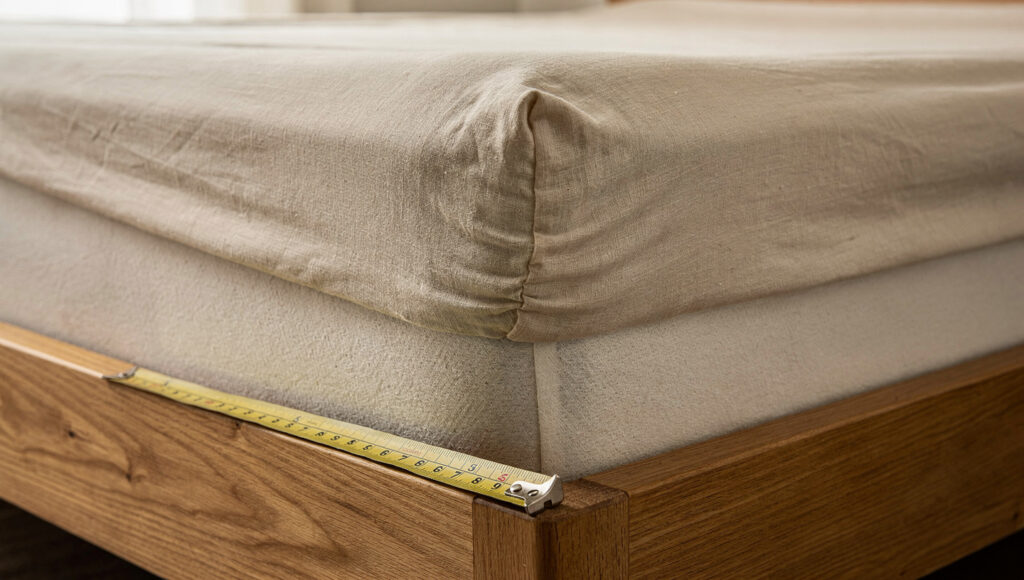
Fitted sheets: check the pocket depth against your mattress before ordering. Standard pockets fit 12 to 14 inches; if you have a pillow-top or a mattress topper you likely need 15 to 18. A fitted sheet that does not quite reach pops off a corner every few nights, which is the most common bedding complaint there is.
Flat sheets are optional and increasingly skipped. In linen they add a layer that can be pushed off in summer without disturbing the duvet, which is a real advantage in a warm climate. If you never use one, do not buy sets that include it.
Pillowcases come in envelope or Oxford styles. Envelope closures are simpler and read cleaner, which suits this style. Oxford cases have a flat border around the edge, which is more traditional.
One practical note that saves money: sheet sets are usually cheaper than buying pieces separately, but only if you will use every piece. If you skip flat sheets, buy the fitted and pillowcases individually.
Duvet covers
The duvet cover is the largest single textile in the room, so it sets the tone more than anything else on the bed.
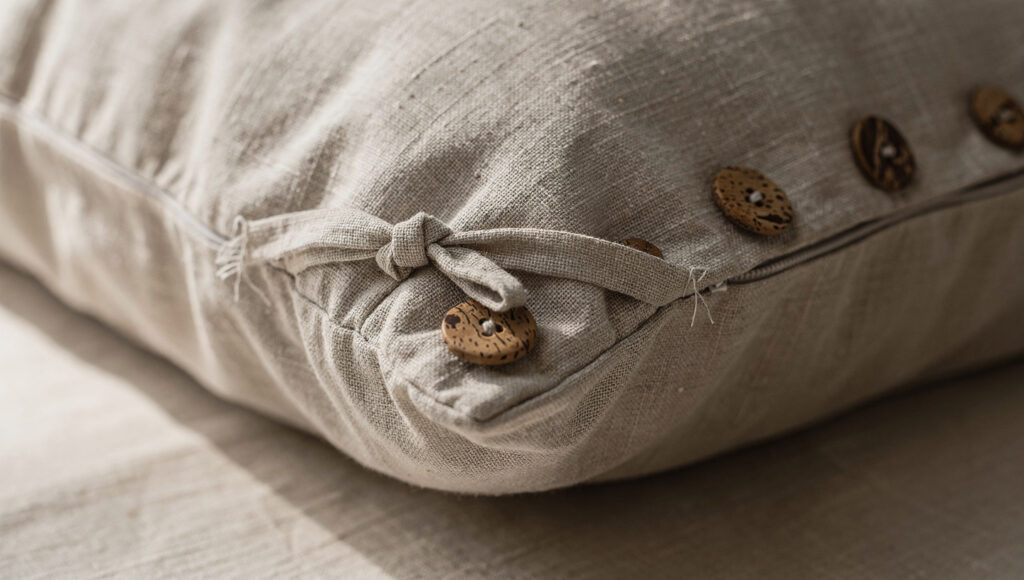
Closure type is worth checking. Buttons are the most common and the most reliable, and coconut or wood buttons suit the material palette better than plastic. Ties at the corners keep the insert from bunching, which is the difference between a duvet that stays flat and one that migrates into a lump by February. Zippers are fastest to change and the least attractive.
Sizing. Buy the cover to match your insert rather than your mattress. A cover slightly larger than the insert produces a soft, under-filled drape, which suits this style. A cover smaller than the insert compresses it and looks tight.
Insert weight. For a year-round bed, a mid-weight down or down-alternative insert paired with linen handles most climates. Two lighter inserts you can layer is the more flexible approach if your winters are cold.
The mistake to avoid is a heavily quilted or channel-stitched insert visible through a light linen cover. The stitching pattern shows, and it reads as hotel bedding.
Layers, and how many
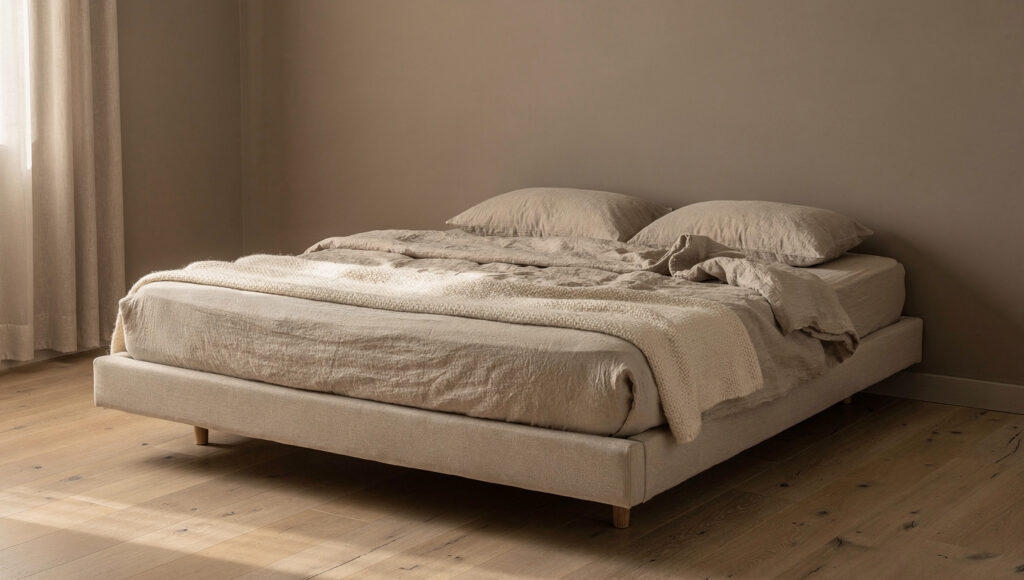
Three is the working number: a fitted sheet, a duvet in its cover, and one blanket or throw folded at the foot.
That last layer is what makes a bed look considered rather than merely made. A wool or cotton blanket folded across the bottom third adds texture and gives you something to pull up without changing the whole bed.
What tips a Japandi bed into looking styled rather than lived in is cushions. Two sleeping pillows and, at most, one lumbar cushion. Anything beyond that has to be taken off every night, which is the reliable sign that a bed has been arranged for a photograph.
Color and care
Takeaway: Keep sheets and duvet in the pale range and put any depth on the blanket layer. Wash warm not hot, never use fabric softener, and tumble dry on low. Do not iron linen.
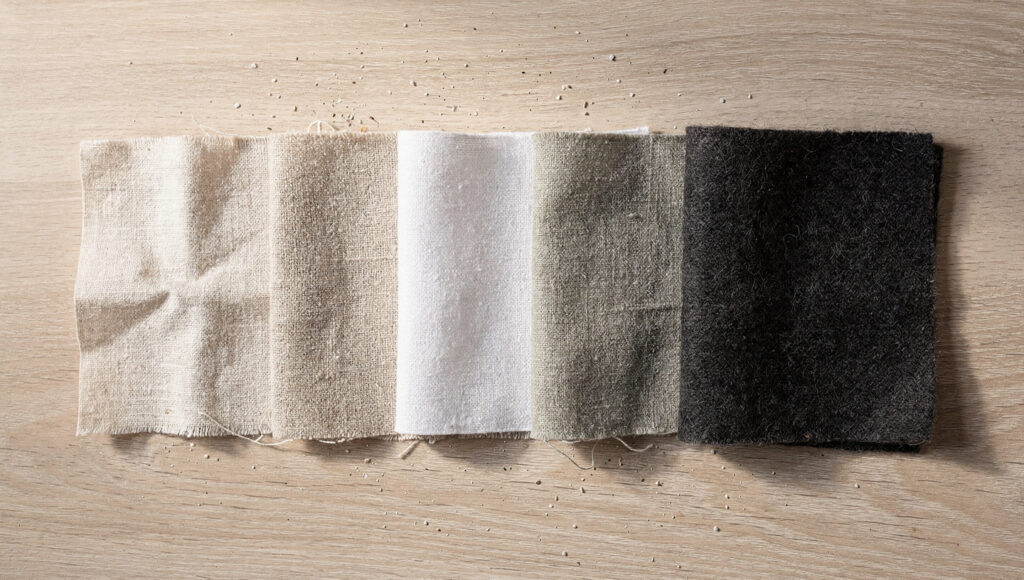
Undyed, oat, flax, warm white, and soft greige. That is the palette. Deeper tones work on a blanket layer, but the sheets and duvet should stay pale so the bed reads as a quiet plane.
On care, three things extend the life of linen considerably. Wash warm rather than hot, because heat weakens the fiber over time. Skip fabric softener entirely, since it coats linen and prevents the natural softening that makes it better with age. And tumble dry on low, removing it slightly damp, which produces softer drape than drying it fully.
Linen does not need ironing and should not be ironed. The crease is the material behaving as it should.
Frequently asked questions
What GSM should Japandi linen bedding be?
Between roughly 165 and 190 GSM. Below about 150 the fabric creases into sharp, untidy folds that read as wrinkled rather than relaxed, which is the most common disappointment with cheap linen bedding. Heavyweight linen in the 165 to 190 range drapes with the soft rumple people actually want. If a listing does not state a GSM figure at all, it is usually because the fabric sits on the light side. Look for stonewashed or garment-washed as well, since unwashed linen arrives stiff and takes months of use to soften properly.
Is linen or cotton better for Japandi bedding?
Linen, in most cases. It is stronger than cotton as a fiber, it softens with every wash rather than wearing thin, and it regulates temperature well enough to work across seasons. Its visible creasing is the aesthetic rather than a flaw. Cotton percale is a genuine alternative rather than a compromise, particularly if you sleep hot or find creasing untidy, since its plain weave feels crisp, cool, and matte. What to avoid is cotton sateen, which has a slight luster that fights every other matte surface in the room.
What color should Japandi bedding be?
Undyed natural, oat, flax, warm white, or soft greige. Keep the sheets and duvet cover within that pale range so the bed reads as one quiet plane rather than a set of competing layers, and put any deeper tone on the blanket or throw folded at the foot. Avoid bright white, which reads clinical against warm neutrals, and skip patterns entirely.
How many pillows should be on a Japandi bed?
Two sleeping pillows, and at most one lumbar cushion. The test is simple: if you have to remove pillows before getting into bed, there are too many. A bed with six decorative cushions has been arranged for a photograph rather than for sleeping, which is the opposite of what this style is about.
The honest answer
Buy heavyweight stonewashed linen in a pale neutral, check the fitted sheet pocket depth against your actual mattress, and match the duvet cover to the insert rather than the bed.
Then stop. Three layers, two pillows, no ironing. The material does the rest, which is rather the point of choosing it.
Shop This Look
Stonewashed linen duvet cover — heavyweight linen duvet set, oat or flax · Heavyweight matters; lightweight linen creases without draping.
Linen sheet set — stonewashed linen sheets · Same fiber as the duvet so the bed reads as one material.
Linen pillowcases, pair — linen pillowcase set ·
Wool or cotton blanket — merino wool throw blanket, natural · The layer over the duvet, folded at the foot.
Down or down-alternative insert — duvet insert, all season ·
Natural fiber mattress protector — cotton mattress protector ·
Linen-safe detergent — wool and delicates detergent · Linen softens with washing but not with harsh detergent.
Wool dryer balls — wool dryer balls · Softens linen without fabric softener, which coats the fiber.
Under-bed storage, slim — low profile under-bed storage bags ·

