
This post contains a couple of affiliate links for paint samples. If you buy through them, Homeoration earns a small commission at no extra cost to you.
Every guide to these two styles reaches for the same shortcut: minimalism is clean, wabi-sabi is cozy. It is accurate, and it collapses the moment you are choosing between two beige rooms that look nearly identical in a photograph. Both empty the room. Both keep few things. Both love a bare wall and a natural material. The problem is not that people cannot tell them apart. It is that the visible signals overlap almost completely, so the real difference has to be found somewhere the camera does not look.
That somewhere is intent. Minimalism removes to reach order. Wabi-sabi removes to reach meaning. That one split decides five concrete choices: what your surfaces are made of, whether you allow a flaw to show, how warm the palette runs, what you leave out on display, and whether you want the room to stay new or be allowed to age. Get those five right and the style follows on its own. Get the last one wrong and you have built the other style by accident.
The Short Answer
Minimalism reduces a room to its essentials and keeps them precise, ordered, and often cool, so the calm comes from control. Wabi-sabi reduces a room to a few natural, imperfect, aging things and keeps them warm, so the calm comes from acceptance. Both empty the room. They empty it for opposite reasons.
Which One Fits You? Quick Answer
| If you want… | Choose… |
|---|---|
| A precise, ordered room | Minimalism |
| A warm, lived-in room | Wabi-sabi |
| Flawless, engineered surfaces | Minimalism |
| Handmade, imperfect surfaces | Wabi-sabi |
| Cool whites, grays, and true black | Minimalism |
| Warm clay, ecru, and soft char | Wabi-sabi |
| Clean lines and hidden storage | Minimalism |
| Visible age, patina, and wear | Wabi-sabi |
| Things that stay looking new | Minimalism |
| Things that improve as they age | Wabi-sabi |
| A disciplined, gallery calm | Minimalism |
| A forgiving style for real family life | Wabi-sabi |
This guide gives you each decision with specifics, verified paint codes, and a framework for choosing based on your actual room and habits rather than a mood board. The warm middle ground both styles lean toward is worked out in the warm minimalism guide.
Where Each Style Comes From, and Why It Matters
Takeaway: Minimalism reduces toward perfection. Wabi-sabi reduces toward acceptance. Every other difference follows from that one.
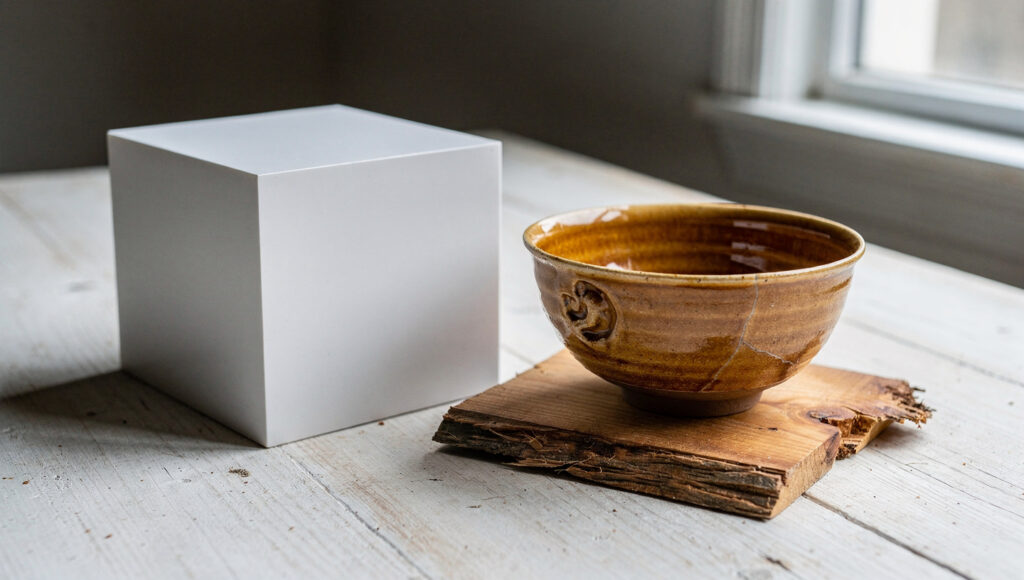
Minimalism is the older idea in the West and the younger one as a room style. It runs back through early twentieth-century modernism, the Bauhaus, and De Stijl, and it is usually summed up in Mies van der Rohe’s “less is more.” It hardened into a formal art movement in 1960s New York, where Donald Judd and Agnes Martin stripped painting and sculpture down to pure form, repetition, and industrial precision. Dieter Rams carried the same logic into product design: as little as possible, done exactly. Every version shares one governing move. Strip away everything inessential, and present what remains with machine-made exactness.
Wabi-sabi is far older and comes from the opposite instinct. It grew out of Zen Buddhism and the Japanese tea ceremony in the fifteenth and sixteenth centuries, when the tea master Sen no Rikyu rejected ornate imported utensils in favour of rough, humble, locally made ones. The term joins two ideas: wabi, a rustic, understated simplicity, and sabi, the particular beauty that age and wear bring to a thing. Underneath sits the acceptance of impermanence, the sense that nothing lasts and nothing is ever finished, and that this is exactly where beauty lives.
Those origins produce the split that runs through everything below. Both styles reduce, but they reduce for opposite reasons. Minimalism’s reduction is an act of control: get the room exactly right, then hold it there. Wabi-sabi’s reduction is an act of acceptance: let the room be humble, and let it change. Two people can strip a room down to almost nothing, ask those two different questions, and end up with spaces that feel like opposites.
The practical consequence is a different question at the door. A minimalist room asks whether everything is in order. A wabi-sabi room asks whether everything left has meaning and is allowed to age. The furniture can be nearly identical and the two rooms will not feel alike at all.
The Five Real Differences at a Glance
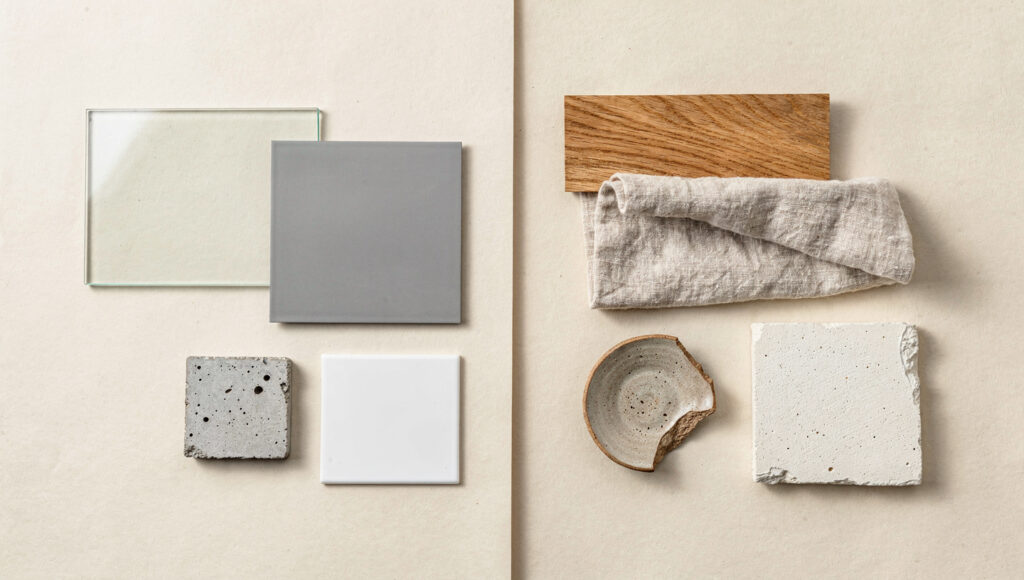
Before the detail, here is the whole comparison in one place. Read the two columns as opposite answers, not as degrees of the same thing.
| Minimalism | Wabi-sabi | |
|---|---|---|
| Surfaces | Engineered and uniform: lacquer, glass, polished concrete, powder-coated steel | Natural and tactile: raw wood, hand-thrown clay, lime plaster, linen |
| Form | Precise, aligned, often symmetrical | Irregular, asymmetric, handmade |
| Palette | Cool and controlled: white, gray, true black | Warm and earthy: ecru, clay, sage, soft char |
| On display | Few objects, put away behind clean fronts | Few objects, left out, each worn and meaningful |
| Time | Wants to stay new; wear reads as damage | Wants to age; wear reads as improvement |
| Contrast | Can run high, black against white | Low and tonal, no true black anywhere |
| Reads as | Ordered, precise, calm through clarity | Warm, grounded, calm through soul |
The one-line version: minimalism keeps what is essential and keeps it perfect. Wabi-sabi keeps what is meaningful and lets it wear.
Difference 1: The Surface Decides It First
Takeaway: The finish tells you the style before anything else does. Flawless and engineered reads minimalist; raw, handmade, and tactile reads wabi-sabi. Run your hand across the surfaces, and if none of them have texture, it is not wabi-sabi.
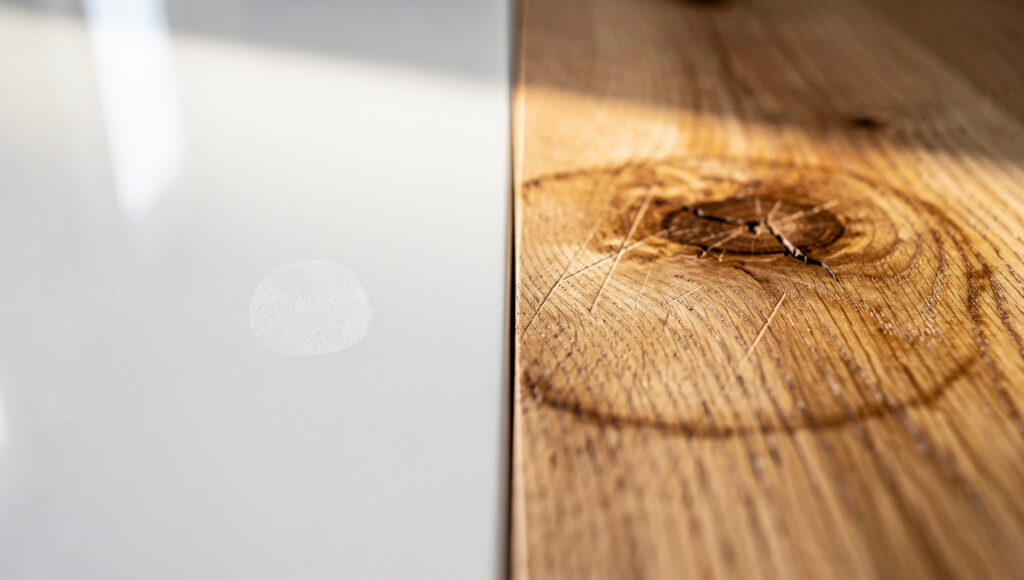
If you change only one thing, change what your surfaces are made of and how they are finished. It is the fastest way to move a room between these two styles, and the difference most guides gesture at without specifying.
Minimalism wants surfaces that look like no hand touched them. Matte lacquer, glass, polished concrete, powder-coated steel, high-tolerance joinery with concealed fixings. The surface is uniform, unbroken, and machine-even, and that flawlessness is the point. A minimalist room reads as calm because nothing in it looks improvised or worked by hand.
Wabi-sabi wants the opposite: surfaces that show the hand and the material honestly. Hand-thrown stoneware with a thumb-mark in the glaze, lime plaster that still carries the movement of the trowel, raw or oiled wood with open grain and live knots, undyed linen that creases and stays creased. The surface should look touched. That tactility is the whole philosophy made physical, and it is why a wabi-sabi room reads as warm even when it is nearly empty.
The finish proves it, on a single object. Take one oak table. Spray it with a flat, even lacquer and it reads minimalist, a clean plane that reflects light and resists marks. Finish the same table with penetrating oil that leaves the grain open and lets the top mark and darken with use, and it reads wabi-sabi. Same timber, same shape, same room. Only the surface changed.
A buying warning worth more than a product link. A large share of what is sold online as wabi-sabi is a factory imitation of imperfection: a mould-made vase with a printed-on crackle, identical in every unit on the shelf. Real wabi-sabi irregularity cannot be mass-produced, because it comes from the hand and the firing. If every unit in the listing is identical, the imperfection is a decoration, not the real thing. Buy genuinely handmade, small-batch ceramics and artisan linen, or buy vintage, where the wear is real.
My honest read: this is where most wabi-sabi rooms fail. People buy flawless flat-pack furniture, add one factory-distressed pot, and call it wabi-sabi. Without a few genuinely tactile, handmade surfaces doing real work, you have a minimalist room wearing a costume.
Difference 2: Whether the Flaw Is Allowed to Show
Takeaway: Minimalism wants the flaw gone. Wabi-sabi wants it visible. Symmetry, even gaps, and clean edges read minimalist; asymmetry, the uneven rim, and the mended crack read wabi-sabi.
Stand back and look at how things are arranged and how precise they are. It is the second-fastest tell, and it is more diagnostic than material.
Minimalism prizes precision. Aligned edges, even reveals, symmetry, machine tolerance. A crooked shelf, a chipped rim, or an off-center stack is a fault to be corrected, because the calm of the room depends on everything being exactly placed. The order is the aesthetic, and disorder reads as noise.
Wabi-sabi prizes the irregular. The asymmetric arrangement, the hand-thrown rim that is slightly oval, the knot in the timber, the glaze that pooled unevenly, the visible repair. Kintsugi, the Japanese practice of mending broken ceramic with gold so the break becomes part of the object’s history, is the clearest single statement of the whole philosophy. The flaw is not hidden. It is honoured.
Here is the test. Put three objects on a shelf. Minimalism spaces them evenly, aligns them, and balances the composition. Wabi-sabi places them off-center, usually in an odd number, deliberately unbalanced, so the arrangement looks found rather than staged. Same three objects, opposite logic.
The practical point is that you do not buy this difference, you allow it. Stop straightening. Let the linen stay creased, let the stack of books lean, keep the bowl with the hairline you would normally retire. Moving a room toward wabi-sabi here costs nothing. Moving it toward minimalism costs only discipline.
Difference 3: Temperature and the Palette
Takeaway: Minimalism runs cool and can reach a true black. Wabi-sabi runs warm and never does. The bottom row of the palette is where the two split completely.
Both styles are neutral, so people assume the palettes are interchangeable. They are not, and the difference is structural rather than a matter of degree.
Minimalism’s palette is cool and controlled. Crisp whites, true grays, and often a genuine black for contrast. The classic minimalist room is white on white, or black on white, and the coolness is deliberate: it reads as clean, precise, and quiet. This is also where the common complaint comes from, that a minimalist room can feel cold. The cool palette and the flawless surfaces, with nothing warm to counter them, can tip a room toward clinical.
Wabi-sabi’s palette is warm and earthy. Ecru, oat, clay, terracotta, mushroom, moss, and a dark note that is really a deep warm brown or soot rather than a true black. Everything leans warm, the contrast stays low and tonal, and there is no pure white and no pure black anywhere in the room. That warmth is precisely why a wabi-sabi space never goes cold, whatever else it strips away.
Here are verified codes for each side, confirmed against the manufacturers before publishing. Light reflectance values are approximate and should be checked on the physical swatch.
| Role | Minimalism | Wabi-sabi |
|---|---|---|
| Base white | Chantilly Lace BM OC-65, Pure White SW 7005 | White Dove BM OC-17, Alabaster SW 7008 |
| Light neutral | gray Owl BM OC-52 | Pale Oak BM OC-20, Accessible Beige SW 7036 |
| Earth or accent | rarely warm | Cavern Clay SW 7701, Saybrook Sage BM HC-114 |
| Deeper tone | Chelsea gray BM HC-168 | Revere Pewter BM HC-172 |
| Dark note | Tricorn Black SW 6258, a true black | Urbane Bronze SW 7048, a warm bronze, never true black |
The difference is visible in the table itself. Read the bottom row. Minimalism reaches for a true black, Tricorn Black, an LRV of 3 with no undertone, built for high contrast. Wabi-sabi refuses pure black and uses a warm bronze-brown, Urbane Bronze at an LRV of 8, so that even the darkest point in the room still reads warm. That single row is the whole difference between the palettes rendered as paint codes. The specific brand combinations for the warm side are worked out in the Japandi paint colors hub and the wabi-sabi home decor guide.
Whichever column you choose, test before you commit. Both palettes fail the same way, a warm white going yellow or a gray going cold, and a chip will not show you which. Peel-and-stick paint samples let you move the real color around the room and look at it at the hours you actually use the space. For a full repaint this step costs a few dollars and saves a few hundred.
One warning about the dark notes. Tricorn Black and any true black close the walls in fast in a small or dim room, and the room loses whatever light it had. If you want minimalist contrast in poor light, keep the black to a frame, a fixture, or hardware rather than a wall. Urbane Bronze is softer but still deep, so treat it the same way outside a well-lit room.
Difference 4: What You Keep on Display
Takeaway: Both styles keep few objects out. Minimalism hides them; wabi-sabi shows a chosen few. Concealed storage and clear surfaces read minimalist; one worn, meaningful object on an otherwise bare surface reads wabi-sabi.
This is the difference people miss, because both rooms photograph as uncluttered and you have to look at why.
Minimalism reaches the empty surface by concealment. Integrated storage, handle-less cabinets, everything behind a clean front, nothing left out that is not essential. The empty surface is the goal in itself, and the objects are put away to achieve it. A minimalist shelf is often simply empty.
Wabi-sabi reaches a nearly empty surface by selection. It leaves a few things out, but each one earns its place by being meaningful, used, and often imperfect: a single hand-thrown vessel, one branch, a worn wooden bowl, a short stack of well-read books. The empty space around the object is what lets you actually see it, which is where wabi-sabi meets the Japanese idea of ma, the meaningful interval. The object is framed by the emptiness rather than removed by it.
So the two surfaces can look almost identical in a photograph, one clear and one nearly clear, while the logic is opposite. Minimalism removes the object. Wabi-sabi frames it.
The failure mode follows directly. A room can be right on materials and right on palette and still read cold and minimalist because everything personal has been concealed and nothing with a story is on show. If your wabi-sabi room feels a little lifeless, it usually is not the paint. It is that you have hidden everything and left nothing real out where it can be seen. Put one worn, meaningful object back on the surface and the room warms immediately.
Textiles follow the same rule. Minimalism keeps them spare, flat, and matching. Wabi-sabi wants undyed linen and one nubby wool, allowed to crease and soften. If you are buying the one linen piece, the spec is narrow: 100 percent linen rather than a blend, stonewashed so it arrives soft, and undyed or natural rather than a dyed color. A 100% linen throw in washed natural flax is the reliable option, and the listing must actually say 100 percent linen, because a blend will not crease or age the way the style depends on.
Difference 5: How Each Treats Time
Takeaway: Minimalism wants the room to stay new. Wabi-sabi wants it to age. Every other difference is downstream of this one.
This is the deepest difference, and it quietly decides the four above it.
Minimalism is built to resist time. Surfaces are chosen to stay pristine, finishes are chosen not to mark, and a state of order is maintained against the natural drift toward mess. A scratch, a patina, or a faded patch is wear, and wear is a failure of the room. The ideal minimalist space looks the same in year ten as it did on the first day.
Wabi-sabi is built to accept time, and it chooses its materials precisely because they change. Oiled wood that darkens with handling, linen that softens and fades, brass and copper that tarnish, plaster that mellows, leather that creases. Age is not damage here. It is the object completing itself. The philosophy underneath is impermanence: nothing lasts, nothing is finished, and the marks of use are the record of a life lived around the thing.
The demonstration is one table again. A solid oak top, oiled or bare. In a minimalist home you coaster it, protect it, and treat the first water ring as a wound to be sanded out. In a wabi-sabi home you let it mark, and the slowly accumulating map of rings and scratches becomes the reason you love the table a decade later. Same table. The only variable is whether you let time touch it.
This is also why wabi-sabi is, in one real sense, easier to live in than minimalism. It forgives the life happening in the room. Minimalism asks you to hold a standard of order and newness every single day, against children, pets, weather, and use. Wabi-sabi asks you to let that standard go. One is a purchase you protect. The other is a process you allow.
Which Style Should You Choose? By Situation
The honest answer depends less on taste than on your room, your household, and how much order you actually need to feel calm. Find yourself below.
If you have children, pets, or a busy daily life. Wabi-sabi, comfortably. It forgives wear, hides the evidence of real life inside its own aesthetic, and turns the inevitable marks into character. Minimalism’s flawless surfaces and enforced order broadcast every fingerprint, every scratch, and every object left out of place, which makes it a demanding style to run around a full household.
If you find mess genuinely stressful and order restful. Minimalism. For you the discipline is the reward, not the cost, and a cleared, precise room will settle your mind in a way a softer one will not. Be warned that a wabi-sabi room’s deliberate imperfection may read to you as unfinished and never quite feel resolved.
If the room is cold, north-facing, or short on warmth. Wabi-sabi, and it is not close. Its warm palette and tactile materials add exactly the warmth the room is missing, while a cool minimalist palette in a cold room compounds the problem and pushes it toward clinical.
If you want a calm, focused workspace. Minimalism, usually. The cleared, ordered, low-stimulus room is the classic deep-work environment, and concealed storage keeps the visual field quiet. Wabi-sabi’s visible objects and texture add a gentle warmth that some people find grounding and others find distracting, so it depends on how you concentrate.
If you are decorating on a budget. Wabi-sabi is the more forgiving of the two, with a caveat. It welcomes secondhand, vintage, and honestly worn pieces, which can be cheap or free, and it does not punish a mixed-quality room the way minimalism does. The caveat is that genuinely handmade ceramics and solid oiled hardwood are not cheap, so the savings come from what you reuse rather than what you buy new. Minimalism done cheaply tends to go flat and plasticky, because a flawless surface shows its quality instantly.
If you already own a lot and will not part with it. Neither style works until you edit, but wabi-sabi is the softer landing. It lets a few characterful older pieces stay, and even rewards them, where minimalism demands near-total clearance before it reads as anything at all.
My honest recommendation: if you are unsure, start warm and imperfect, and tighten toward minimalism only if the room feels busy. Warming up a cold minimalist room means buying texture, wood, and objects. Calming a busy wabi-sabi room means editing, which is free. Start on the warm side and subtract later.
Can You Combine Them?
Takeaway: Yes, and the blend already has a name you use. Minimalism's order plus wabi-sabi's warmth is warm minimalism. Take the structure from one and the soul from the other, and do not split every decision down the middle.
This is the most legitimate mix in interior design right now, because it is exactly what warm minimalism is. You keep minimalism’s restraint, clean lines, and few-things discipline, and you warm every remaining surface with wabi-sabi’s natural materials, earthy palette, and honest aging. It is not a compromise between two rival styles. It is the useful combination of their best halves, and it is where most well-executed real rooms actually land.
The way to combine them without producing mush is to choose your base and your soul separately, then commit to both. Take the structure from minimalism: clean lines, concealed clutter, few objects, a calm and ordered layout. Then bring the soul from wabi-sabi: natural and imperfect materials, a warm earthy palette, a few meaningful aging objects left out on show, and no pure white or true black anywhere.
What does not work is splitting the difference on every decision. Half-tactile surfaces, a medium-warm palette, some clutter hidden and some left out, a little age allowed and a little resisted. That reads as neither style. It reads as an undecided beige room. The mix works when each individual choice is made decisively and drawn cleanly from one side.
The rule that keeps it coherent: minimalist structure, wabi-sabi materials. Commit to both and the room is calmer than pure wabi-sabi and warmer than pure minimalism. The full playbook for that exact middle ground is the warm minimalism guide.
Frequently Asked Questions
Is wabi-sabi just messy minimalism?
No, though it is the most common misreading. Both styles reduce a room to few things; the difference is intent and finish. Minimalism removes toward order and keeps every surface flawless, while wabi-sabi removes toward meaning and keeps surfaces natural and imperfect. A wabi-sabi room is edited and deliberate, not careless. The creased linen and the off-center vessel are chosen, not neglected. The real tell is whether the imperfection is genuine, meaning handmade, aged, and one of a kind, or simply absent. Mess is unedited clutter left out at random. Wabi-sabi is a few meaningful things, each allowed to show its age on purpose. A room with random stuff out is neither style. It is just untidy.
Which is warmer, minimalism or wabi-sabi?
Wabi-sabi, by design, and it is not close. Its whole palette runs warm, from ecru and clay to terracotta and a soft soot that stands in for black, and its materials are tactile: linen, oiled wood, hand-thrown clay, aged brass. It also welcomes the softening that time brings. Minimalism runs cool by default, built on crisp whites, true grays, and often a genuine black, and its flawless surfaces can tip a room toward clinical when nothing warm counters them. This is the origin of the frequent complaint that a minimalist room feels cold. You can warm minimalism up with wood and texture, at which point you are already moving toward warm minimalism, the blend of the two styles.
Which is easier to live in day to day?
Wabi-sabi, for most households. It forgives the life happening in the room, so wear becomes patina, a mark on the wood becomes character, and a creased throw is on-brief rather than a failure to be fixed. Minimalism asks you to hold a standard of order and newness every day, and it shows every fingerprint, every object out of place, and every scratch on a flawless surface. If you have children, pets, or simply a full and busy life, wabi-sabi absorbs the mess where minimalism broadcasts it. Minimalism rewards the specific person who genuinely finds order restful and will maintain it without it feeling like work.
Can I combine wabi-sabi and minimalism?
Yes, and the result has a name: warm minimalism. Take minimalism’s structure, meaning clean lines, few objects, concealed clutter, and a calm layout, and add wabi-sabi’s soul, meaning natural imperfect materials, a warm earthy palette, a few meaningful aging objects left on show, and no pure white or true black. The mix works when each decision is made decisively from one side or the other. It fails when you split every choice down the middle into a medium-warm, medium-tactile, medium-tidy room that reads as neither. The short rule is easy to hold: minimalist structure, wabi-sabi materials. Hold that line and the room stays calm and warm at the same time, instead of drifting into the undecided middle that satisfies neither.
The Honest Answer
These two are not really opposites. They are two answers to the same question: what do you keep when you take almost everything away? Minimalism keeps what is essential and keeps it perfect. Wabi-sabi keeps what is meaningful and lets it wear. Surfaces, whether flaws show, palette temperature, what you leave on display, and how you treat time are the five levers, and you move between the styles by adjusting them one at a time rather than starting over.
If you are torn, start warm. A wabi-sabi room warmed by real materials is easier to live in and easier to correct than a cold minimalist one, and the middle ground where most good rooms land, warm minimalism, sits closer to the wabi-sabi side to begin with. Minimalism is what remains when you keep subtracting and stop letting things age. Most people are happier stopping a little before that.

