
The Operational Paradox: Function Meets Visual Silence
Designing a visually silent space is relatively straightforward when you are styling a minimalist Japandi bedroom. It is exponentially more difficult when dealing with the kitchen. The kitchen is fundamentally an operational hub—a room that requires hundreds of specialized tools, raw ingredients, and heavy daily traffic. The paradox of the Japandi kitchen is that it must function flawlessly for a heavy cooking session, yet look entirely untouched and architecturally serene five minutes after you finish cleaning.
To achieve this, we must stop looking at the kitchen as a collection of appliances and start viewing it as a logistical puzzle. The core philosophy of a Japandi kitchen is “Concealed Function.” We do not sacrifice the tools you need to cook; we simply engineer strict, beautiful boundaries to hide them. By focusing on integrated architecture, matte finishes, and the tactile warmth of raw wood, we strip away the clinical, sterile feeling of the traditional “white and stainless steel” kitchen. The result is a highly efficient workspace that feels like a grounded, bespoke piece of living room furniture.
1. The Architecture of Concealment: Panel-Ready Appliances
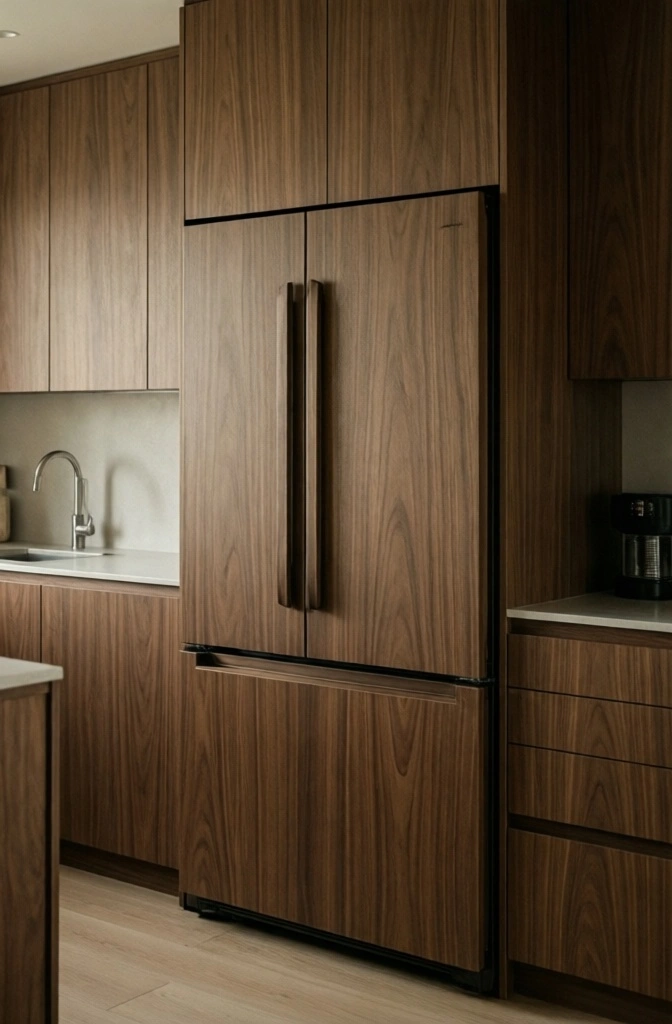
Nothing disrupts the organic harmony of a Japandi home faster than a massive, reflective stainless steel refrigerator dominating the visual plane. Stainless steel is visually noisy; it reflects light harshly, shows every fingerprint, and immediately codes a room as “utilitarian.” In 2026, the absolute baseline for high-end minimalist design is Integrated Cabinetry.
Subscribe to Homeoration!
Get decor ideas, room inspirations & seasonal styling tips.
By subscribing you agree to receive emails & accept our Privacy Policy.Your refrigerator and dishwasher must be procured as “panel-ready” units. These appliances are shipped from the manufacturer without a finished front face. This allows your cabinet maker or contractor to install a custom wood panel over the appliance doors that perfectly matches the surrounding cabinetry.
- The Visual Horizon: When the doors are closed, the kitchen reads as a seamless, unbroken wall of custom woodwork. There are no metallic breaks in the sightline.
- Grain Matching: For true luxury, ensure your cabinet maker uses “book-matched” or “slip-matched” wood veneers for these large panels. This means the organic wood grain flows continuously from the cabinet door above the fridge, straight down through the fridge panel itself, creating a monolithic, highly expensive look. Architectural Digest continuously notes that this level of seamless integration is the defining feature that elevates a kitchen from builder-grade to architectural luxury.
2. Micro-Logistics: The Appliance Garage
Hiding the refrigerator solves the macro-clutter, but what about the daily operational tools? The toaster, the heavy espresso machine, the blender, and the stand mixer cannot live permanently on the counter. Countertop clutter destroys the Ma (negative space) required for the Japandi aesthetic and creates physical friction in your prep space.
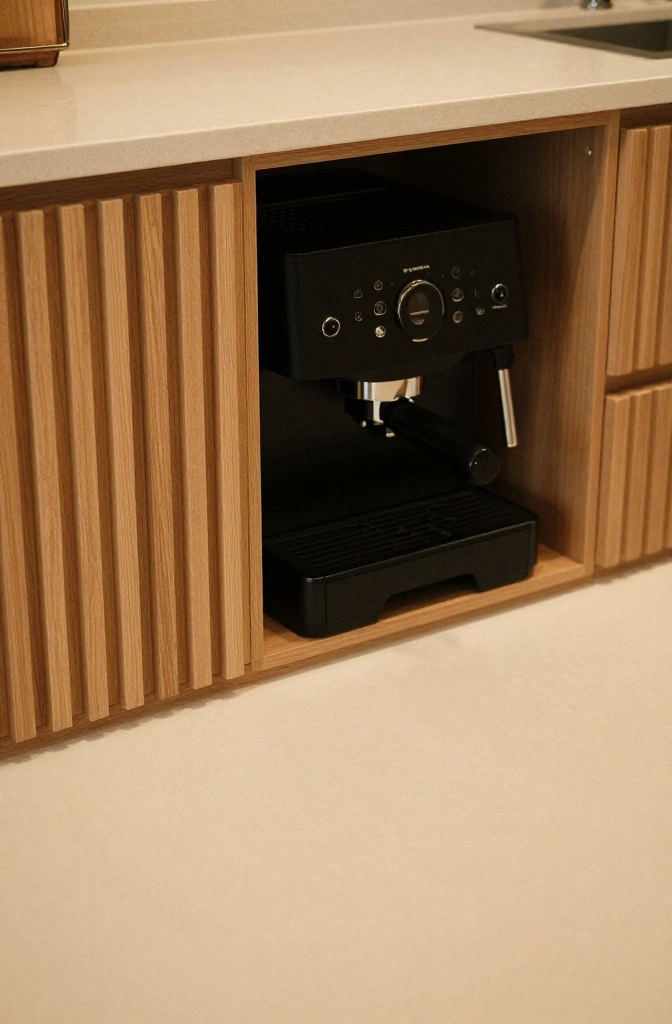
The definitive architectural solution is the Appliance Garage. This is a dedicated, countertop-level cabinet zone designed specifically to house your daily-use machinery.
- The Tambour Door: The most highly sought-after mechanism for an appliance garage in Japandi design is the vertical tambour door. Made of thin, horizontal wood slats attached to a flexible backing, a tambour door rolls up and disappears seamlessly into the top of the cabinet.
- The Workflow: You slide the tambour door up in the morning to access your complete coffee station—already plugged into hidden outlets at the back of the cabinet. When the task is complete, you simply pull the slatted wood door back down. Your honed stone countertops remain 100% empty, flawlessly mirroring the clutter-free discipline we demand for minimalist nightstands.
3. Cabinetry Profiles: The Rejection of the Shaker
The style of your cabinet doors dictates the entire design language of the room. Traditional Shaker-style cabinets (with their recessed center panels and raised frames) belong in a modern farmhouse. High-gloss, handle-less laminates belong in an ultra-modern, clinical loft. A Japandi kitchen relies strictly on two specific, highly tactile cabinet profiles:
- Flat-Panel (Slab) Cabinets: The foundation of the kitchen should be built using completely smooth, flat-panel wood doors. To maintain absolute visual silence, avoid drilling holes for metal handles entirely. Instead, utilize heavy-duty, push-to-open mechanical latches (like the Blum Tip-On system). By eliminating the visual noise of dozens of metal pulls, you keep the horizontal and vertical planes of the wood entirely uninterrupted.
- Vertical Wood Slats (The Fluted Accent): While flat panels provide the serene foundation, a room entirely made of flat wood can feel heavy. We introduce rhythmic texture by selectively using vertical wood slats. Most commonly wrapped around the back and sides of the kitchen island, these thin fluted slats create a beautiful linear shadow-play. This precise texture ties directly into the wood slat acoustic panels often used in Japandi living rooms, creating a cohesive architectural flow throughout the entire home.
4. The Countertop Paradigm Shift: Honed vs. Glossy
For the last decade, the default standard for kitchen renovations has been polished, high-gloss white quartz. However, in the realm of high-end Japandi and minimalist design, highly reflective surfaces are treated as an architectural flaw.
When you install a polished quartz or glossy marble countertop, the surface acts like a horizontal mirror. It catches every single overhead LED light, reflecting a harsh, glaring grid back into the eyes of anyone standing in the room. This constant visual glare causes subconscious eye strain and completely shatters the soft, muted atmosphere we are trying to engineer.
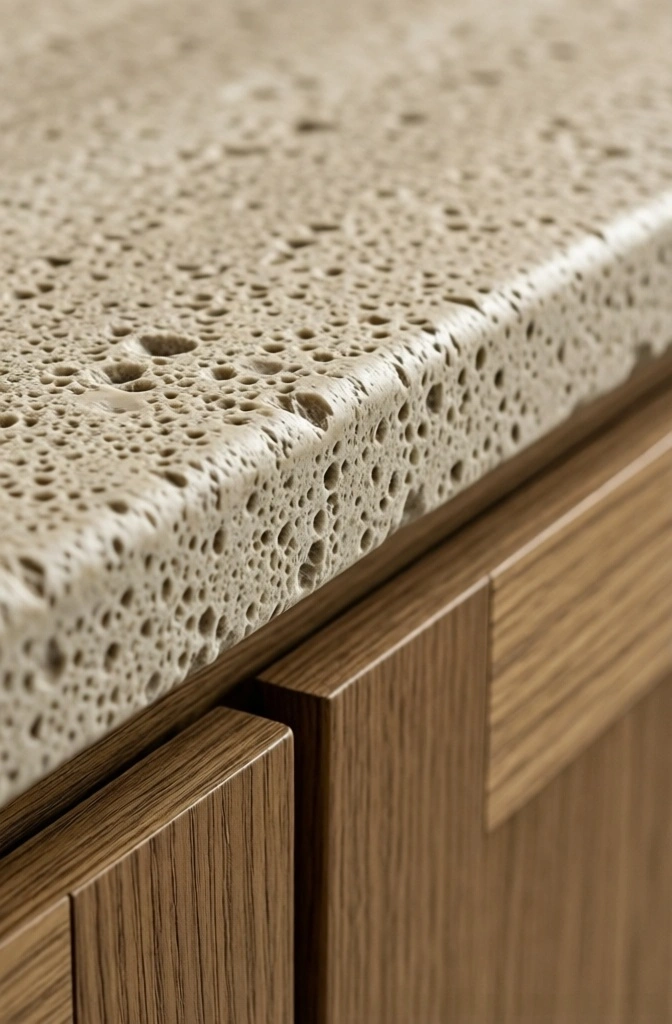
The 2026 standard dictates a strict shift to Honed or Leathered Stone.
- The Tactile Matte Finish: Honed stone has been mechanically ground down to remove the polish, resulting in a completely matte, velvety, soft-touch surface. Instead of reflecting ambient light, honed stone absorbs it. This creates a grounded, deeply restful visual plane that mimics the raw textures found in nature.
- Material Sourcing: For lighter, Scandinavian-leaning Japandi kitchens, source honed beige Travertine or matte Taj Mahal Quartzite. If you are executing a moody, Dark Japandi layout, specify honed Soapstone. Soapstone is naturally non-porous and incredibly dense, offering a deep charcoal hue that develops a beautiful, organic patina as it ages and interacts with the natural oils from your hands.
5. The Seamless Backsplash: Eliminating Visual Gridlock
The material you choose for your countertops must dictate your backsplash. The biggest mistake homeowners make when attempting a minimalist kitchen is pairing a beautiful, expensive stone counter with a standard 3×6 inch subway tile backsplash.
Standard tile introduces hundreds of intersecting grout lines into your sightline. In a Japandi kitchen, grout lines are considered “visual gridlock.” They create a busy, distracting pattern that draws the eye away from the beautiful wood grain of your flat-panel cabinetry.
To maintain the unbroken Ma (negative space) of the room, you must utilize the Continuous Slab Backsplash. Run the exact same honed stone from your countertops directly up the wall, continuing all the way to the bottom of your upper cabinets or floating shelves. This monolithic approach minimizes material transitions, dramatically enlarges the perceived size of the kitchen, and provides a backdrop of absolute visual silence.
6. Hardware as Sculpture: Living Finishes (Commercial Upgrades)
While we highly recommend push-to-open mechanisms for primary cabinetry to maintain a flat visual plane, you may choose to introduce physical hardware for heavy appliances or specific utility drawers. If you do, the hardware cannot be an afterthought. It must act as functional jewelry.
You must strictly avoid shiny chrome, polished nickel, or generic brushed steel. These finishes feel cold, mass-produced, and lack the organic warmth required by the Japandi aesthetic. Instead, invest exclusively in “Living Finishes.”
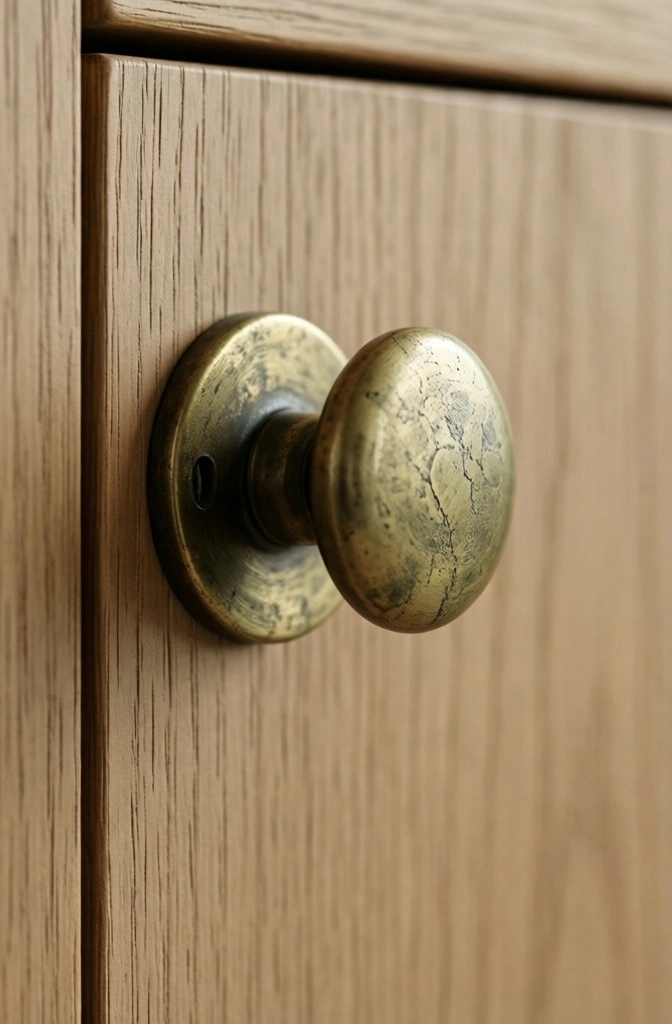
- Unlacquered Brass: This is the crown jewel of Wabi-Sabi kitchen hardware. Unlike standard brass which is coated in a clear plastic lacquer to keep it perpetually shiny, unlacquered raw brass is left exposed to the elements. Over time, the moisture in the air and the oils from your hands will naturally tarnish the metal, turning it into a rich, mottled, deep bronze. This patina process means the hardware ages beautifully alongside your home, a highly coveted interior trait celebrated by elite design publications like Remodelista.
- The Sumi-e Contrast: Alternatively, if your kitchen features very pale ash or oak wood, ultra-thin matte black edge pulls offer a sharp, modern juxtaposition. This mirrors the high-contrast Sumi-e ink-stroke aesthetic we utilized for Japandi bedroom reading sconces, proving that a calculated touch of black is essential to sharpen and ground a neutral room.
7. Sculptural Lighting: Illuminating the Island
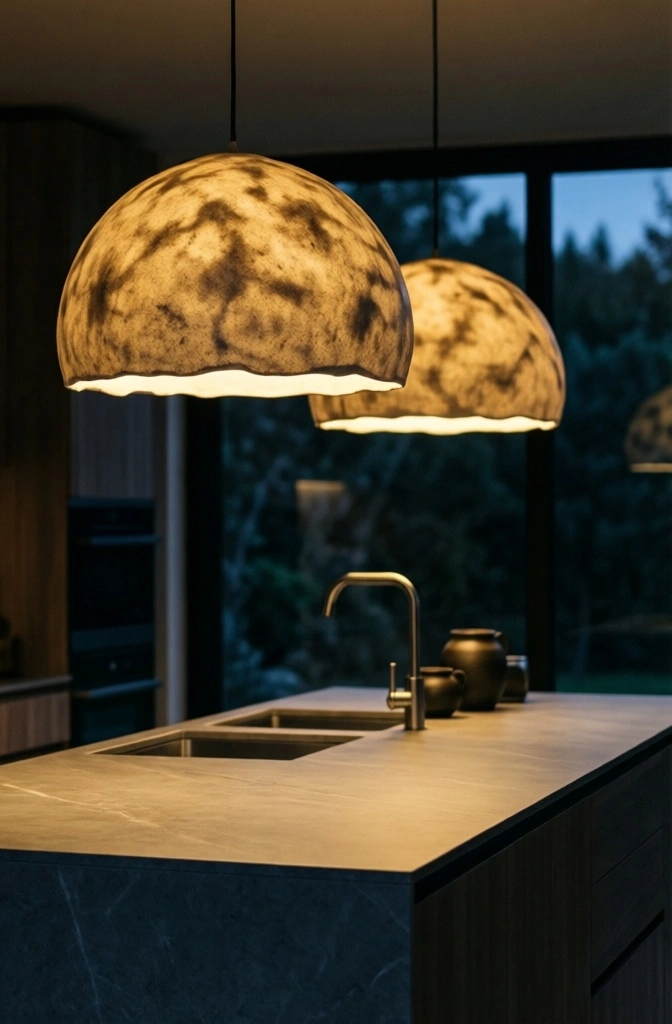
The lighting above your kitchen island is not just for task illumination; in a Japandi kitchen, it serves as the room’s primary art installation. Because the cabinetry and countertops are strictly minimal, you can afford to go bold with your overhead pendants. However, you must apply the exact same circadian lighting principles we engineered for the bedroom to ensure the kitchen transitions seamlessly from a daytime workspace to a nighttime sanctuary.
Avoid transparent glass cloches or industrial metal domes that expose harsh, brilliant LED bulbs. These fixtures create severe visual glare and cast unappealing shadows.
- The Washi Lantern (Ethereal Diffusion): Hang oversized, asymmetrical Washi paper lanterns. The fibrous texture of the paper acts as a massive diffuser, absorbing the glare of the bulb and emitting a soft, omnidirectional glow that casts zero hard shadows across your workspace.
- The Matte Ceramic Dome (Moody Directional Light): If you prefer a more grounded atmosphere, utilize heavy, hand-thrown matte ceramic domes. Because ceramic is opaque, it forces the light strictly downward onto the island surface, leaving the upper half of the room and the ceiling in moody, dramatic shadow.
- The 2700K Rule: Regardless of the fixture, the bulbs must never exceed 2700 Kelvin (Warm White). This amber spectrum signals to the brain that the workday is ending, shifting the energy of the room into a relaxed, communal state.
8. The Plaster-Wrapped Range Hood
A massive, commercial-style stainless steel exhaust hood dominating the wall instantly breaks the visual silence of a Japandi kitchen. It screams “machinery” and forces the eye to focus on utility rather than architecture. To maintain absolute design purity, the ventilation system must be concealed.
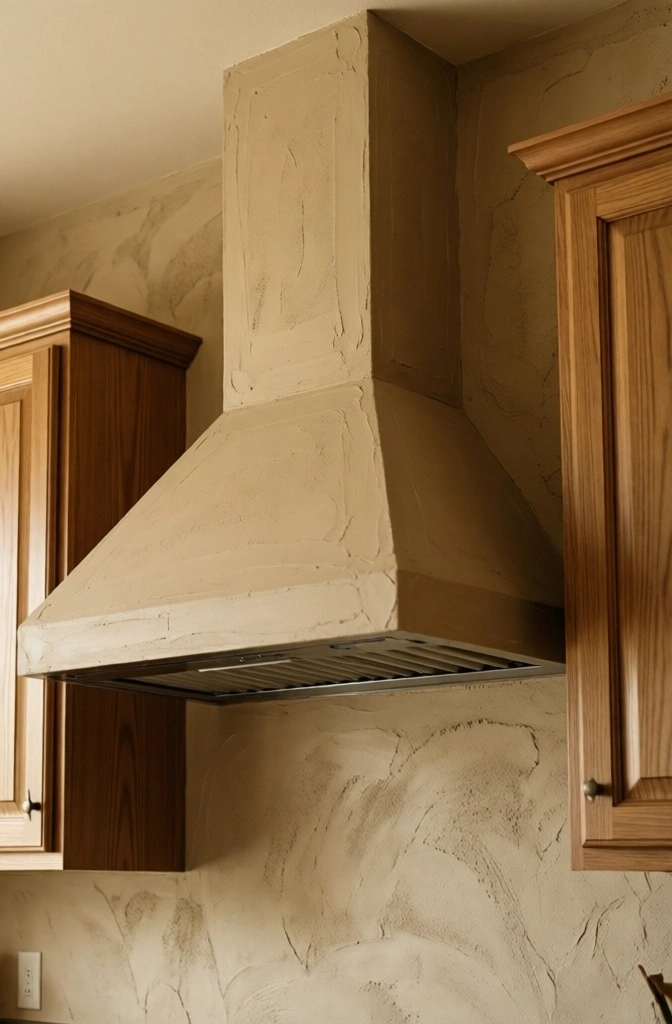
The luxury standard for 2026 is the Plaster-Wrapped Hood. Instead of buying a decorative metal hood, you purchase a raw exhaust “insert.” Your contractor then builds a custom wooden box around the insert, perfectly proportioned to the room. The exterior of this box is then coated in a sand-colored Roman Clay or Tadelakt plaster.
By matching the color and texture of the plaster hood to the surrounding walls, the hood blends seamlessly into the architecture. It transforms from a glaring piece of machinery into a soft, textural, monolithic feature. This technique pairs beautifully with the continuous slab backsplash we discussed earlier, creating a breathtakingly quiet, uninterrupted visual plane above the cooking zone.
Conclusion: A Space for Slow Living
A Japandi kitchen is the ultimate architectural paradox: it is a high-traffic, heavily utilized workspace that manages to feel like a deeply restful meditation room. By meticulously hiding the digital displays of your appliances behind custom wood panels, insisting on tactile, matte materials, and embracing the living patina of natural brass, you transform a purely utilitarian room into the grounded, peaceful heart of your home. It is not just a place to prepare food; it is a meticulously engineered environment designed for slow, intentional living.
Frequently Asked Questions (FAQ)
What makes a kitchen “Japandi” style? A Japandi kitchen blends Japanese minimalism with Scandinavian functionality. It prioritizes warm, raw wood tones (like oak or walnut), matte stone countertops, hidden appliances, and completely clutter-free surfaces to create a visually silent, highly efficient workspace.
Are stainless steel appliances going out of style? In high-end minimalist and Japandi design, exposed stainless steel is being actively replaced by panel-ready, integrated appliances. By covering the refrigerator and dishwasher with custom wood panels, the kitchen achieves a seamless, furniture-like appearance.
What is the best countertop for a minimalist kitchen? Honed or leathered natural stones are the luxury standard. Materials like honed travertine, soapstone, or matte quartzite absorb light rather than reflecting it, eliminating the harsh glare associated with polished quartz or glossy marble.
How do I hide small appliances on my kitchen counter? The most effective architectural solution is an “Appliance Garage.” This is a countertop-level cabinet featuring a retractable tambour or pocket door that completely conceals toasters, espresso machines, and blenders when not in use.
Subscribe to Homeoration!
Get decor ideas, room inspirations & seasonal styling tips.
By subscribing you agree to receive emails & accept our Privacy Policy.
