
The “Green Architecture” Philosophy
Japanese and Scandinavian traditions treat nature differently. Scandinavians want “jungle-like” abundance to fight the winter gray, while the Japanese prefer a single, perfect branch that tells a story. Japandi living room plants sit right in the middle. We aren’t looking for a crowded shelf of succulents; we are looking for “Architectural Greenery”—plants that have a strong silhouette and provide a calm, structural presence. As we established in our Japandi Living Room Ideas pillar, every element must serve a purpose. A plant’s purpose is to soften the hard edges of our minimalism.
1. The Iconic Choice: Ficus Lyrata (Fiddle Leaf Fig)
While some call it “trendy,” I call it a classic. The large, sculptural leaves of a Fiddle Leaf Fig provide a massive block of green that anchors a room.
- Takeaway: To keep it Japandi, choose a specimen with a “Standard” trunk — a single, clean wooden stem — rather than a bushy one. This mimics the clean lines of the matte black lighting we explored in our Japandi Living Room Lighting Ideas guide.
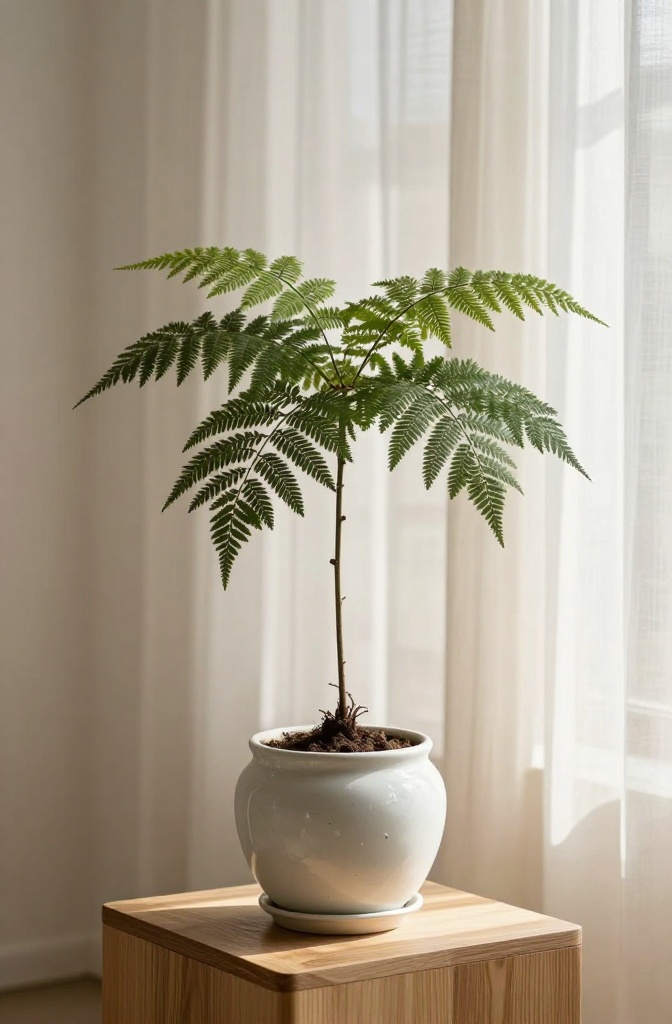
2. The “Cloud” Tree: Ming Aralia
If you want something more delicate and “Zen,” the Ming Aralia is unmatched. Its fine, fern-like foliage looks like a miniature forest. It creates a “misty” visual texture that pairs beautifully with the raw linen and wool textures of Japandi Living Room Rugs. It feels ancient, storied, and perfectly imperfect.
3. The Structural Masterpiece: Dracaena Marginata
With its thin, spindly trunks and sword-like leaves, the Dracaena looks like a calligraphic ink stroke. It’s the perfect companion for a room featuring Japandi Living Room Wall Decor Ideas, as it mirrors the vertical rhythm of oak slats or hanging scrolls.
4. Wabi-Sabi in a Pot: The Bonsai
Nothing says Japanese influence like a Bonsai. However, for a living room, I suggest a “Large-Scale Bonsai” or a Niwaki style tree. It represents the beauty of age and the struggle of nature. It’s a living sculpture that reminds us to appreciate the slow passage of time.
5. The Scandi Staple: Monstera Adansonii
Unlike its giant cousin (the Deliciosa), the Adansonii has smaller, lacy leaves with natural “Swiss cheese” holes. It’s a lighter, more ethereal version of the tropical trend. Let it trail slightly off a walnut shelf to break the horizontal line of the furniture.
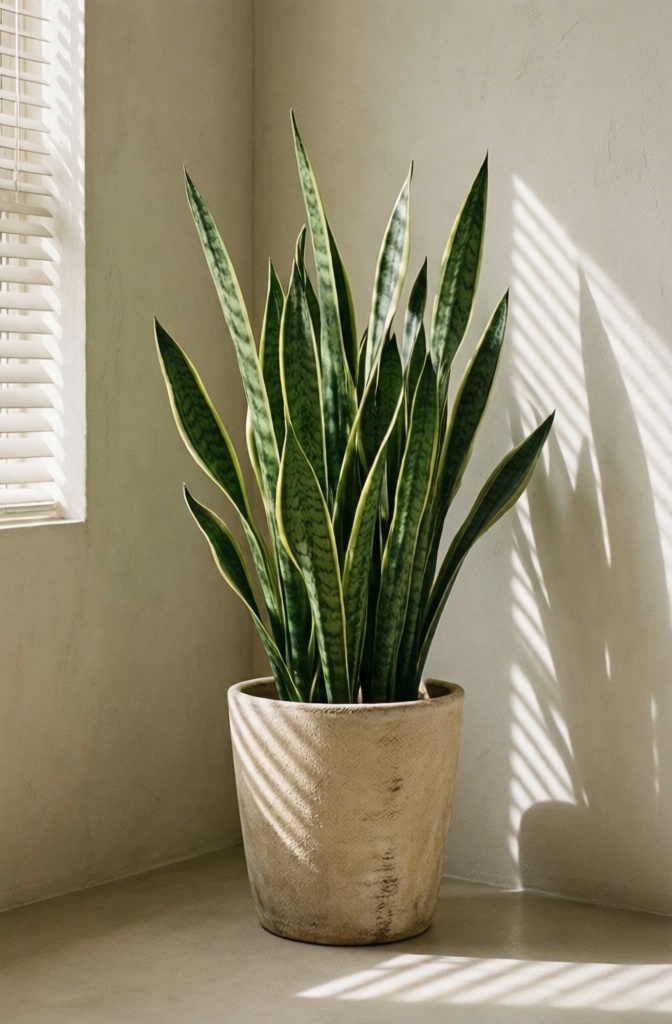
6. The “Negative Space” Plant: Snake Plant (Sansevieria)
If your corner is tight and dark, the Snake Plant is your best friend. Its vertical, sword-like growth takes up very little horizontal space, preserving that precious Ma (emptiness). It’s architectural, virtually indestructible, and acts as a natural air purifier—a fact often highlighted by the Royal Horticultural Society (RHS) in their indoor air quality guides.
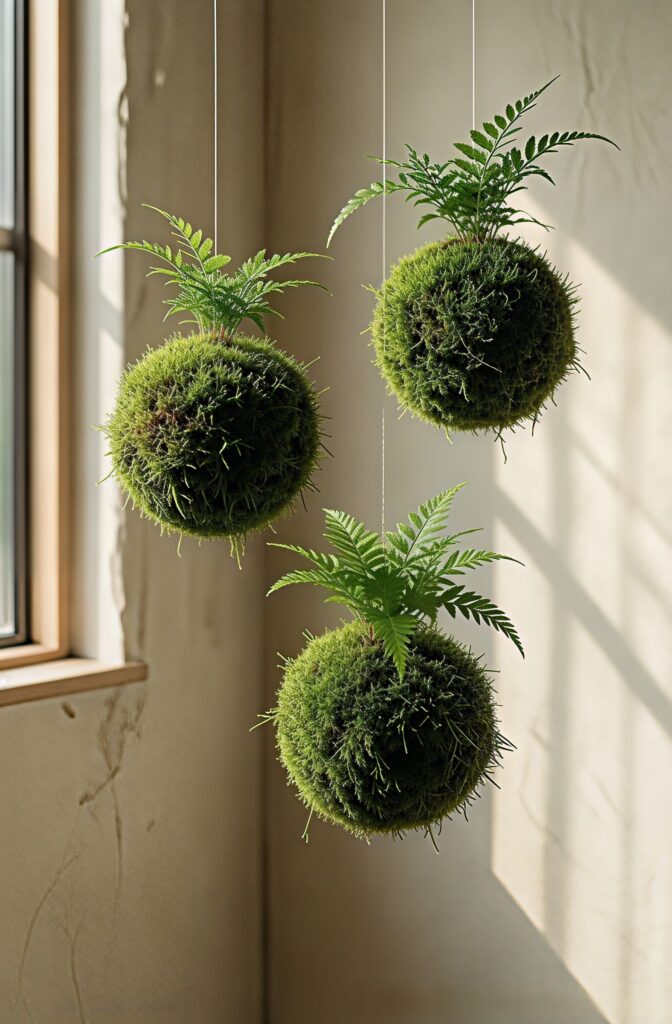
7. Moss as Art: Kokedama
Kokedama is the Japanese art of growing plants in a moss-covered ball of soil. Hanging a few of these at varying heights in a corner creates a “floating garden” effect. It’s a brilliant way to add greenery without using floor space, keeping the room feeling airy and light.
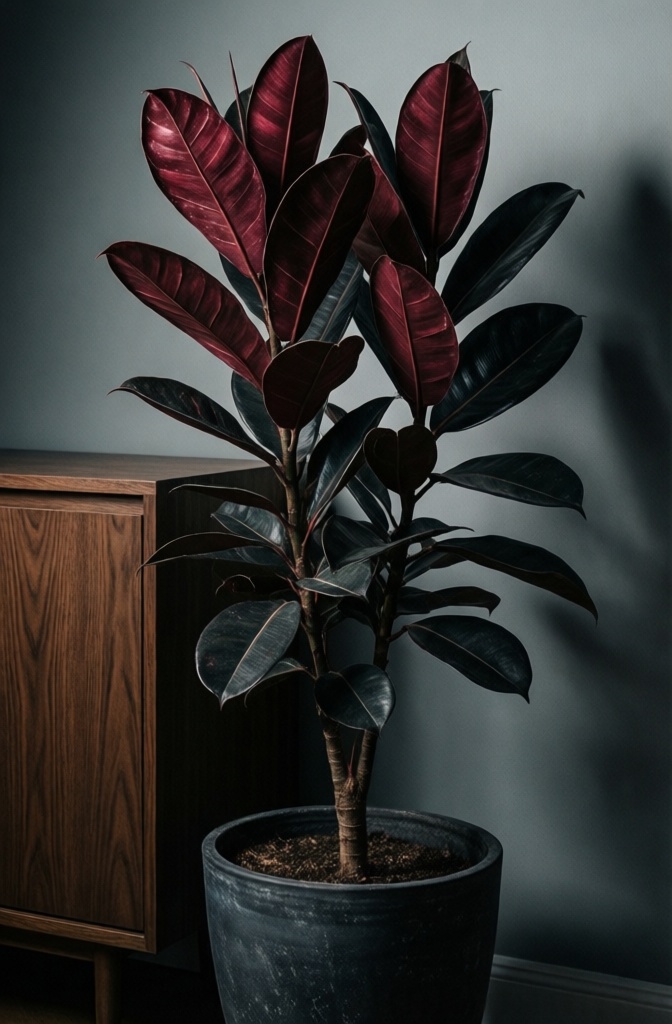
8. The “Dark Japandi” Companion: Rubber Tree (Ficus Elastica)
With its deep, moody burgundy or near-black leaves, the Rubber Tree is the soulmate of a Dark Japandi Living Room. The glossy, dark foliage reflects light in a way that feels expensive and grounded.
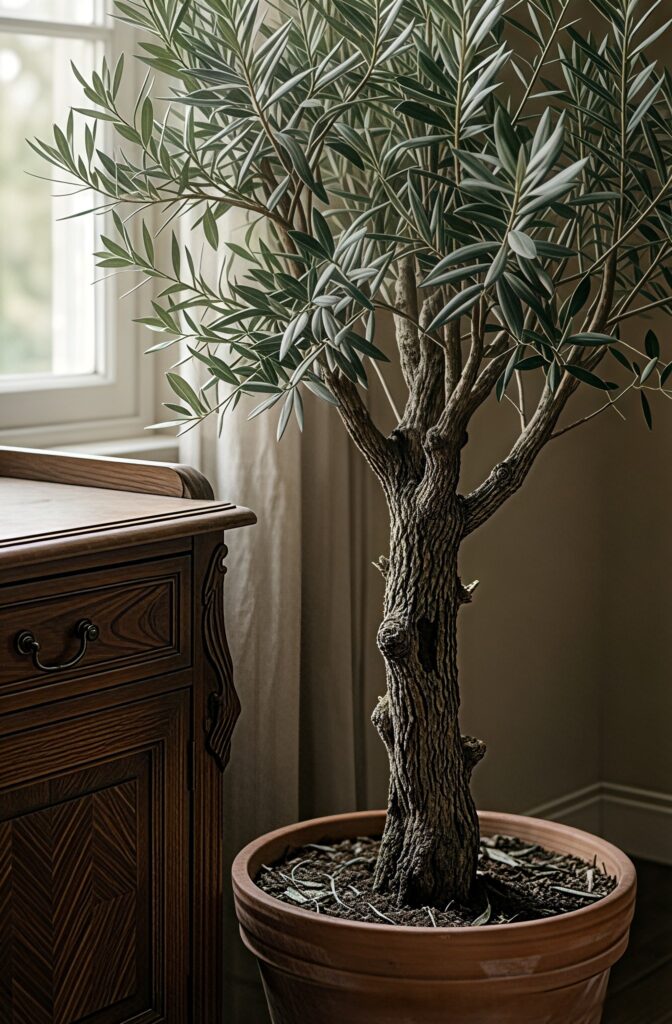
9. The Olive Tree: Mediterranean Minimalism
The silver-green leaves of an Olive tree provide a dusty, desaturated palette that fits perfectly with “muddy” neutral interiors. It’s the ultimate “quiet luxury” plant.
- Note: They need a lot of light. If your living room is dim, go with a high-quality “faux” silk olive tree to maintain the look without the heartbreak of falling leaves.
10. Floating Greenery: Air Plants (Tillandsia)
For the extreme minimalist, Air Plants require no soil. Place them in a simple geometric wire frame or inside a hollowed-out stone. They are “visual whispers”—there, but barely.
11. The Desktop Zen: Lucky Bamboo
Don’t let the name fool you; it’s not actually bamboo. But its straight, segmented stalks provide a wonderful linear element for a coffee table or sideboard. It’s the definition of “Low Maintenance, High Impact.”
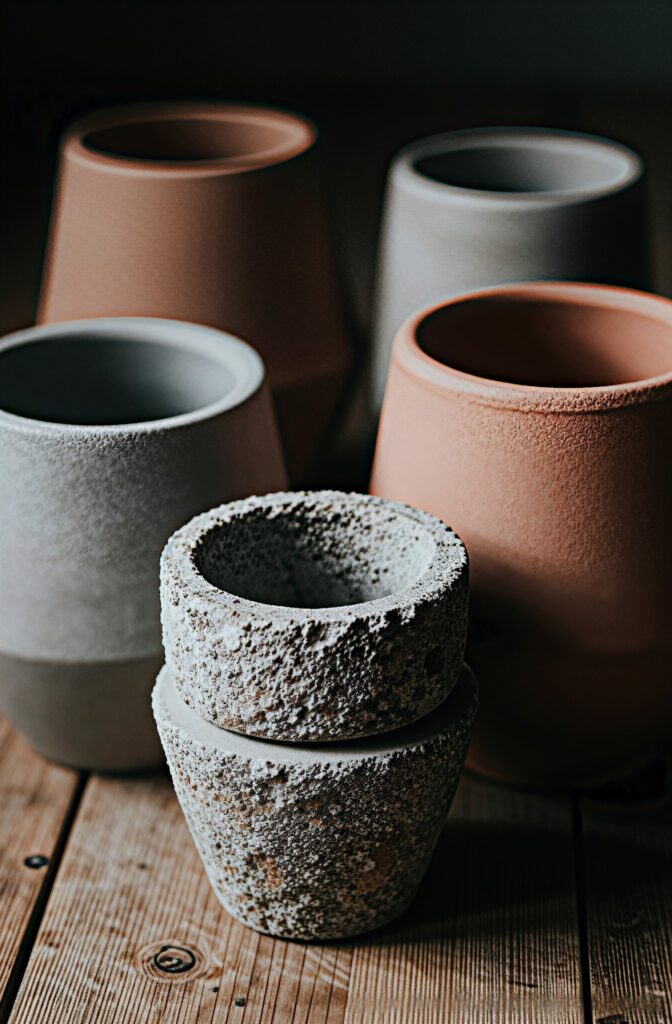
12. Selecting the Right Vessel: Stone and Clay
A 10/10 plant in a plastic pot is a 0/10 design choice. To stay in the Japandi aesthetic, use:
- Materials: Rough-hewn stone, matte terracotta, or unglazed ceramic.
- Colors: Charcoal, sand, or “concrete” gray. The pot should be an extension of the floor, not a distraction from the plant.
Common Mistakes to Avoid
- The “Jungle” Trap: Too many plants create visual “noise.” Stick to 3-5 high-impact pieces rather than 20 small ones.
- Symmetry: Avoid placing two identical plants on either side of a TV. It looks like a hotel lobby. Keep it organic and asymmetrical.

