
The Ground-Up Philosophy: Why Rugs are the “Fifth Wall”
In a well-planned Japandi interior, you never start with the sofa start with the floor. In Japandi design, the rug is the “anchor.” It is the psychological boundary that tells your brain: “This is where the rest happens.” A common mistake I see is choosing a rug that is too small or too “busy.” If your rug has a loud geometric pattern, it’s not Japandi—it’s just mid-century modern. To reach the level of mastery we discussed in our Japandi Living Room Ideas pillar guide, the rug must provide “visual silence” through texture rather than color.
1. The Raw Earth: Jute and Sisal
For the Japanese side of the aesthetic, we lean into raw, plant-based fibers. Jute and sisal rugs bring a golden, earthy tone that perfectly complements the “Dark Japandi” walnut furniture we explored in our Dark Japandi Living Room Ideas guide.
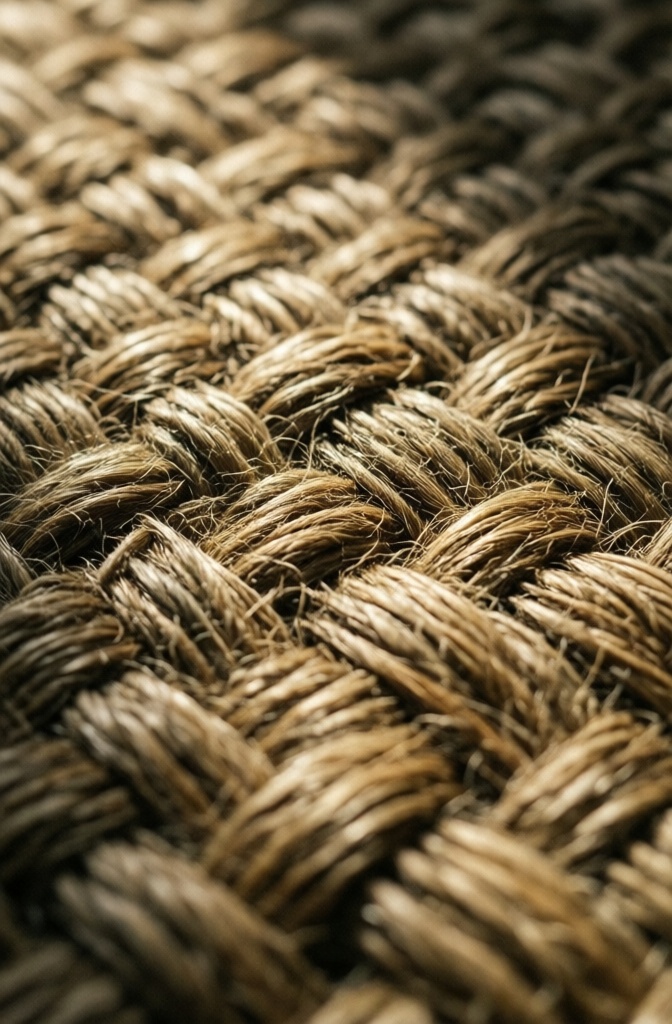
Takeaway: Jute can be rough on bare feet — layer a softer wool or cotton rug on top in a bedroom or seating area where you’re barefoot.
2. The Scandi “Cloud” (High-Pile Wool)
If your living room feels too cold or “clinical,” you need the Scandinavian element of Hygge. A high-pile, cream-colored wool rug (often called a Shaggy or Moroccan-style) provides the warmth needed to balance minimalist furniture.
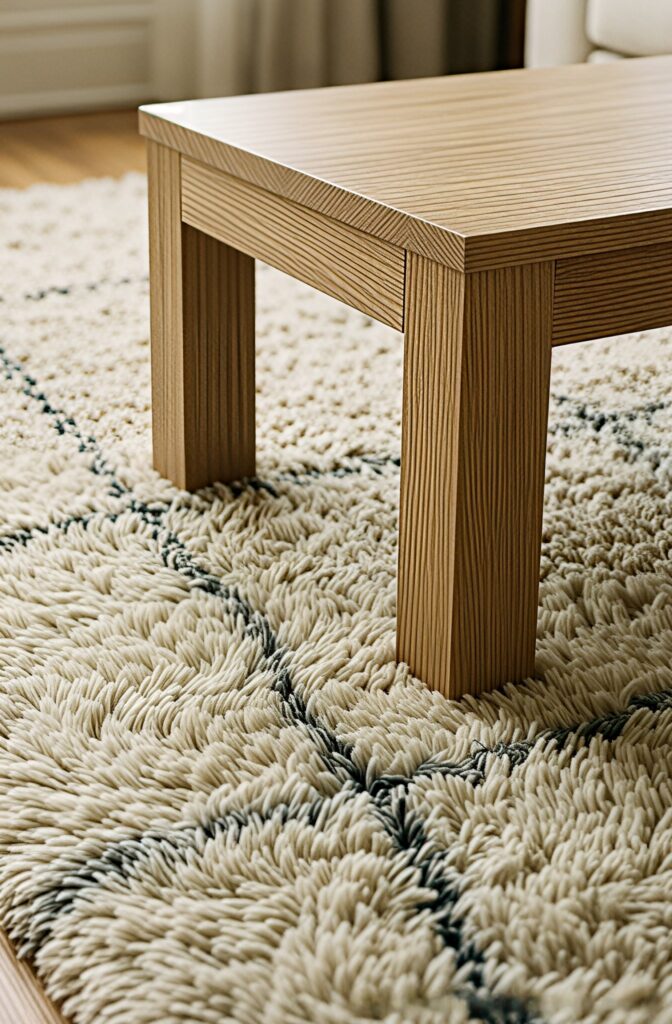
- The Look: Look for “low-contrast” patterns—think charcoal lines on a cream background that look like they were sketched by hand, not printed by a machine.
3. The 2026 Trend: Biomorphic and Fluid Shapes
The “rectangle” is losing its grip on interior design. In 2026, we are seeing a massive shift toward Biomorphic Rugs. These are rugs with organic, flowing edges that look like a puddle or a smoothed river stone.
- Why it works: In a room full of square shelves and rectangular sofas, an organic-shaped rug breaks the “box” and makes the space feel more curated and less “catalog.”
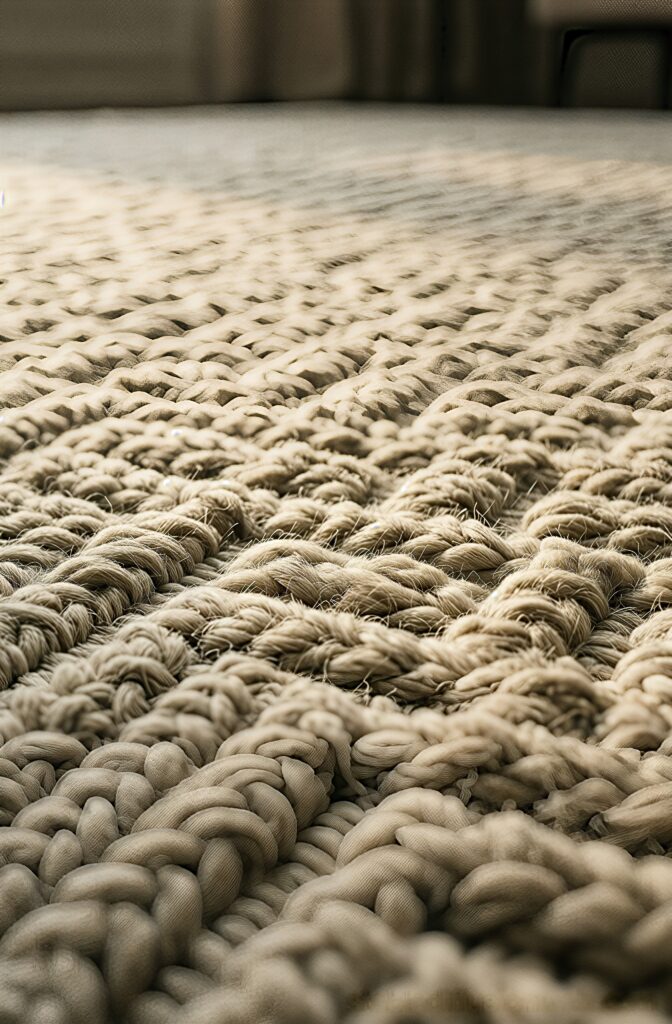
4. High-Low Texture (The “Shadow” Pattern)
How do you make a beige rug interesting? You play with the pile height. High-low rugs use different lengths of wool to create a pattern you can feel rather than just see. This is the ultimate “quiet luxury” move. It captures the light differently throughout the day, much like the Japandi Living Room Wall Decor Ideas we recommended, where the texture is the art.
5. Size Matters: The “Island” Mistake
I see this every day: a beautiful room ruined by a “postage stamp” rug. Your rug must be large enough that at least the front legs of all your furniture pieces sit on it. If the rug is floating in the middle of the room with nothing touching it, the room will feel disjointed and small.
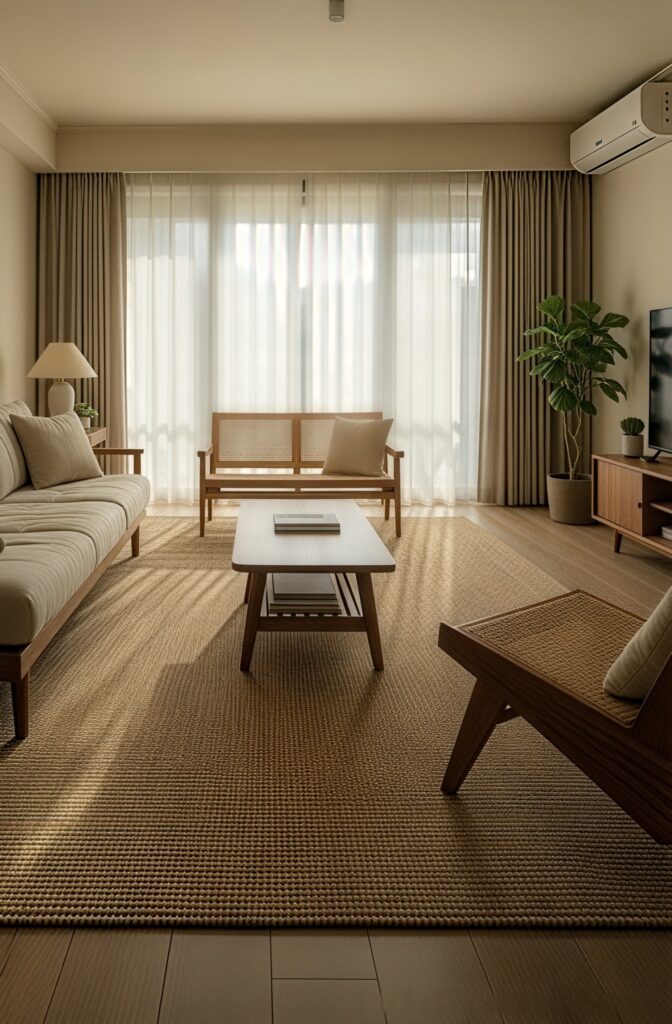
6. The “Muddy” Palette: Gloucester Sage and Clay
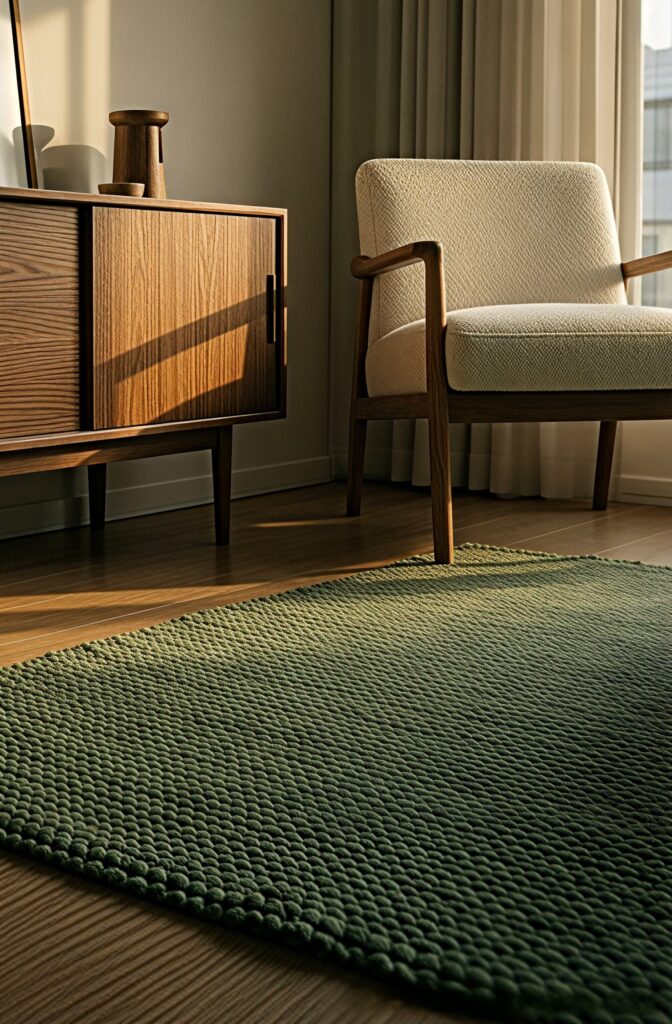
While cream is the standard, don’t be afraid of “muddy” neutrals. A desaturated olive or a deep clay-toned rug can hide the realities of daily life (pets, coffee spills) while still feeling incredibly high-end. This tone-on-tone layering is a staple of Architectural Digest’s recent Japandi features, where color is used as a shadow, not a statement.
7. Layering: The Rug-on-Rug Technique
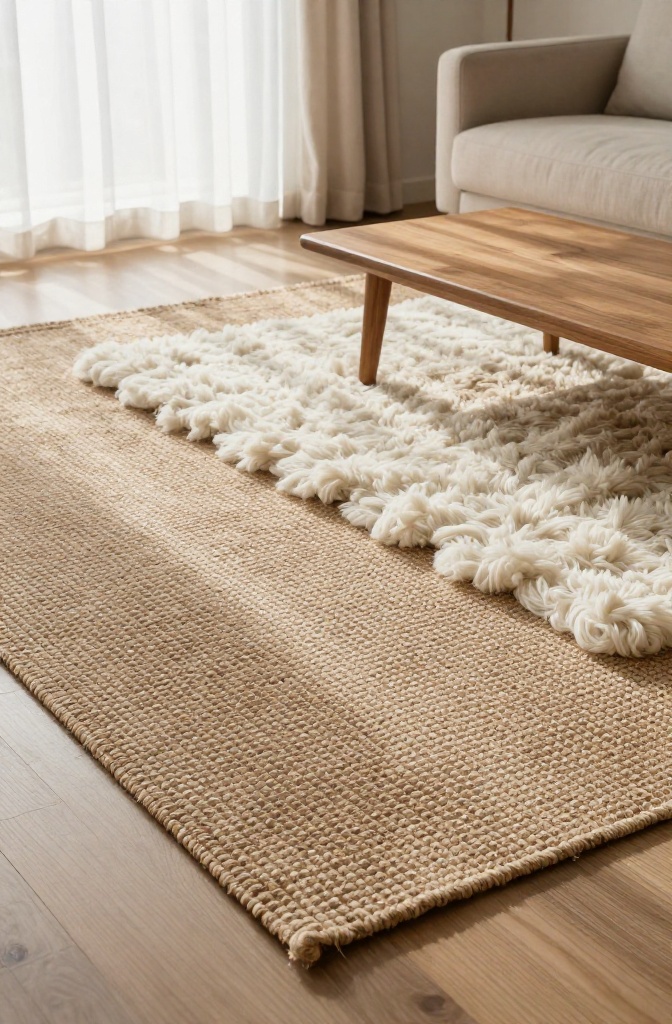
If you have a large space, try layering. Place a large, flat-weave jute rug as the base, and then a smaller, plush wool rug directly under the coffee table area. This adds architectural depth and defines the “inner sanctuary” of the living room. It’s a trick I often use to make massive open-plan lofts feel intimate.
FAQ
Q: Are jute rugs hard to clean? A: They don’t love water. For spills, blot immediately with a dry cloth. For longevity, a natural wool rug is actually the most durable “luxury” choice.
Q: Can I use a rug over carpet? A: Yes, but make sure it’s a low-profile rug to avoid a “tripping hazard” look. It’s a great way to hide generic apartment carpeting.

