
Disclaimer: This post contains affiliate links. If you purchase through these links, Homeoration earns a small commission at no extra cost to you.
There is a reason Scandinavian interior design has never gone out of style. While maximalism surges and retreats, while color trends cycle from millennial pink to terracotta to sage and back again, the Scandinavian living room stays. Calm. Warm. Considered.
I used to think Scandinavian design meant buying everything in bright white, removing all my belongings, and living in a sterile, echoing room. But that was a misunderstanding of the Pinterest trends of the 2010s. Authentic Scandi survives every trend cycle because it was never built on trends. It was built on a philosophy—hygge—the Danish and Norwegian concept of coziness, warmth, and the particular pleasure of being comfortable in your own home.
A room designed around hygge does not ask to be photographed. It asks to be lived in. And that, in 2026, feels more urgent than ever.
This guide covers everything you need to create a Scandinavian living room that is genuinely warm rather than just visually minimal—the furniture proportions, the textile layering, the lighting approach, and the specific ways the style is evolving to incorporate the earthy Japanese influences that are dominating the decade.
- What Scandinavian Living Room Design Actually Means in 2026
- The Scandinavian Living Room Color Palette for 2026
- Scandinavian Living Room Furniture: The 2026 Approach
- Textile Layering: The Most Important Skill
- Lighting: How Scandinavians Solve the Darkness Problem
- Scandinavian Living Room Plants: The Biophilic Layer
- The 2026 Hybrid: Designing the "Warm Minimalist" Room
- Frequently Asked Questions
- The Finished Room: Warm Before It Is Beautiful
- Shop This Look
What Scandinavian Living Room Design Actually Means in 2026
Scandinavian design is not the same thing it was in 2015. The all-white walls, blonde wood, and single succulent on a windowsill aesthetic has evolved into something warmer, more layered, and more human.
In 2026, the design is defined by three shifts:
- From Cool to Warm: The cold, blue-toned whites of early Scandi interiors are being replaced by warm neutrals—greige, clay, oat, and warm putty. A warm white wall with oak furniture feels alive; a cool white wall feels like a showroom.
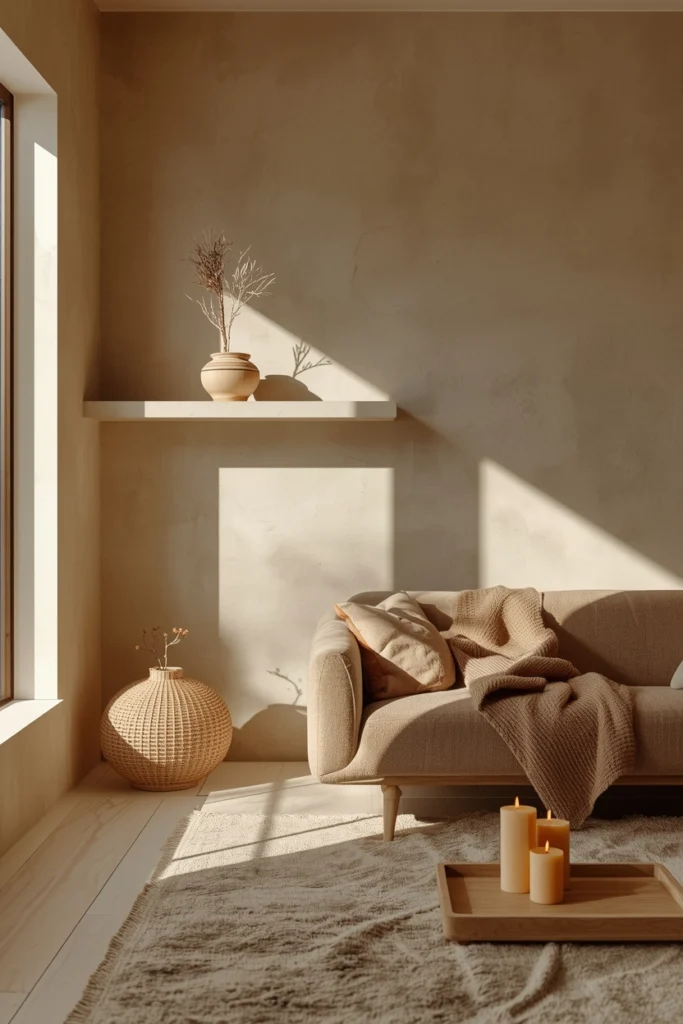
- From Minimal to Layered: Early minimalism removed everything. 2026 Scandinavian design adds back carefully—a chunky wool throw, an extra cushion, a candle cluster on a wooden tray. Hygge cannot exist in a room edited to a sterile minimum.
- From Blonde to Warm Wood: The light ash and birch of the early 2000s are giving way to warmer tones—medium oak, smoked pine, and walnut. The wood is still natural and honest, but it runs warmer.
The Scandinavian Living Room Color Palette for 2026
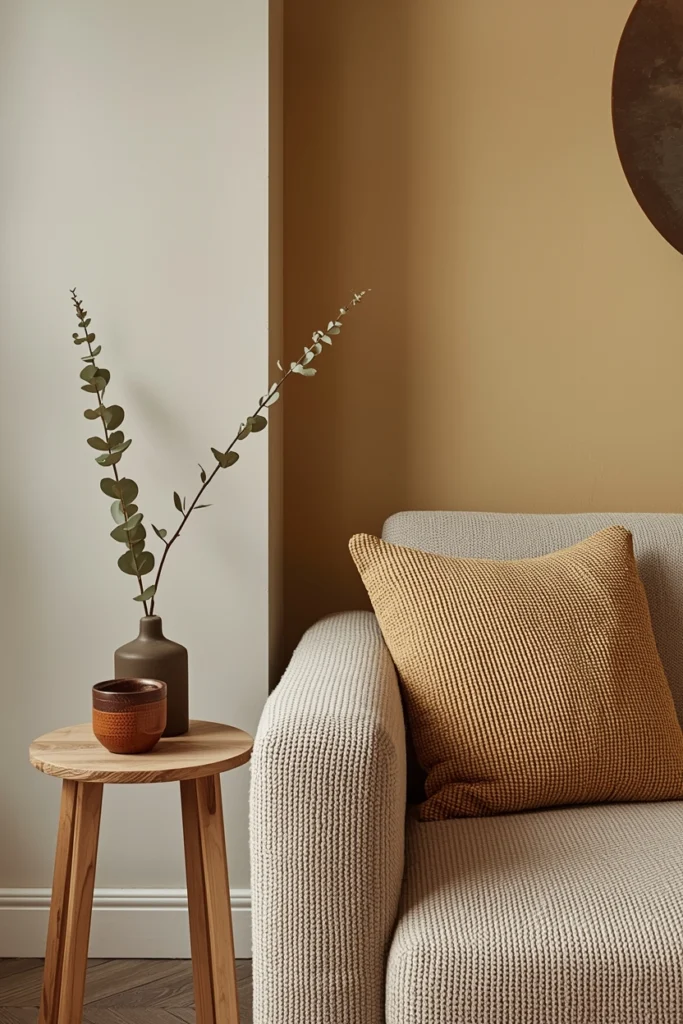
The color palette is where Scandinavian design and Japanese minimalism overlap most significantly—and where most people misread both styles by going too cool. (For a deep dive into specific paint codes, reference our Complete 2026 Japandi Color Palette Guide).
- Walls: Warm white or warm greige as the base. Benjamin Moore White Dove, Sherwin-Williams Alabaster, or Accessible Beige all work. The rule: If the paint and your wood floor look like they belong in the same room, the undertone is correct.
- Textiles: Oat, cream, warm white, charcoal, and one muted accent—soft dusty blue, muted sage, or warm terracotta. Scandi design is more permissive with soft color than strict Japandi.
- The 2026 Addition: Warm terracotta is entering palettes this year. A single terracotta ceramic vase or a rust-toned cushion adds warmth without disrupting the Nordic calm.
The Scandinavian Living Room Formula: Warm greige base + medium oak wood tones + deep-seated linen sofa + 4-layer tactile textiles + 4-source warm lighting + one biophilic plant. That is the complete system.
Scandinavian Living Room Furniture: The 2026 Approach
Scandinavian furniture is built on principles that haven’t changed since the 1950s: honest materials, functional form, human scale, and zero pointless decoration.
The Sofa
The Scandinavian sofa in 2026 is low-profile, deep-seated, and upholstered in natural fabric (linen, bouclé, or wool blend). The legs are solid tapered wood—never chrome.
- The Depth Rule: A sofa with a seat depth of 22 inches is for sitting upright. A Scandinavian living room sofa needs a minimum of 25 inches of seat depth—ideally 27–30—because hygge requires that you can actually curl up in it.
- Top Picks: Article Sven Sofa (the best Scandi-proportioned sofa at a mid-range price), West Elm Shelter Sofa, or the highly customizable IKEA SÖDERHAMN.
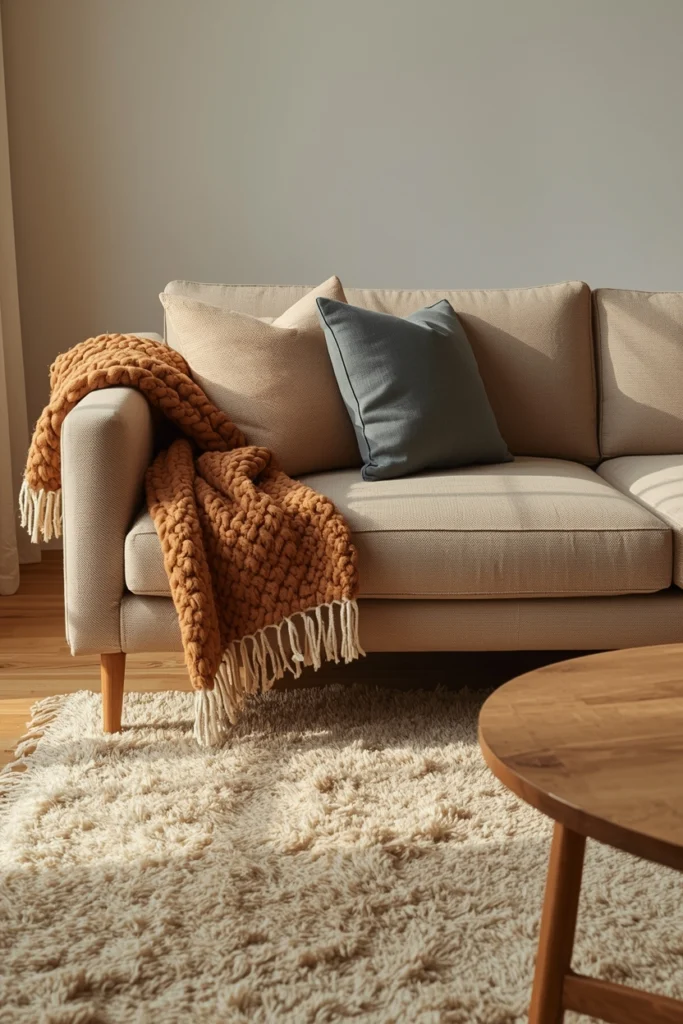
The Coffee Table
It should be lower than you think—ideally 14–16 inches high rather than the standard American 18–20 inches. Lower tables create a relaxed, ground-level feeling central to hygge.
- Material & Shape: Solid wood or a wood/rattan combo. Choose round or oval shapes to eliminate sharp, formal corners and improve traffic flow. Avoid glass tops, which create visual noise and require constant cleaning.
The Armchair
Every living room needs one chair that is clearly the best seat in the room. In 2026, this is a bouclé or wool upholstered chair with wooden arms in natural oak.
- Top Picks: The classic Wegner Wishbone Chair is beautiful but rigid. For actual comfort, look at the CB2 Gwyneth Chair in cream bouclé, or the Article Hygge Chair.
Textile Layering: The Most Important Skill
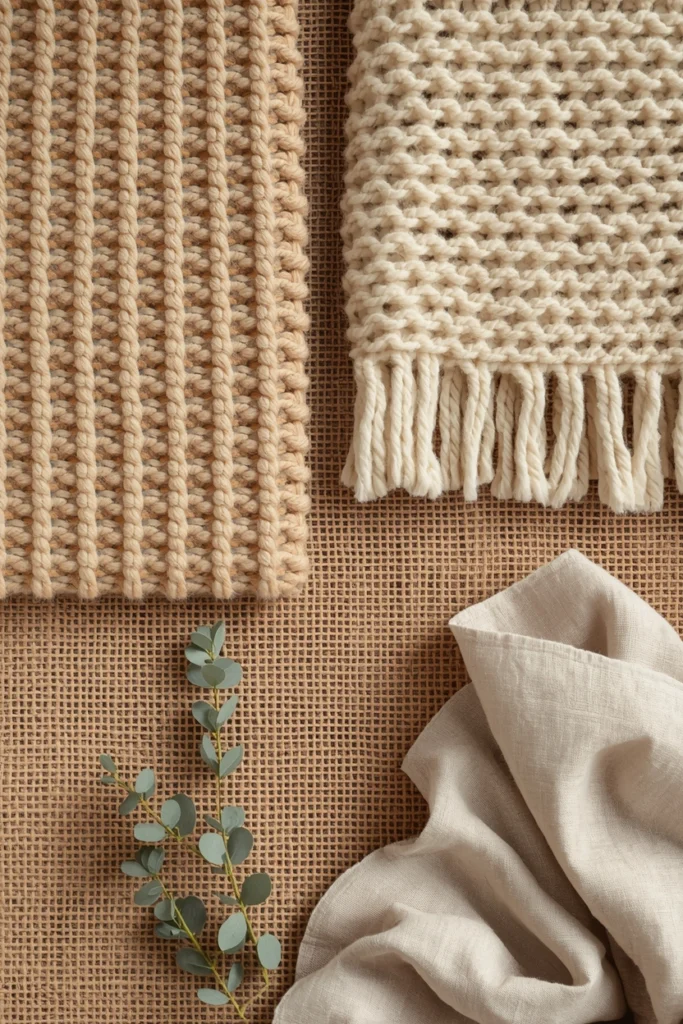
If color is the foundation of a Japandi room, textiles are the foundation of a Scandinavian one. Hygge is primarily a tactile experience. The wrong approach—too few layers, wrong materials—makes even an expensive room feel flat.
- Layer One (The Rug): Always a natural fiber (wool, jute, or a blend). It must be large enough that the front legs of every seating piece sit on the rug. Natural wool with a subtle geometric pattern (diamond or herringbone) reads as texture rather than decoration.
- Layer Two (The Sofa): Linen, bouclé, and wool blend. Bouclé has the highest tactile warmth, linen ages beautifully, and wool blends are the most practical for families.
- Layer Three (The Throw): A chunky knit wool throw is the single most recognizable element of this style. The weight matters as much as the appearance. Look for merino wool or a chunky cotton knit.
- Layer Four (The Cushions): Never symmetrical. Three cushions on a sofa, not four. Two different sizes. One cushion in your accent color, the others in your base neutral.
Lighting: How Scandinavians Solve the Darkness Problem
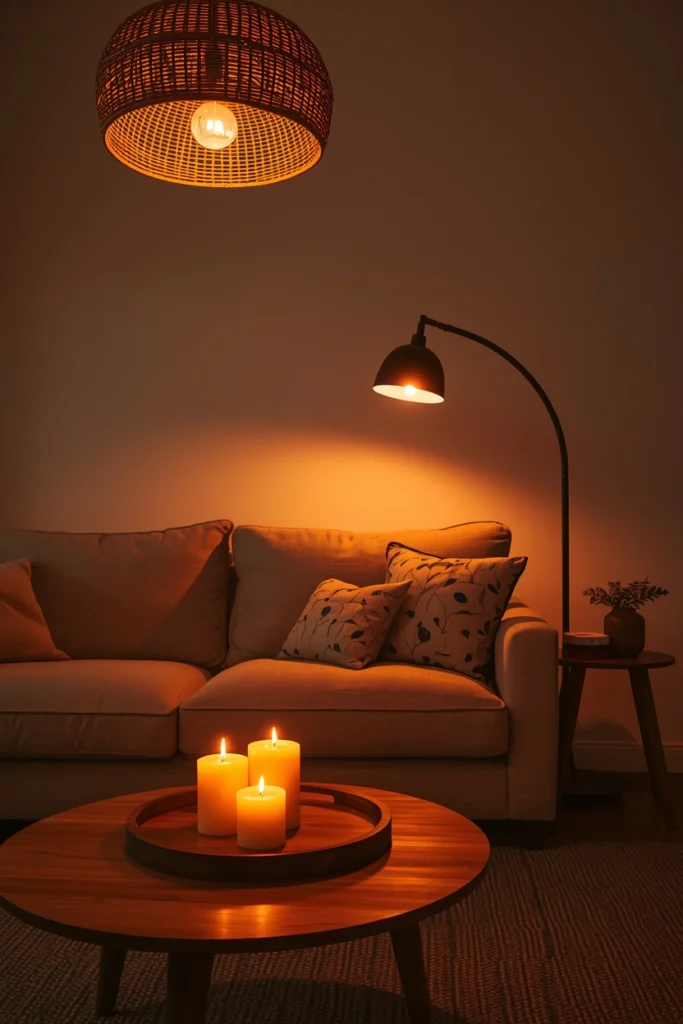
Scandinavians live in darkness for months at a time. The result is the most sophisticated lighting culture in the world. The rule is simple: never use a single overhead light source. Always use at least four.
- Ambient: One organic pendant (rattan, paper, or raw wood) with a warm-toned globe at 2200–2700K.
- Task: One arc floor lamp positioned behind the primary seating. It brings light exactly over your shoulder for reading. The VONLUCE Floor Lamp is an accessible standard.
- Accent (Candles): Non-negotiable. Danes burn more candles per capita than anyone else. The specific warm flicker of candlelight at 1800K is physiologically impossible to replicate with electric light.
- Decorative: Small table lamps operating below eye level to contribute warmth without competing.
Scandinavian Living Room Plants: The Biophilic Layer
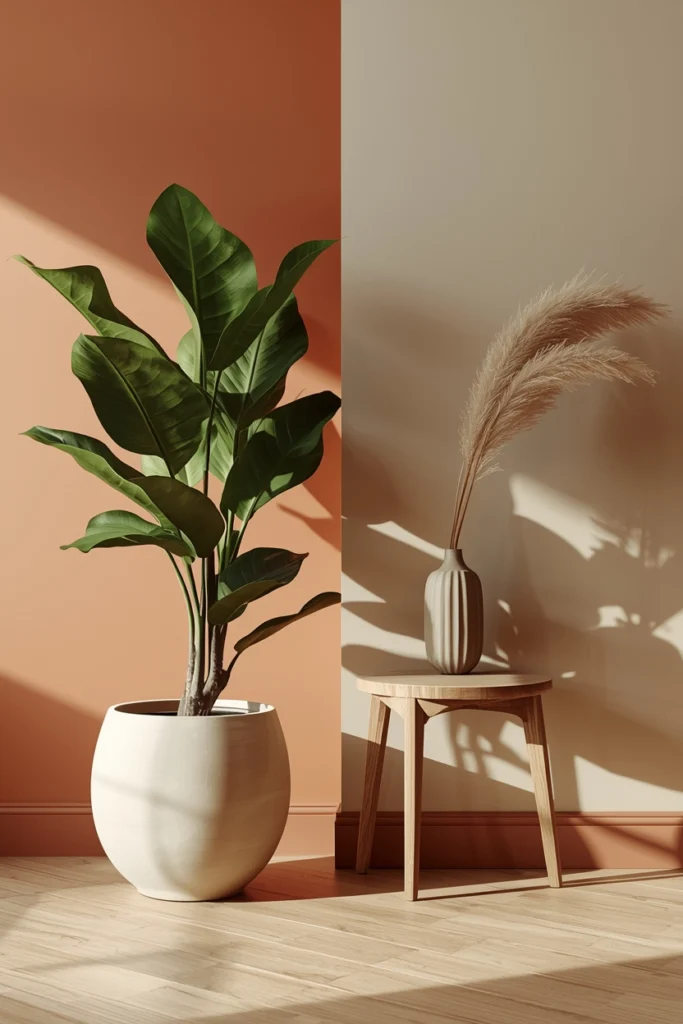
The goal is a connection to the natural world, not the recreation of a greenhouse. In 2026, the approach favors fewer, larger, and more architectural plants.
- Fiddle-Leaf Fig: The dominant statement plant. Dramatic and warm.
- Monstera Deliciosa: Large leaves and graphic silhouettes that tolerate lower light.
- Snake Plant: Virtually indestructible and architectural, fitting the Japandi-Scandinavian overlap.
- Dried Botanicals: Dried pampas, eucalyptus, and cotton stems add wabi-sabi quality without the maintenance. Terrain and Amazon both carry dried pampas bundles in natural and bleached tones—search “dried pampas stem natural” for the most authentic Japandi-Scandi look.
- The Rule for Pots: Always natural—ceramic, terracotta, or woven seagrass. Never plastic.
The 2026 Hybrid: Designing the “Warm Minimalist” Room
Scandinavian design and Japandi are increasingly difficult to separate, converging into what designers call Warm Minimalism.
To design the hybrid room, start with the Japandi color palette (warm greige, natural wood). Add Scandinavian textile depth (chunky throws, wool rugs) to prevent the palette from reading as cold. Light it like a Scandinavian (multiple sources, candles, 2700K). Finally, add one wabi-sabi object—a handmade ceramic or a dried botanical. The result is a highly livable room that defies easy categorization.
Frequently Asked Questions
What is the difference between Scandinavian and Japandi interior design?
Answer: Scandinavian design prioritizes warmth, coziness, and the hygge concept—it uses more textiles, more candlelight, and is more permissive with soft color accents. Japandi is more restrained, with fewer objects and a stronger emphasis on wabi-sabi materials. In 2026, the two are converging into “warm minimalism.”
What colors work best in a Scandinavian living room
Answer: The 2026 palette centers on warm whites and greiges—Benjamin Moore White Dove and Sherwin-Williams Accessible Beige. Accents should be muted: dusty blue, soft sage, or warm terracotta. Avoid cool-toned whites and blue-based grays.
How do I create hygge in my living room?
Answer: Hygge is built through four elements: layered textiles (chunky throw, wool rug), warm layered lighting (pendant, arc lamp, candles operating simultaneously), natural materials (wood, linen, ceramic), and deliberate editing. It is the feeling that results when all four elements work together.
The Finished Room: Warm Before It Is Beautiful
The best Scandinavian living rooms do something that rooms designed for Instagram cannot—they make you want to stay.
Not because they are impressive, but because there is a throw within arm’s reach, a candle burning on the coffee table, and a deep wool rug under your feet. That is hygge. It is a feeling that a room either generates or it doesn’t—and the difference is almost entirely in the layering.
Start with one throw. One candle. One lamp that is not the overhead light. Let the room tell you what it needs next.
Shop This Look
- The Sofa: Morden Fort 3 Piece Boucle Sofa Set. Deep seated, solid wood legs, genuinely comfortable.
- The Throw: SAMIAH LUXE Chunky Knit Blanket Throw. Weight and texture create hygge.
- The Rug: Wool Jute Blend Rug. Size up from what you think you need.
- The Arc Floor Lamp: VONLUCE Floor Lamp. Positions light exactly over the shoulder.
- The Coffee Table: 31″ Round Coffee Table for Living Room Low profile.
- The Candle Cluster: Beeswax Pillar Candles (Set of 3). Natural beeswax burns cleaner and warmer than paraffin.
- The Bouclé Cushion: Oat Bouclé Cushion Cover. The highest-tactile-warmth material available.
- The Statement Plant: Fiddle Leaf Fig via The Sill. One large specimen in a ceramic pot.

