
The Threshold of Rest
In architectural design, the final 5% of a room is where the atmosphere is truly forged. You have established the low-profile foundation with your Japandi bed frame, layered the tactile warmth of your earth-toned bedding, and regulated your circadian rhythm with warm, low-horizon lighting.
Now, we must address the room’s “Vibration.” Zen bedroom decor is not about acquiring more items to fill empty corners; it is about ruthlessly editing your space until only objects that radiate quietness remain. These principles of visual silence extend far beyond the Japandi aesthetic—they are the baseline for any sophisticated, restorative interior design style. Every piece you add must pass the “Nervous System Test”: does this object lower your heart rate, or does it demand your attention?
1. The “One-Object” Dresser Rule
The top of a bedroom dresser is universally a magnet for daily clutter—receipts, loose change, and assorted bottles. To achieve a Zen aesthetic, we implement the strict “One-Object” rule.

Subscribe to Homeoration!
Get decor ideas, room inspirations & seasonal styling tips.
By subscribing you agree to receive emails & accept our Privacy Policy.Keep the surface of your dresser 90% empty, reserving the space for a single, high-quality, large-scale object. Whether it is a heavy travertine tray, a single branch in a ceramic vase, or a piece of minimalist wall decor leaning casually against the wall, this extreme restraint creates a “Visual Clearing.” It mimics the unbroken horizon line of the ocean, which psychological studies on neuroarchitecture confirm is inherently soothing to the human brain.
2. Wabi-Sabi Ceramics: The Beauty of the Crack
When selecting that single object, avoid factory-perfect, mass-produced items. A Zen space requires the human touch.
Seek out a hand-thrown ceramic vase or bowl with an irregular rim, a gritty texture, or even a visible repair using the Kintsugi method (mending breakage with gold). This celebrates the Wabi-Sabi ethos—finding deep beauty in the imperfect and the impermanent. It reminds the subconscious mind that a home is a living space, not a sterile showroom.

3. Smoked Incense and Olfactive Anchors
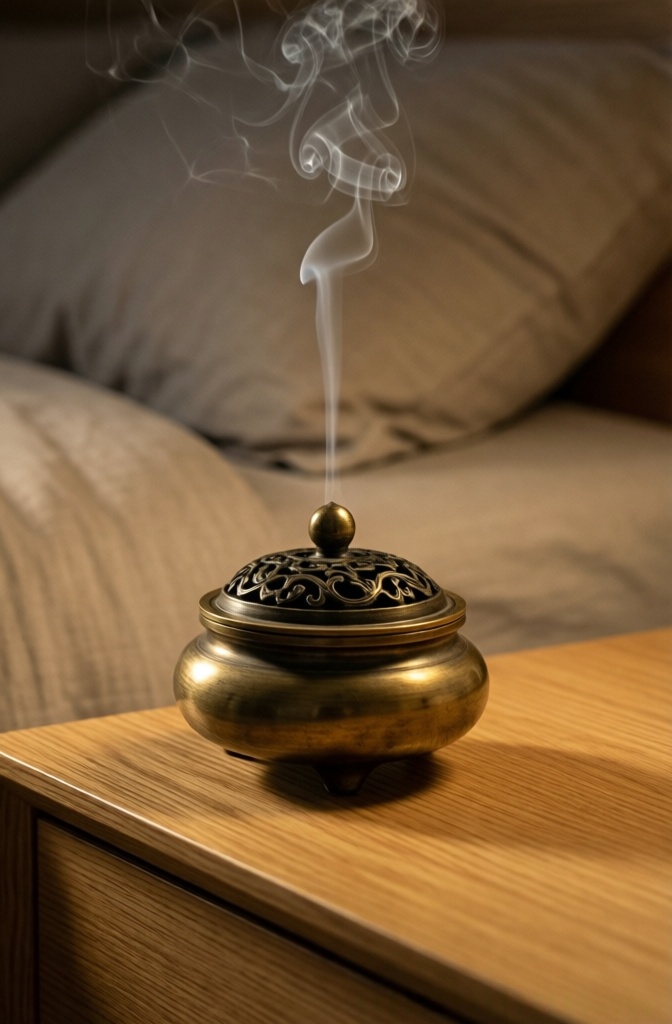
Decor is not entirely visual; it is a 360-degree sensory experience. A beautifully crafted, minimalist brass or raw stone incense burner serves as both a sculptural decor piece and an olfactive tool.
The scent of Hinoki (Japanese Cypress), Sandalwood, or deep Cedar provides an earthy anchor. As you watch the thin, unhurried wisp of smoke rise from the burner on your clutter-free nightstand, your breathing naturally begins to mirror its slow, rhythmic pace. It is a functional piece of decor that actively transitions your mind from the workday to the evening.
4. Small-Scale Biophilia: Moss and Stone
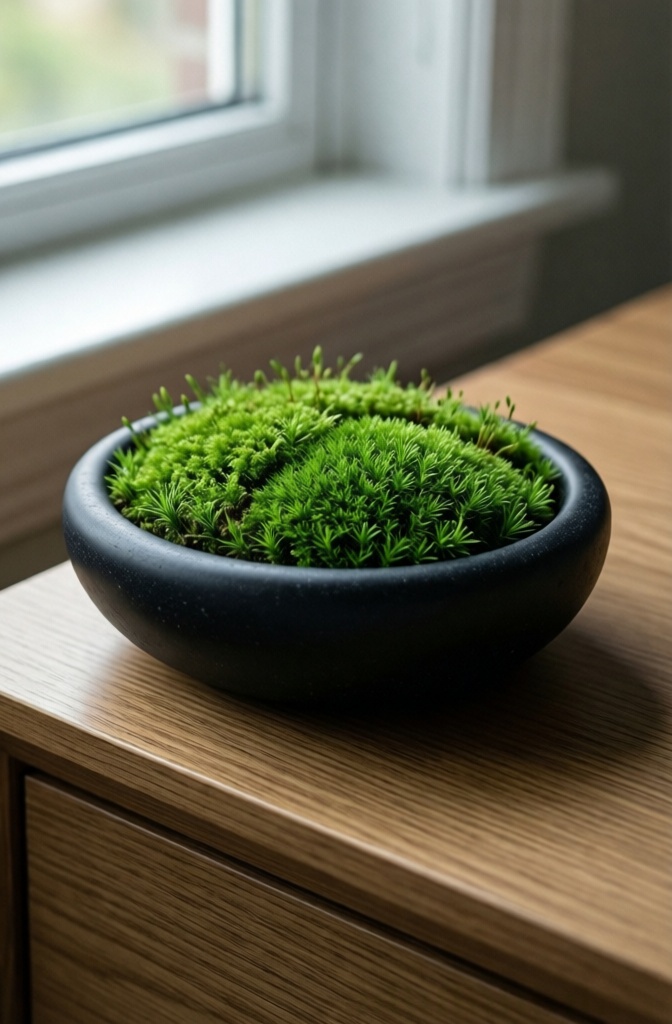
While we utilized large, architectural statement trees like the Ficus Lyrata in our guide to Japandi living room plants, the bedroom requires “Quiet Greenery.”
Large, sprawling plants can sometimes cast imposing shadows at night and feel chaotic. Instead, introduce biophilia on a micro-scale. A small, shallow bowl filled with dense, preserved green moss, or a single, perfectly smooth black river stone placed on a bedside shelf acts as a grounding natural totem. It brings the outdoors inside with a whisper rather than a shout.
5. Acoustic Softening: Heavy Linen and Jute
Visual silence requires actual, auditory silence. Hard, empty, minimalist spaces often suffer from “echo,” which makes a room feel cold and commercial.
Your decor must absorb sound. Layering heavy, floor-to-ceiling linen curtains does more than just diffuse the morning light; it significantly dampens the acoustic reverberation of the room. Pair this with a thick, hand-knotted wool or jute rug placed under the bed. By softening the acoustics, you create a cocoon-like environment that feels insulated from the chaotic outside world, a technique highly prioritized by top hospitality designers creating luxury wellness retreats.

6. The Analog Clock: Reclaiming Time
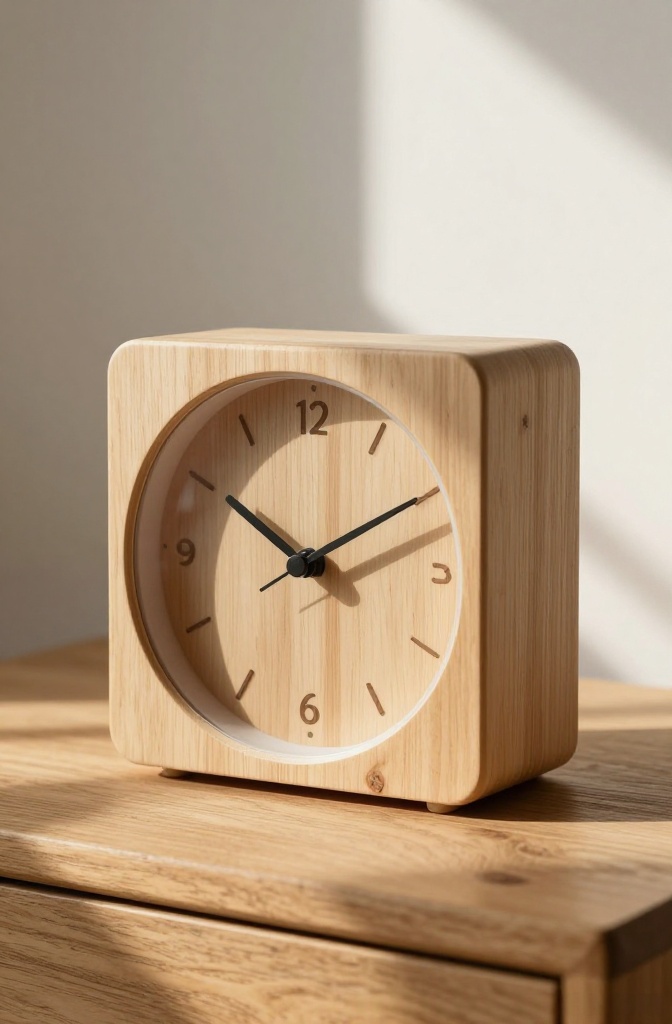
The final piece of Zen bedroom decor is an act of subtraction. Remove the digital, glowing numbers of a smartphone or smart-screen from your bedside.
Replace it with a completely silent, analog wooden or ceramic clock—or simply choose to have no clock at all. Reclaiming your bedroom from “Digital Time” and the constant notification cycle is the ultimate luxury. It establishes a firm boundary, turning the bedroom into a sanctuary where time slows down to match your body’s natural rhythm.
Conclusion: The Completed Sanctuary
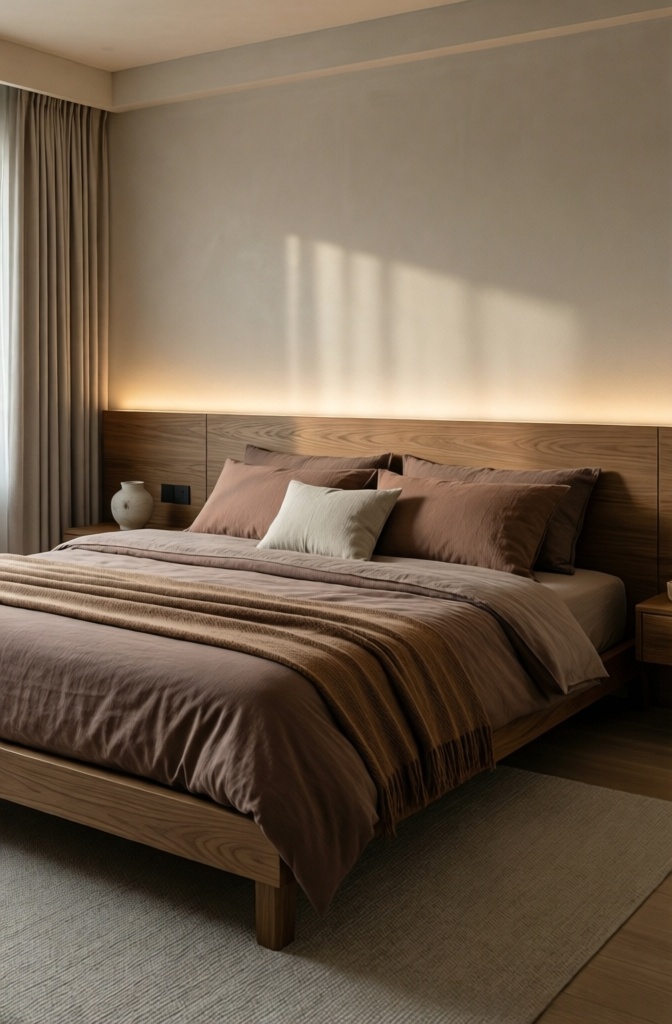
Achieving Zen bedroom decor is an exercise in profound restraint. It is about understanding that empty space (Ma) is a decorative element in itself. By selecting a few highly tactile, meaningful pieces—like Wabi-Sabi ceramics, acoustic linens, and analog touches—you finalize a space that doesn’t just look beautiful, but actively heals you.
Subscribe to Homeoration!
Get decor ideas, room inspirations & seasonal styling tips.
By subscribing you agree to receive emails & accept our Privacy Policy.
