
The “Last View” Philosophy
In luxury residential design, the nightstand is arguably the most dangerous square foot in the bedroom. It is the natural accumulation zone for “clutter creep”—charging cables, half-empty water glasses, and stacks of unread books. If the last thing you see before closing your eyes is a chaotic pile of to-do lists, your nervous system begins the night in a state of stress.
The Japandi approach treats the nightstand not as a storage unit, but as a “Digital Altar.” It is a boundary. While your low-profile Japandi bed frame anchors the room, the nightstand provides the functional “breathing room” around it. By applying the Japanese concept of Ma (negative space) to the bedside, we ensure the transition into sleep is seamless, architecturally clean, and deeply restorative.
1. The Floating Nightstand (Visual Levitation)
For small to medium-sized bedrooms, the “Floating” nightstand is a non-negotiable design standard. By mounting the table directly to the wall and eliminating the legs, you keep the floor line entirely unbroken.

Subscribe to Homeoration!
Get decor ideas, room inspirations & seasonal styling tips.
By subscribing you agree to receive emails & accept our Privacy Policy.This architectural trick tricks the eye into perceiving the room as significantly larger than its actual footprint. It aligns perfectly with the clean verticality of minimalist wall decor, removing the visual “noise” of extra furniture legs and allowing the natural wood grain or textured rug below to shine uninterrupted.
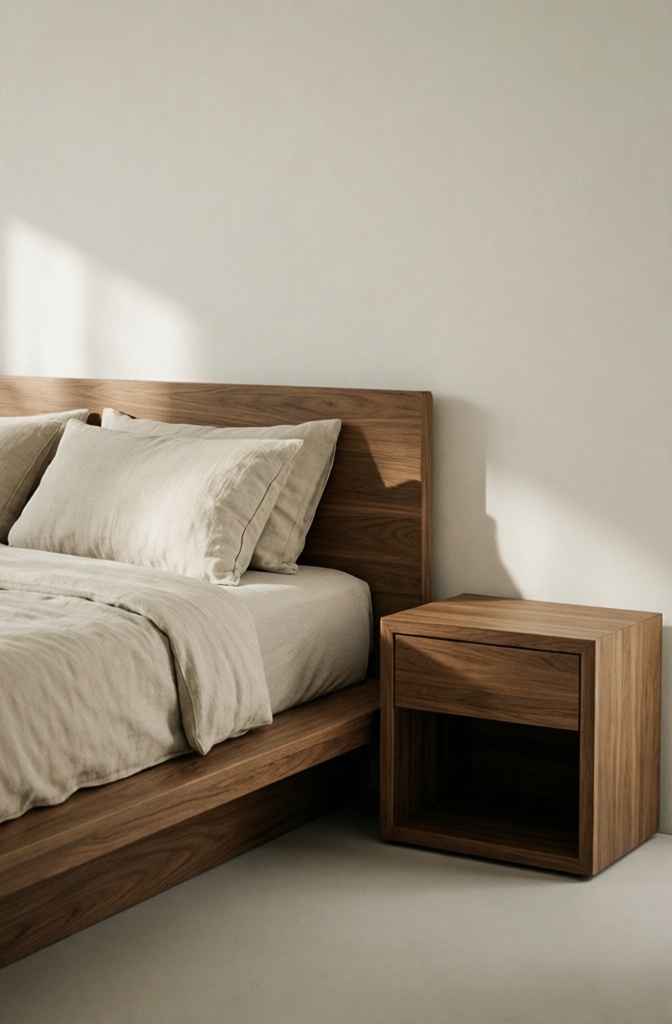
2. Material Honesty: Oak, Walnut, and Stone
Your nightstand should converse with your bed, but it does not have to be an identical, catalog-matched set. In fact, slightly contrasting materials elevate the room from a basic setup to a curated, high-end design.
If you have a light ash or oak platform bed, consider pairing it with a slightly darker wood grain for the nightstand to add depth. As we look at broader interior design trends for 2026, we are seeing a massive rise in Travertine and Wood combinations. The cold, porous nature of honed travertine stone balanced by the warmth of natural walnut or oak is the ultimate expression of tactile minimalism, a concept frequently championed by leading design publications like Yellowtrace.
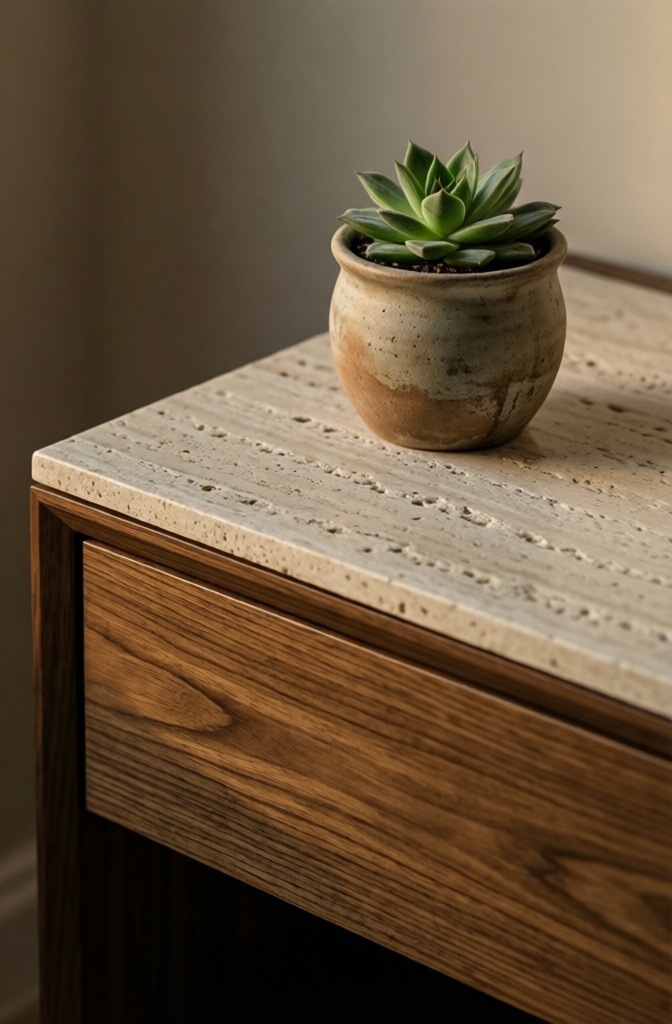
3. The “Curated Three” Styling Method
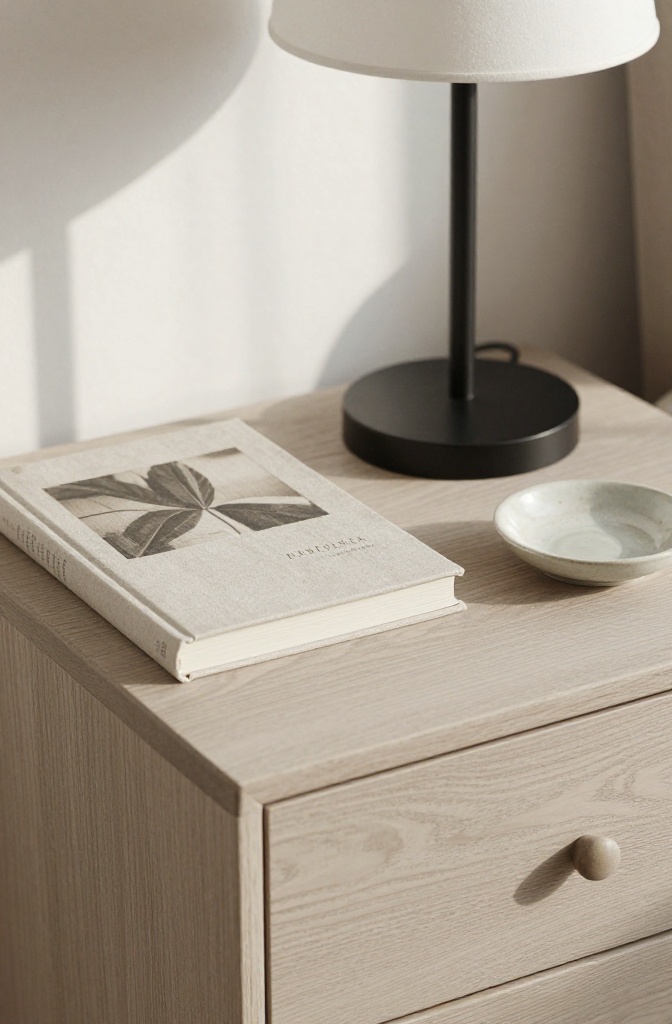
How do you style a nightstand without it looking sterile or messy? Interior designers use the Rule of Three. A beautifully styled Japandi nightstand requires only three specific elements to feel complete:
- A Vertical Element: A slim, architectural reading lamp or a single tall branch in a ceramic vase to draw the eye upward.
- A Horizontal Element: One high-quality, beautifully bound design book or journal (never a towering stack).
- An Organic Element: A small, hand-thrown ceramic bowl or a smooth stone to act as a catch-all for jewelry.
This strict curation ensures that the surface remains 80% empty, preserving the visual silence required for true Zen bedroom decor.
4. Hidden Storage: The “Digital Detox” Drawer
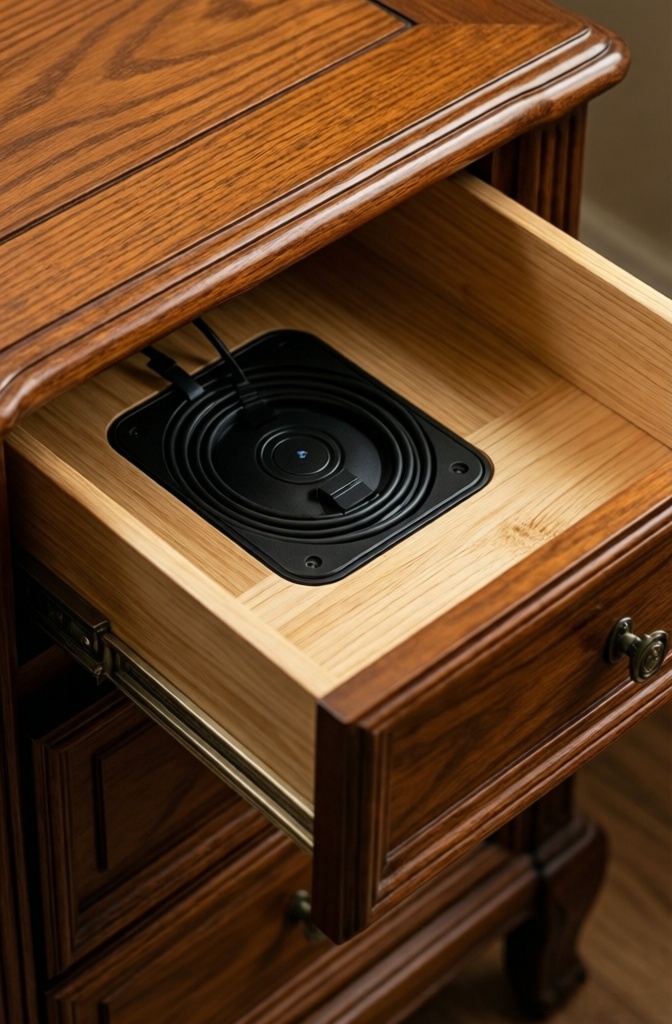
A beautiful nightstand is useless if it is instantly covered in tangled white charging cords. In 2026, the best minimalist nightstands feature dedicated “Hidden Ports” or cable management systems routed through the back of a drawer.
The goal is to keep technology entirely out of sight. Sleep psychologists universally agree that the presence of glowing screens and digital devices severely disrupts melatonin production. By designating your nightstand drawer as a “Digital Drop Zone,” your phone charges out of sight, and the surface of your table remains reserved for analog, restorative items like a glass of water and a linen sleep mask.
5. Low-Profile Heights
A common and jarring design mistake is choosing a nightstand that towers over the mattress. For a cohesive, luxurious look, the top of the nightstand should be exactly level with or slightly lower than your sleeping surface.
This strict horizontal alignment maintains the grounded feeling we established in our guide to layering Japandi bedding. It creates a continuous visual horizon line across the room, which subconsciously lowers the heart rate.
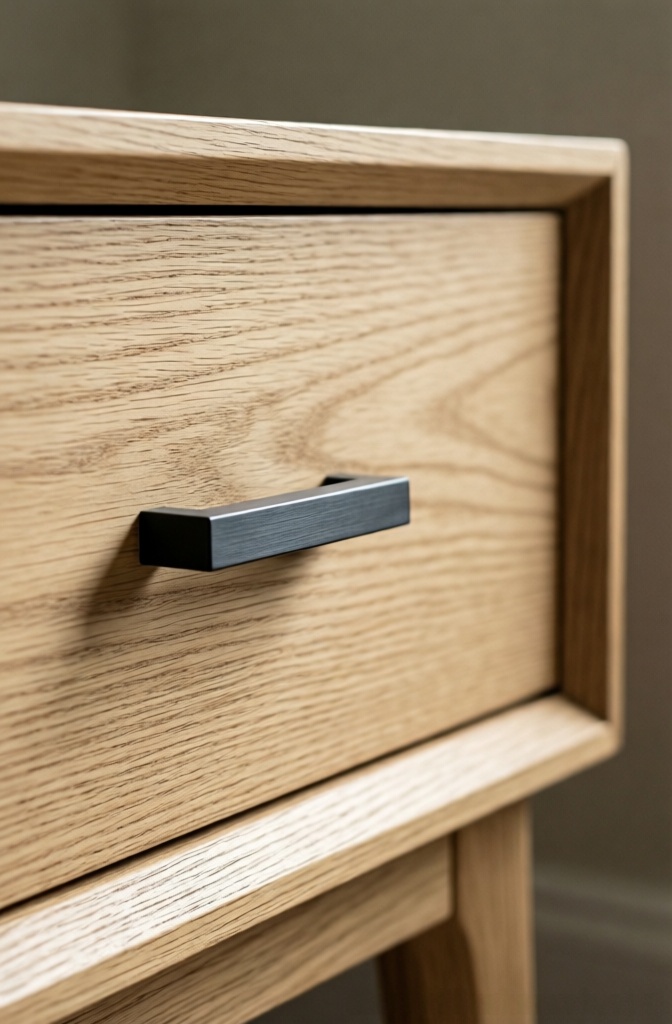
6. The “Sumi-e” Contrast: Matte Black Hardware
To add a touch of modern, architectural edge to the soft, neutral bedroom, look for nightstands with matte black pulls or thin, blackened steel legs.
In Japanese art, Sumi-e is the practice of black ink wash painting. A touch of matte black hardware acts like a sharp ink stroke on a blank page. It provides a necessary, high-contrast focal point against the soft, rumpled textures of your linens. It also perfectly mirrors the aesthetic of the dark Japandi bedroom lighting fixtures we recommend placing above the bedside.

[IMAGE PLACEMENT 7: THE MORNING RITUAL (SENSORY LUXURY)] (Place here at the end to evoke the feeling of a slow, peaceful morning.)
Conclusion: The Functional Breathing Room
Your nightstand is the bridge between your waking life and your sleep. By choosing a low-profile, materially honest design—and strictly policing what is allowed to sit on top of it—you transform a simple piece of furniture into a tool for well-being. Hide the cables, embrace the empty space, and let the craftsmanship of the wood speak for itself.
Subscribe to Homeoration!
Get decor ideas, room inspirations & seasonal styling tips.
By subscribing you agree to receive emails & accept our Privacy Policy.
