
The Art of the Empty Wall
In my Copenhagen studio, the most common question I get is: “What should I put on this big, empty wall?” My answer is often: Nothing. In Japanese design, the concept of Ma (negative space) is just as intentional as the furniture. An empty wall isn’t “missing” something; it is providing the visual silence needed for your mind to rest. However, when we do choose to decorate, every piece must have “tactile weight.” As we discussed in our guide to Japandi Living Room Ideas, the goal is functional minimalism—where the decor serves the atmosphere, not just the eyes.
1. The Living Wall: Limewash and Clay Textures
Before you hang a single frame, look at the wall itself. In 2026, the “decor” is the texture. A flat, white-painted wall feels clinical. A limewash or clay-plaster wall feels alive. The subtle, mottled movement of the plaster creates enough visual interest that you often don’t need art at all. The way sunlight grazes these “imperfect” surfaces provides a natural, shifting decor throughout the day.
2. Large-Scale Wabi-Sabi Canvas
If you have a large wall, avoid “gallery walls” with ten small frames. They create visual clutter (the “noise” we want to avoid). Instead, choose one massive, oversized canvas.
Subscribe to Homeoration!
Get decor ideas, room inspirations & seasonal styling tips.
By subscribing you agree to receive emails & accept our Privacy Policy.- The Look: A textured, monochromatic abstract piece. Think thick impasto strokes in “sand” or “charcoal” tones. This adheres to the Dark Japandi Living Room Ideas aesthetic by providing a heavy, grounding focal point without distracting from the room’s flow.
3. Sustainable Wood Slats (Acoustic Panels)
Wall decor can be functional. Oak or walnut vertical slats are a Japandi staple because they add linear rhythm and improve the room’s acoustics.
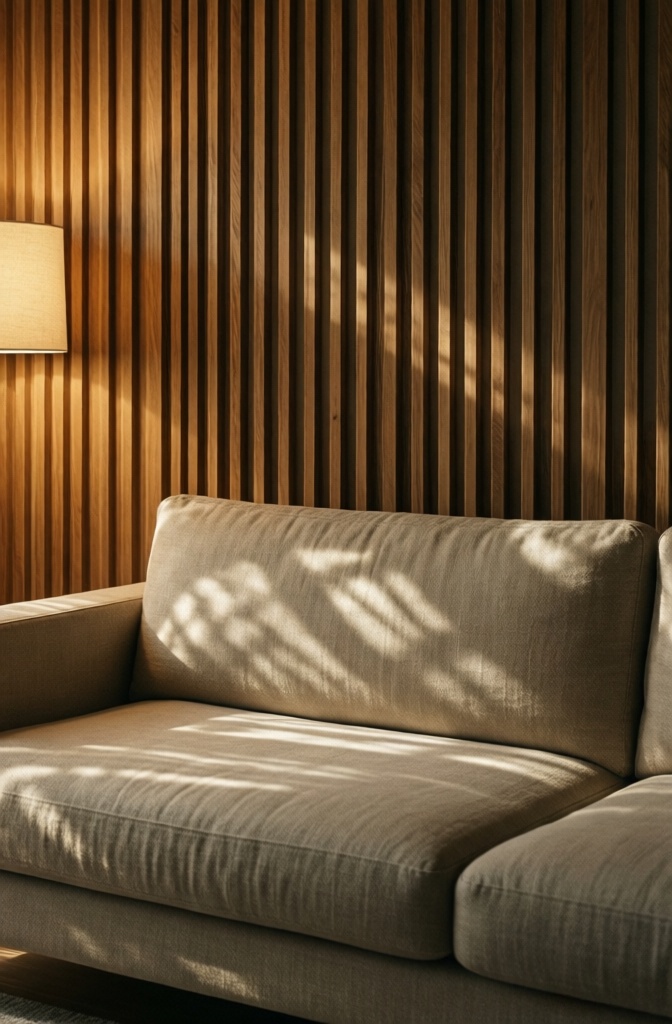
- Soren’s Tip: Don’t cover the whole wall. Use a 4-foot wide section behind the sofa or TV to define a zone. It adds “warmth” through wood grain, which is a key tenet of Scandinavian comfort.
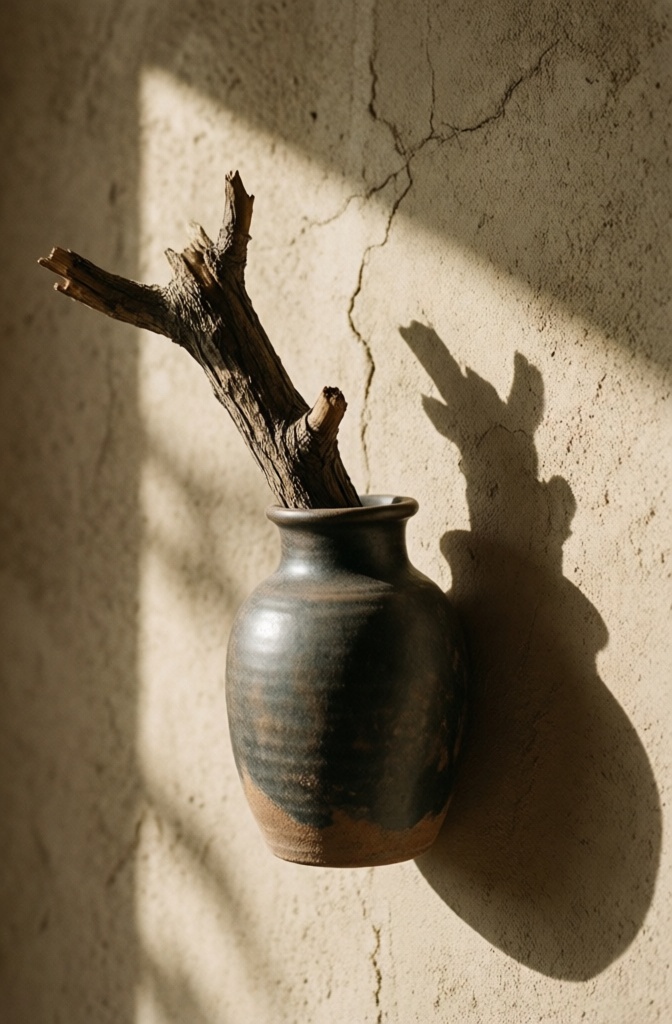
4. The “Single Branch” Philosophy
Japanese minimalism often uses a single, organic element to break the straight lines of modern architecture. A wall-mounted “Ikebana” vase with a single charred branch or a dried Eucalyptus stem is more powerful than a shelf full of trinkets. It brings Biophilia into the space in its most distilled form.
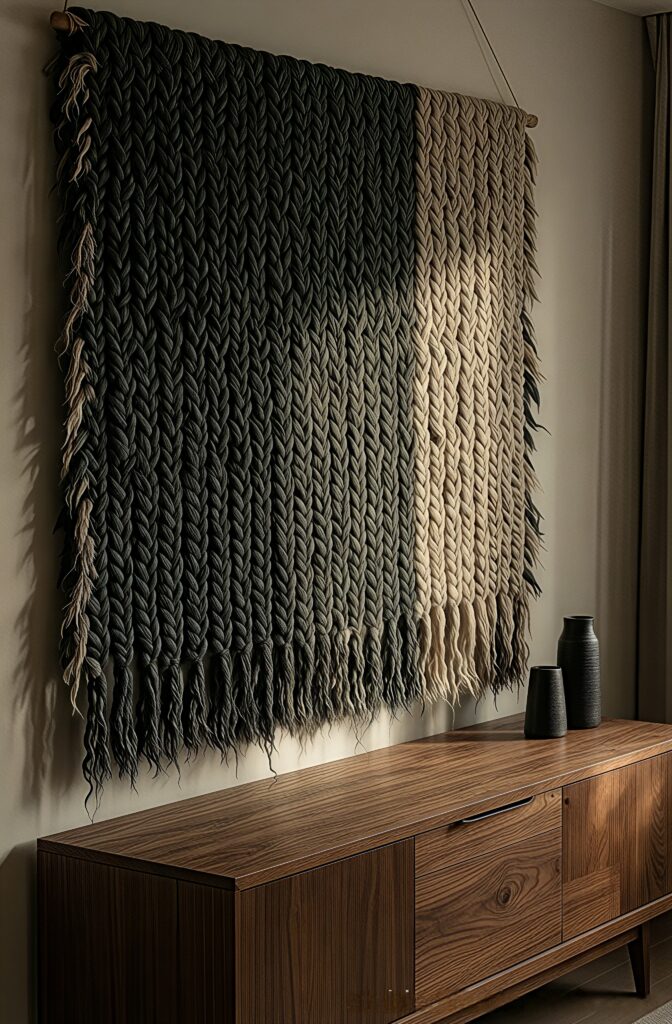
5. Textiles as Art: Raw Linen and Wool Hangings
To soften the “echo” of a minimalist room, look to the walls. A heavy, raw linen wall hanging or a hand-woven wool tapestry in “muddy” earth tones adds a layer of “Scandi-hygge.” It’s tactile, soft, and feels more human than a glass-fronted frame.
6. Floating Walnut Shelves (The Curated Edit)
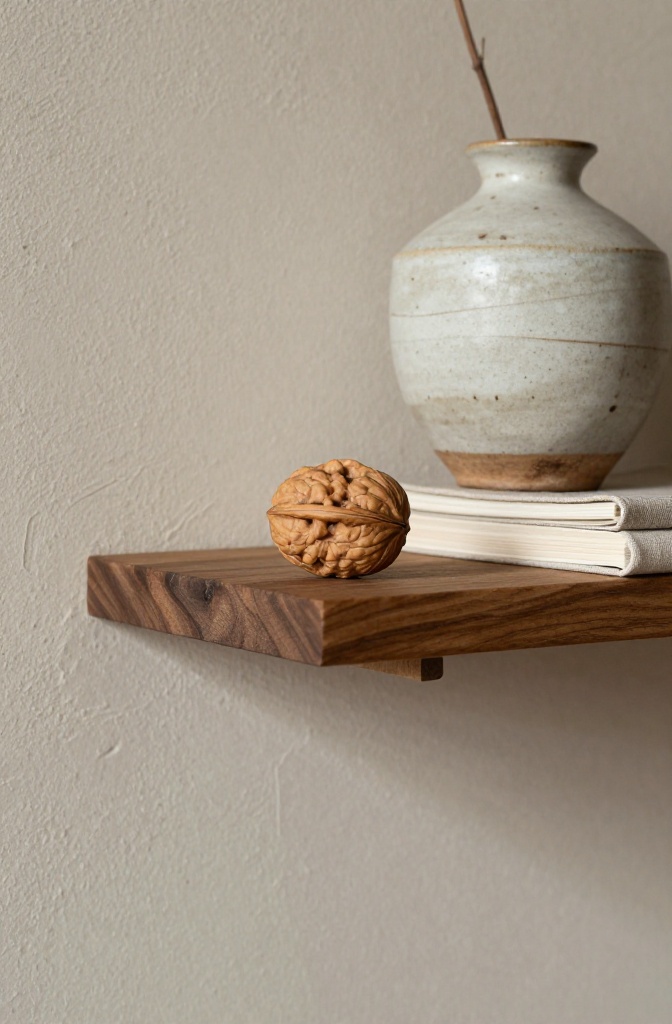
If you must display objects, use a single floating walnut shelf. The “floating” aspect maintains the floor’s “Ma,” keeping the room feeling light. On the shelf, apply the Rule of Three: one ceramic vessel, one design book, and one organic object (like a stone or small plant).
7. Black Ink Wash (Sumi-e) Art
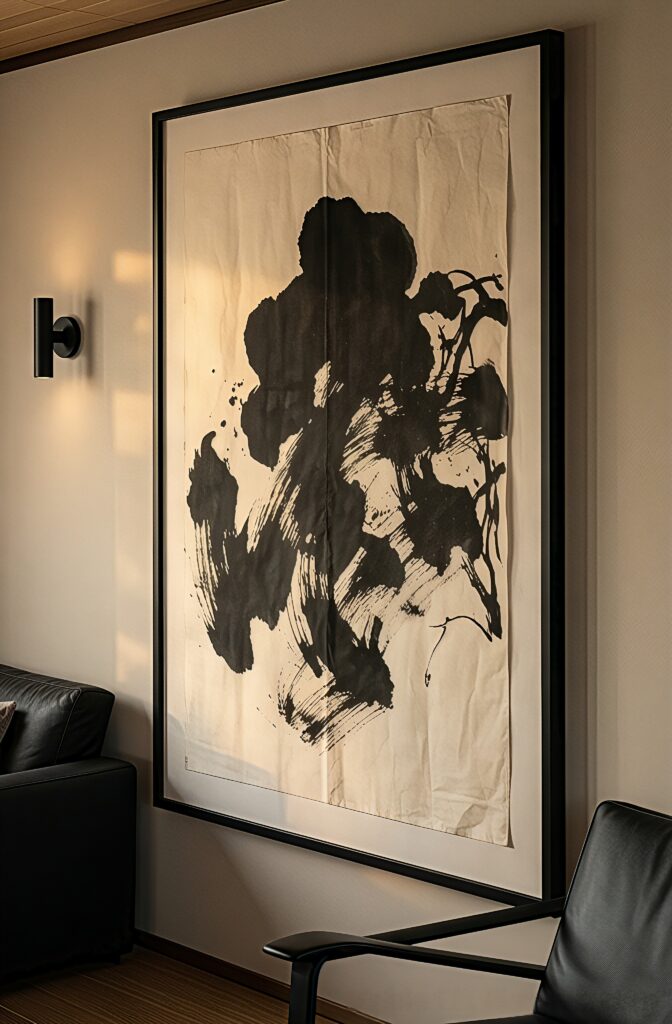
To lean into the Japanese side of the aesthetic, Sumi-e (ink wash) paintings are unparalleled. The high contrast of black ink on handmade washi paper creates a “visual anchor.” This pairs beautifully with the matte black sconces we recommended in our Japandi Living Room Lighting Ideas guide, as the black hardware “speaks” to the black ink on the wall.
8. Oversized Paper Fans and Screens
For a more architectural feel, a large, vintage Japanese paper fan or a framed section of a Shoji screen can act as a headboard-style decor piece behind a low-profile sofa. It introduces “rhythm” through the delicate wooden lattice work.
9. Mirroring the Light: Organic Shapes
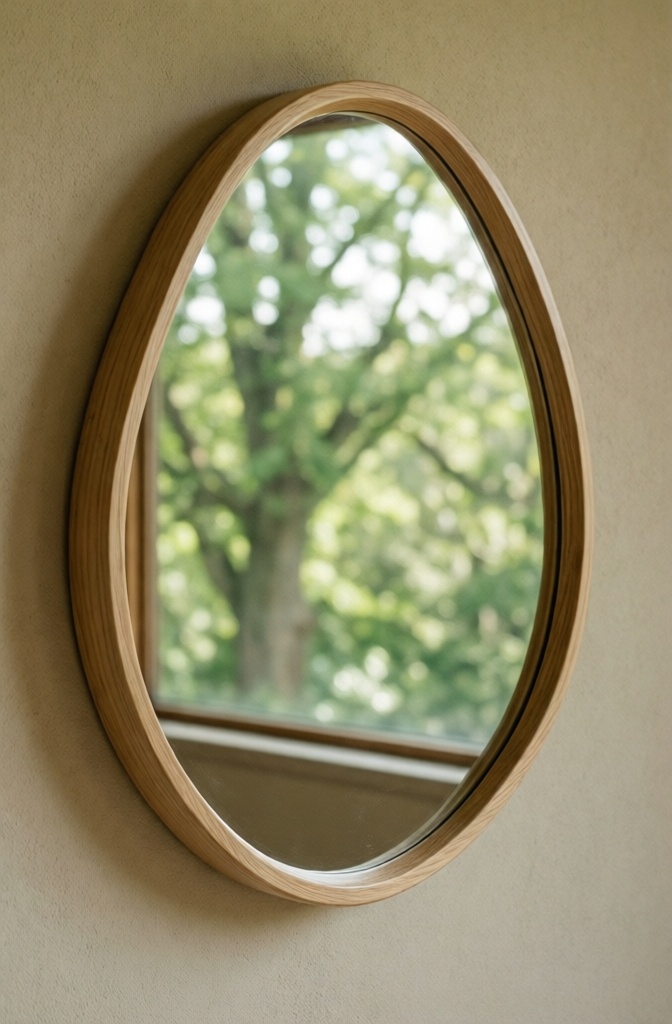
Mirrors in Japandi should not be ornate or “glam.” Choose an organic, pebble-shaped mirror with a thin oak frame. Place it opposite a window to “pull” the natural garden view onto the wall. This blurs the line between indoors and outdoors, a core goal of Japanese architecture.
10. The “Shadow” Box: Recessed Niches
If you are renovating, consider a Niche. A carved-out rectangle in a thick plaster wall, lit from within, creates a “shrine” for a single piece of handmade pottery. This is the ultimate “quiet luxury” decor—it’s built into the very bones of the home.
11. Minimalist Photography: Mist and Grain
If you prefer photography, avoid sharp, high-definition cityscapes. Choose grainy, atmospheric shots of nature—forests in the mist or a close-up of stone textures. This style of photography, often featured in Architectural Digest’s minimalist home tours, adds emotion without adding “busy” details.
12. Functional Decor: The Hanging Noren
In open-concept Japandi rooms, a linen Noren (split curtain) can act as wall decor when placed against a flat surface or over a doorway. It adds verticality and the gentle movement of fabric, which softens the “hardness” of wooden furniture.
Common Mistakes to Avoid
- Over-Decorating: If you can’t see the wall color, you’ve gone too far.
- Cheap Prints: Avoid generic “boho” prints from big-box retailers. They lack the “tactile soul” needed for a 10/10 Japandi room.
- Incorrect Scale: Small art on a large wall looks “timid.” Go big or stay empty.
FAQ
Q: What colors should I use for art? A: Stick to the “Muddy” palette: Gloucester Sage, Terra Clay, Charcoal, and Sand. Avoid primary colors.
Q: Can I use colorful art in Japandi? A: Yes, but keep it desaturated. A “burnt orange” or “deep indigo” can work if the rest of the room is strictly neutral.
Subscribe to Homeoration!
Get decor ideas, room inspirations & seasonal styling tips.
By subscribing you agree to receive emails & accept our Privacy Policy.
