
Color plays a quiet but powerful role in Japandi interiors. While furniture and layout shape how a living room functions, the color palette determines how it feels. Too bright, and the space can feel restless. Too dark, and it may feel heavy.
A well-chosen Japandi living room color palette sits somewhere in between—soft, warm, and deeply calming.
Rather than dramatic contrast or trendy shades, Japandi design relies on natural tones that feel grounded and easy to live with.

Subscribe to Homeoration!
Get decor ideas, room inspirations & seasonal styling tips.
By subscribing you agree to receive emails & accept our Privacy Policy.What Defines a Japandi Color Palette?
A Japandi color palette is built on restraint. Colors are chosen to support calm, not draw attention.
Most Japandi living room palettes include:
- Warm off-whites instead of stark white
- Soft beige, greige, and muted taupe
- Natural wood tones
- Occasional darker accents for depth
These colors blend seamlessly, creating a space that feels cohesive rather than styled. Japandi interiors are influenced by both Japanese and Scandinavian design principles, which emphasize simplicity, balance, and natural materials—often explained under the concept of Japandi design.
Warm Neutrals as the Foundation
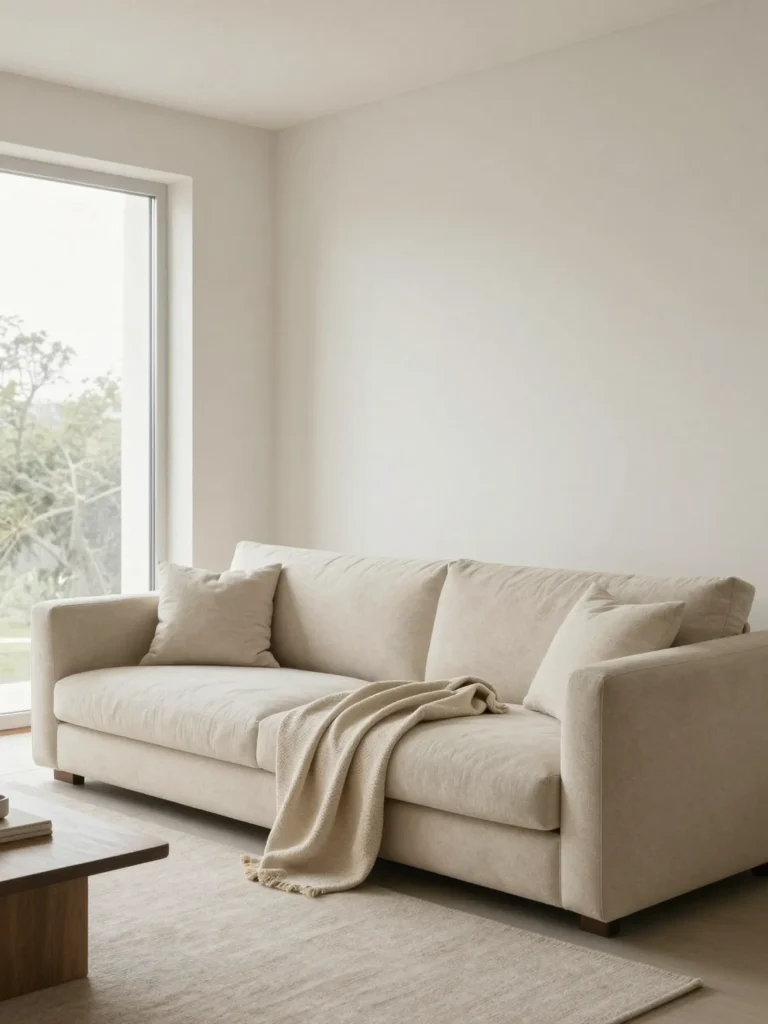
At the heart of every Japandi living room color palette is a neutral base.
Instead of cool greys or pure whites, Japandi interiors favor:
- Warm white with subtle undertones
- Creamy beige
- Soft stone or sand tones
These shades reflect light gently and prevent the room from feeling cold or flat.
Using Wood Tones to Add Warmth
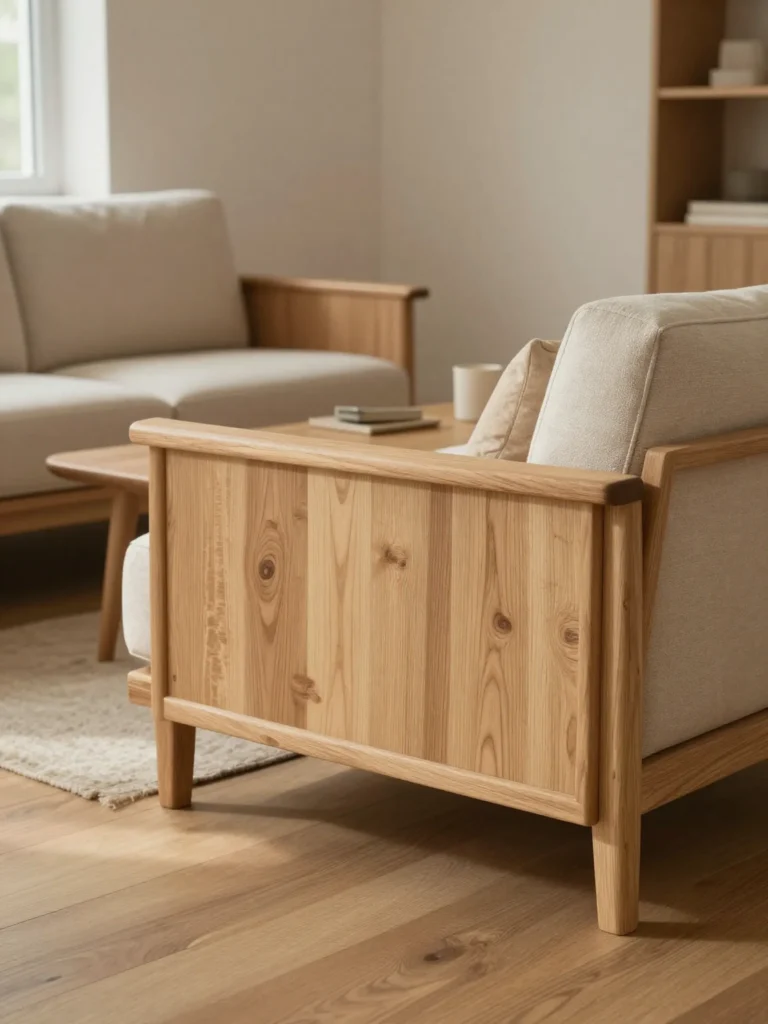
Wood is essential in Japandi interiors, and its color plays a major role in the palette.
Light oak, ash, or slightly darker walnut tones bring warmth and texture without overpowering the space. Mixing too many wood shades can disrupt calm, so it’s best to stay within one or two similar tones.
Natural grain and imperfect finishes are preferred over glossy or overly polished surfaces.
Adding Depth With Soft Dark Accents
A Japandi living room color palette doesn’t need to be entirely light.
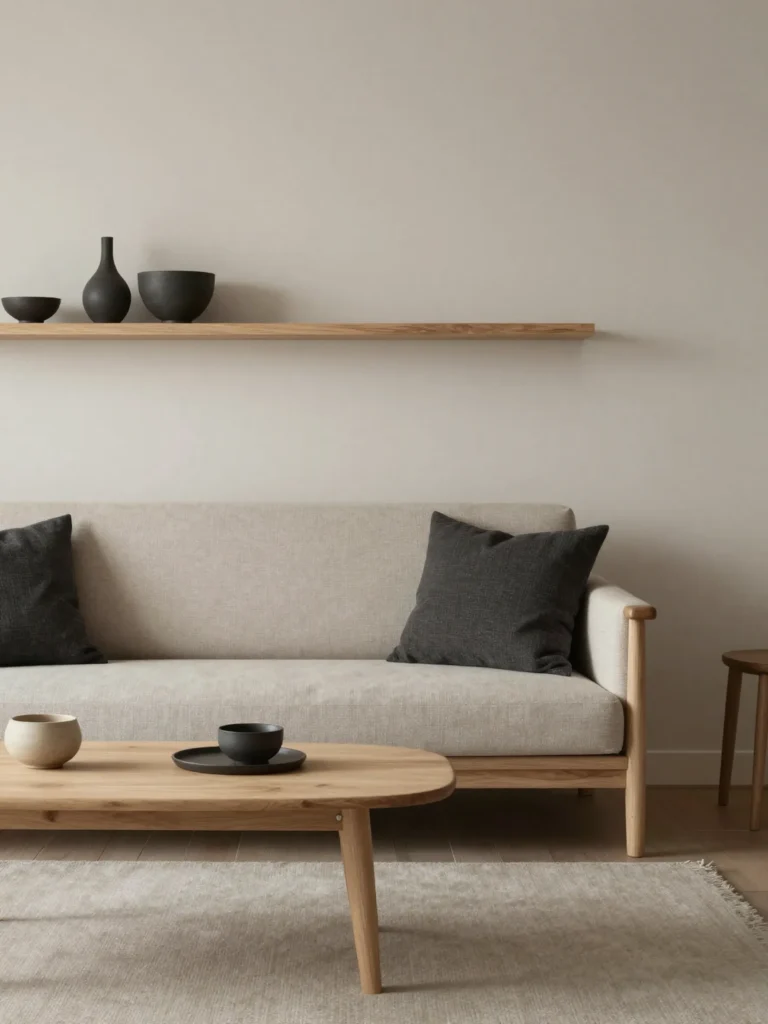
Used sparingly, darker tones help ground the space:
- Charcoal cushions
- Dark ceramic accessories
- Blackened wood details
The key is balance—dark accents should support the palette, not dominate it.
For those who prefer deeper tones, these principles are explored further in dark Japandi living room ideas that focus on warmth rather than drama.
Keeping the Palette Calm and Cohesive
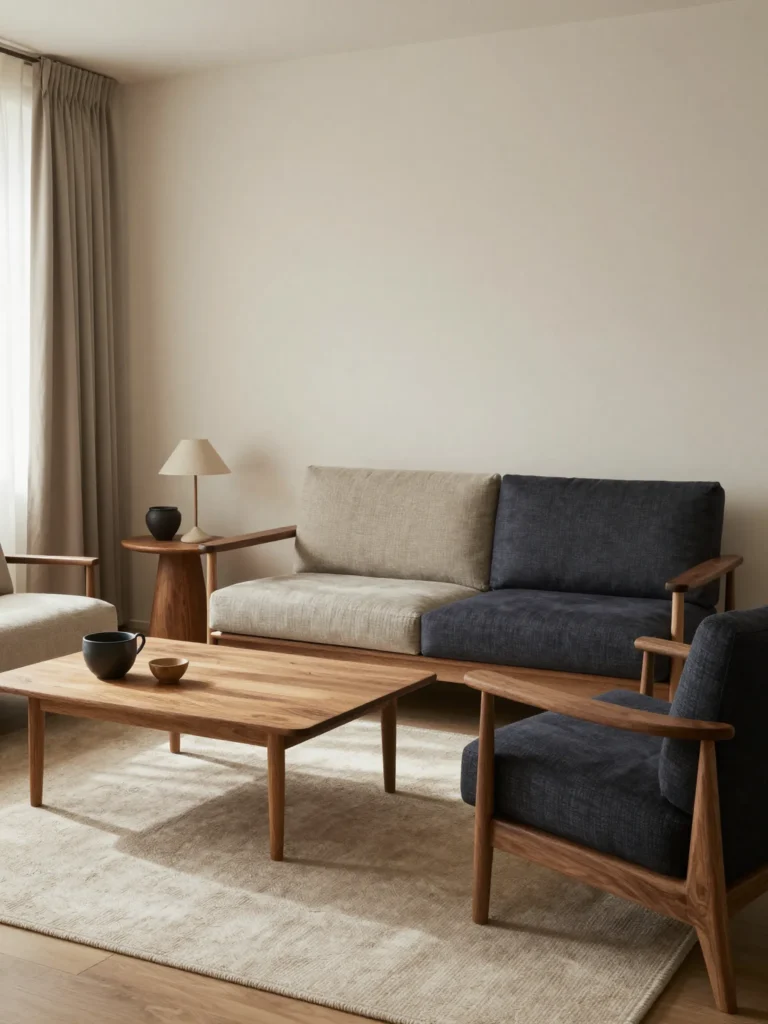
The most successful Japandi living room color palettes feel effortless because they are limited.
A simple rule:
- Choose one main neutral
- Support it with one secondary tone
- Add wood + texture
- Finish with minimal contrast
This approach keeps the living room visually quiet and easy to return to at the end of the day.
Final Thought
A Japandi living room color palette isn’t about following trends or copying a specific look. It’s about choosing colors that support calm, warmth, and balance over time.
By focusing on natural neutrals, thoughtful contrast, and material-driven tones, Japandi interiors create living rooms that feel timeless, grounded, and genuinely comfortable to live in.
Subscribe to Homeoration!
Get decor ideas, room inspirations & seasonal styling tips.
By subscribing you agree to receive emails & accept our Privacy Policy.
