
Modern kitchens are often designed to impress—but not always to live in. High-gloss finishes, busy layouts, and trend-heavy materials can quickly make a kitchen feel loud and overwhelming.
Japandi kitchen design takes a different approach. It focuses on calm, functionality, and balance—combining Japanese restraint with Scandinavian warmth to create kitchens that feel timeless, practical, and deeply comfortable.
Rather than chasing trends, Japandi kitchens are built around simplicity that lasts.

Subscribe to Homeoration!
Get decor ideas, room inspirations & seasonal styling tips.
By subscribing you agree to receive emails & accept our Privacy Policy.The Philosophy Behind Japandi Kitchens
At its core, Japandi design values:
- Function over decoration
- Natural materials over synthetic finishes
- Fewer elements, chosen carefully
A Japandi kitchen is not empty—it’s intentional. Every surface, cabinet, and object has a purpose, creating a space that feels calm even during daily use.
This approach works especially well in kitchens, where visual clutter can quickly become stressful.
Clean Layouts That Feel Effortless
Japandi kitchens favor simple, efficient layouts:
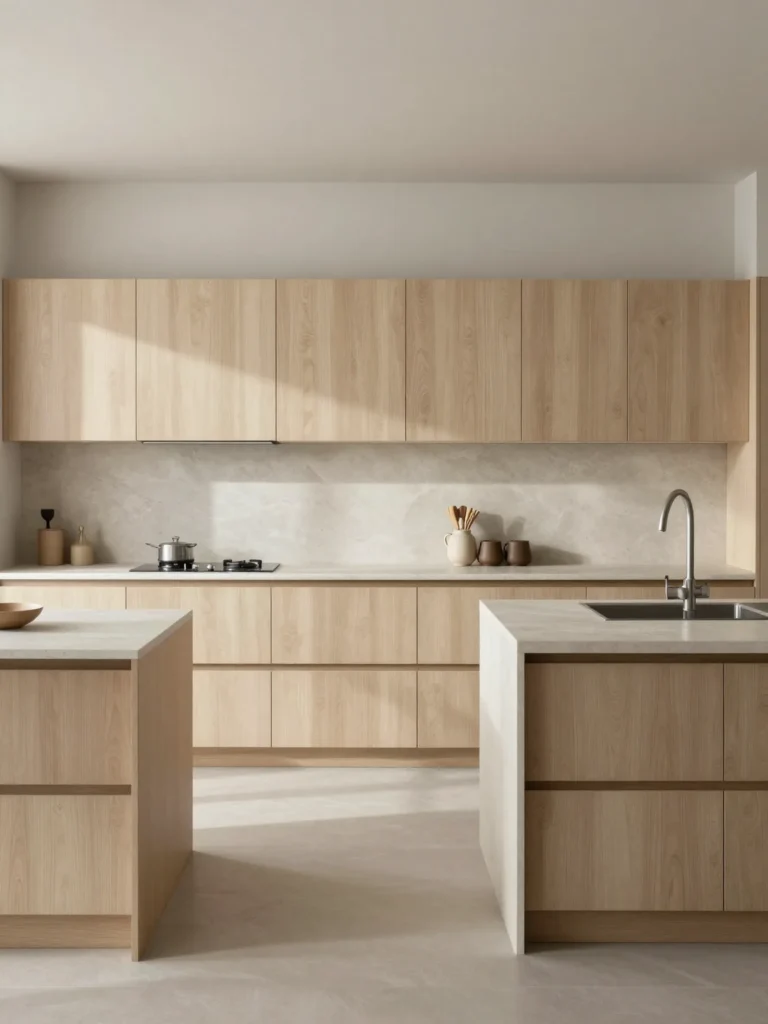
- Straight-line or L-shaped kitchens
- Uncluttered countertops
- Handle-less or recessed cabinetry
Open shelving is used sparingly—only where it adds function, not decoration. Storage is prioritized so everyday items stay out of sight, helping the kitchen maintain a quiet visual rhythm.
This design choice makes even small kitchens feel larger and more breathable.
Natural Materials That Add Warmth
Material selection defines Japandi kitchens.
Common choices include:
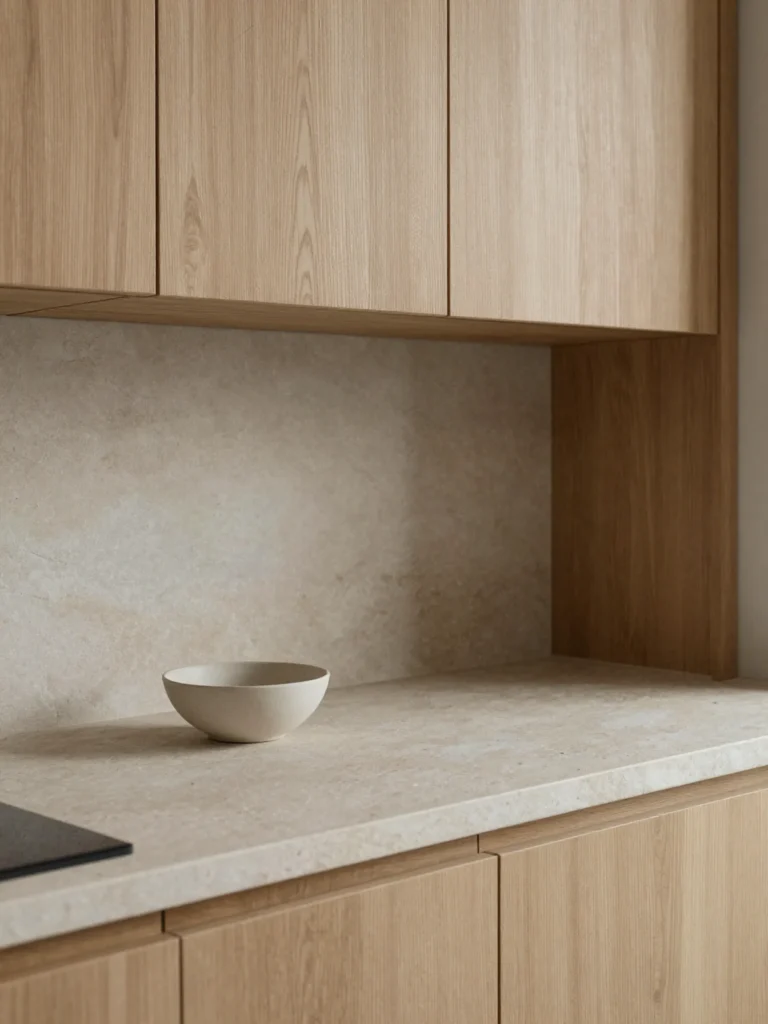
- Light to medium-toned wood cabinetry
- Stone or matte quartz countertops
- Ceramic, clay, or concrete textures
These materials age gracefully and add subtle character without overpowering the space. Wood grain, natural imperfections, and soft finishes bring warmth to an otherwise minimalist design.
This balance prevents the kitchen from feeling cold or sterile.
Soft, Muted Color Palettes
Japandi kitchens avoid sharp contrasts and bold colors.
Instead, they rely on:
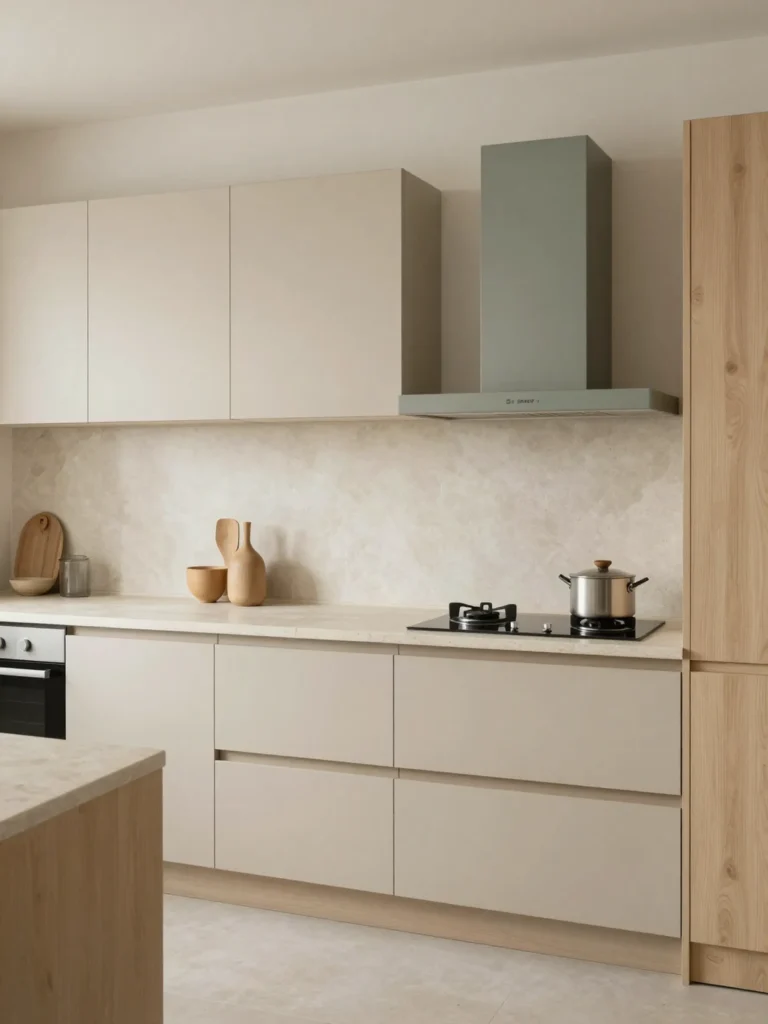
- Warm whites and off-whites
- Soft greige and taupe
- Muted beige, sand, and clay tones
These colors reflect natural light gently, making the kitchen feel calm throughout the day. Dark Japandi kitchens may introduce charcoal or deep brown—but always balanced with lighter wood or stone.
Lighting That Feels Calm, Not Clinical
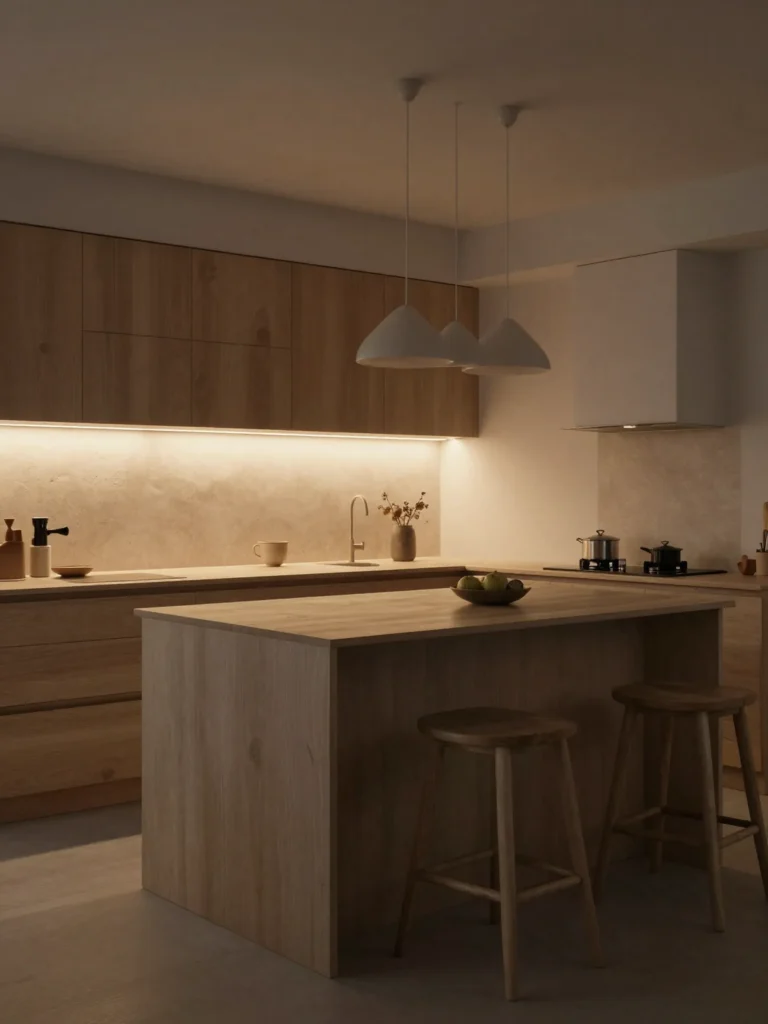
Lighting in Japandi kitchens is subtle and layered.
Instead of harsh ceiling lights, use:
- Warm pendant lights over islands
- Soft under-cabinet lighting
- Diffused natural daylight wherever possible
The goal is to create gentle illumination that supports daily tasks while maintaining a relaxed atmosphere—especially in the evening.
Minimal Styling That Still Feels Lived-In
Japandi kitchens are not styled to look perfect—they’re styled to feel real.
A few intentional elements are enough:
- A ceramic bowl on the counter
- A wooden cutting board left visible
- Neutral-toned dishware
Avoid over-accessorizing. Empty space is part of the design and allows the kitchen to breathe.
If you’re exploring Japandi design across your home, you may also enjoy our guide on Japandi Living Room Ideas for creating calm, balanced interiors beyond the kitchen.
Japandi design principles are rooted in Japanese and Scandinavian philosophies of simplicity and craftsmanship, often referenced in architectural and interior design studies published by Dezeen.
A Kitchen Designed for Everyday Calm
A Japandi kitchen isn’t about visual impact—it’s about how the space feels over time.
By focusing on simplicity, natural materials, and thoughtful layout, Japandi kitchens create an environment that supports daily life without distraction. It’s a design approach that values quiet beauty and long-term comfort over short-lived trends.
Subscribe to Homeoration!
Get decor ideas, room inspirations & seasonal styling tips.
By subscribing you agree to receive emails & accept our Privacy Policy.
