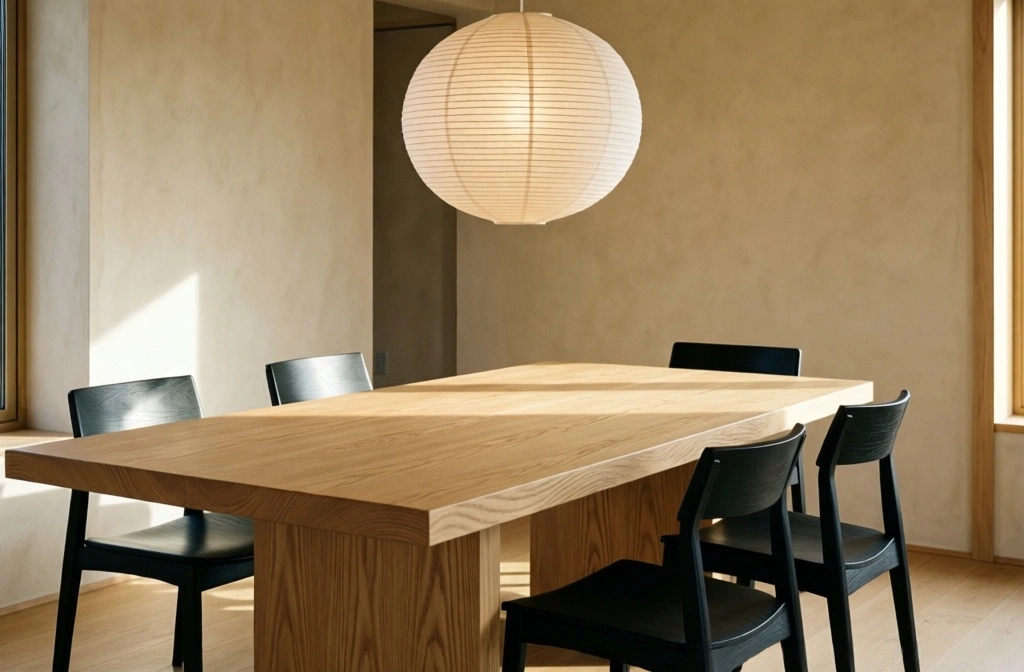
The Death of the Formal Dining Room
In traditional interior design, dining rooms were treated as a museum—a stiff, formal space filled with polished mahogany and fine china, used perhaps three times a year. The Japandi philosophy completely reject this outdated concept. In 2026, high-end residential architecture has shifted toward the “Modern Hearth.” The dining table is no longer a showroom piece; it is the tactile, everyday anchor of the home.
By prioritizing solid, raw materials and ruthlessly editing away formal table linens and towering centerpieces, the Japandi dining table becomes a grounded zone for intentional connection. It serves as the critical architectural bridge between the operational flow of your warm, clutter-free kitchen and the deep, restorative silence of your living space.
1. Material Science: The Non-Negotiable Rules of Raw Timber
A Japandi table must be an exercise in absolute material honesty. If you are investing in a minimalist aesthetic, the few items you do own must be of unimpeachable quality. This means a strict rejection of glass tops, high-gloss laminates, MDF (Medium-Density Fiberboard), and the epoxy-resin “river tables” that heavily date a room.

Subscribe to Homeoration!
Get decor ideas, room inspirations & seasonal styling tips.
By subscribing you agree to receive emails & accept our Privacy Policy.You must source solid, heavy timber. When evaluating a table, interior designers look closely at the Janka Hardness Scale, which measures a wood’s resistance to denting and wear.
- White Oak and Ash (The Scandinavian Breathability): With a Janka rating of around 1360, White Oak is incredibly durable for heavy daily use. Its light, desaturated tone reflects natural light, making it the superior choice for smaller dining rooms. It provides the airy breathability fundamental to Nordic design.
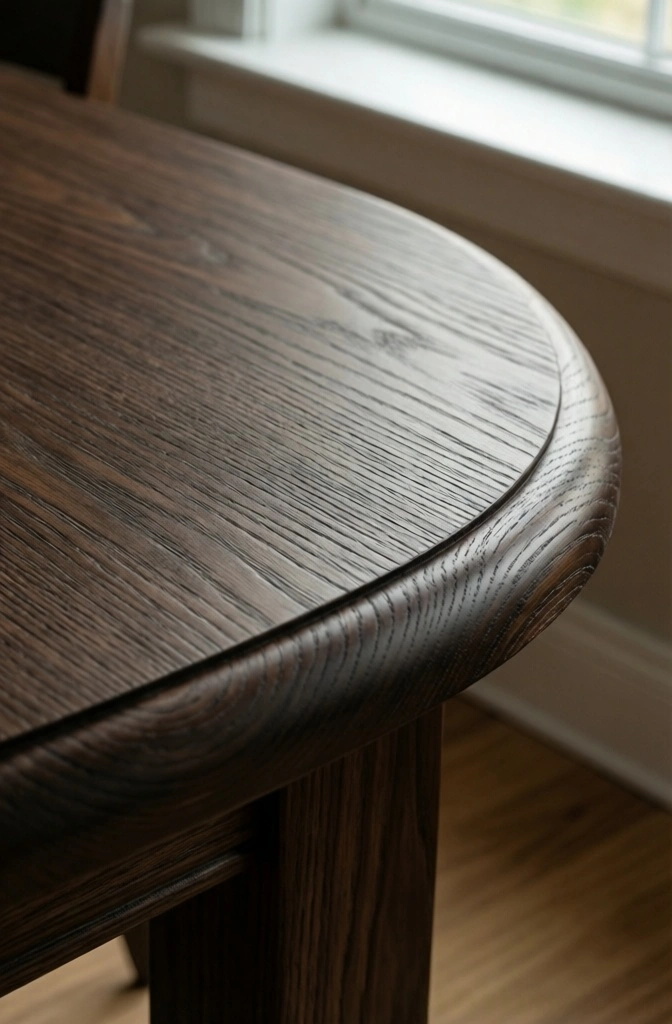
- American Black Walnut (The Grounding Anchor): If you are extending a Dark Japandi aesthetic, solid walnut is the ultimate luxury material. While slightly softer than oak (Janka rating 1010), it offers a deep, rich visual weight that instantly grounds a large room. The chocolate and auburn undertones of walnut absorb light, creating a moody, intimate dining experience.
2. The Matte Finish: Designing for the Patina
The finishing process is just as critical as the wood species. A massive mistake homeowners make is buying a beautiful piece of raw timber that has been suffocated under a thick layer of high-gloss polyurethane. Glossy finishes reflect overhead ceiling lights, creating harsh visual glare that disrupts the Zen visual silence of the home.
Additionally, polyurethane acts like a plastic shell. When it scratches, the entire table must be professionally sanded and refinished.
Instead, a high-end Japandi dining table must feature an Oil-Rubbed or Hardwax Oil Finish (such as Rubio Monocoat).
- The Sensory Experience: Hardwax oils penetrate the wood fibers rather than sitting on top of them. When you run your hand across the table, you feel the actual organic grain of the wood, not a plastic coating.
- The Wabi-Sabi Patina: An oil finish allows the wood to “breathe.” As you use the table, it will naturally develop a slight patina—a softening of the edges and a unique wear pattern that tells the story of your home. If a deep scratch occurs, you simply buff a small amount of oil directly into the spot to repair it. It is the ultimate expression of Wabi-Sabi: embracing time, use, and imperfection.
3. The Architecture of the Base: Pedestals vs. Joinery
The surface of the table dictates the tactile experience, but the legs dictate the architectural flow of the room. A standard four-leg table is safe, but it can create “visual gridlock,” especially in smaller spaces where dining chairs add another dozen legs to the floor plan.
The Fluted Pedestal Base
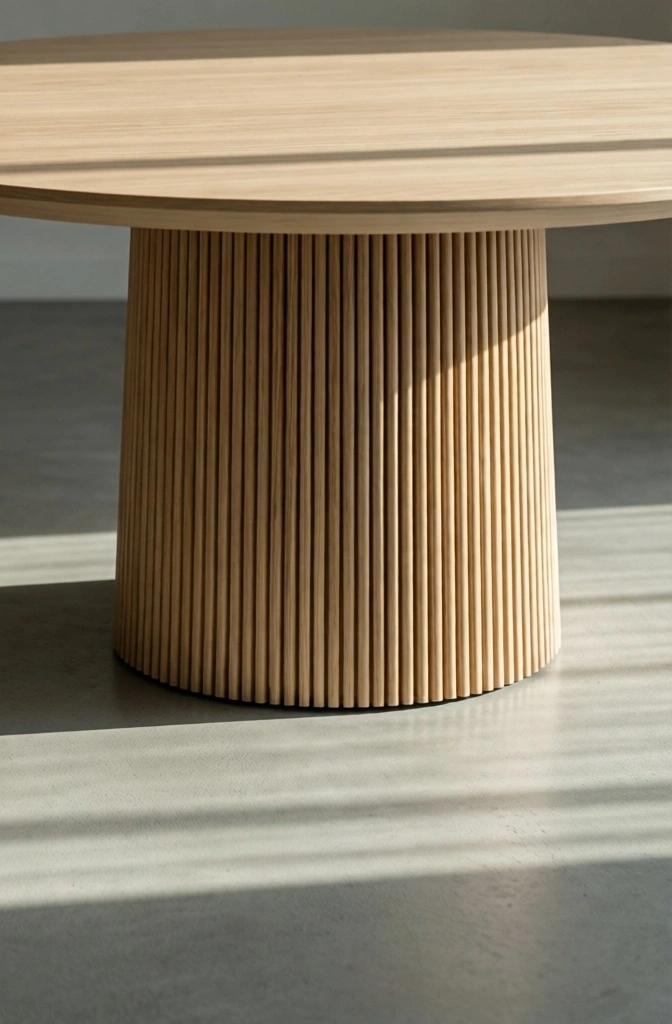
To maximize seating capacity and maintain a clean floor line, designers are heavily favoring the Fluted Wood Pedestal. Instead of four corner legs, the table is supported by a single, massive center column wrapped in vertical wooden slats.
This rhythmic, linear texture draws the eye upward and perfectly echoes the slatted wood islands we utilized in our Japandi kitchen organization guide. Because there are no corner legs to navigate, you can comfortably slide chairs completely under the table, freeing up vital square footage when the room is not in use.
Kigumi: The Pinnacle of Joinery
If you prefer a traditional leg structure, the ultimate status symbol in a Japandi dining room is a table constructed using Kigumi—traditional Japanese wood joinery.
This ancient architectural technique relies on precisely carved, interlocking wooden joints to hold the furniture together, completely eliminating the need for metal screws, nails, or brackets.
- Structural Integrity: Wood naturally expands and contracts with changes in seasonal humidity. When metal screws are driven into wood, this natural movement eventually causes the screws to loosen, resulting in a wobbly table. Kigumi joints expand and contract with the wood, ensuring the table remains structurally silent and perfectly rigid for generations.
- Commercial Sourcing: When shopping for high-ticket affiliate furniture, actively look for terms like “mortise and tenon,” “dovetail,” or “bracketless construction.” This signals to the buyer that they are investing in heirloom craftsmanship rather than fast furniture.
4. The Seating Contrast: The “Anti-Set” Rule
The fastest way to instantly cheapen a dining room is to purchase a perfectly matched “dining set” directly from a big-box catalog. When the table, chairs, and buffet all feature the exact same wood stain and hardware, the room loses its soul. It looks like a furniture showroom, not a curated, lived-in home.
Japandi design thrives on high-contrast, intentional pairings. If your table is a heavy, solid walnut monolith, you must pair it with seating that is visually “light.” This juxtaposition—heavy against light, dark against pale, solid against woven—is the core tension that makes minimalist spaces feel dynamic rather than sterile.
5. Woven Paper Cord (The Wishbone Influence)
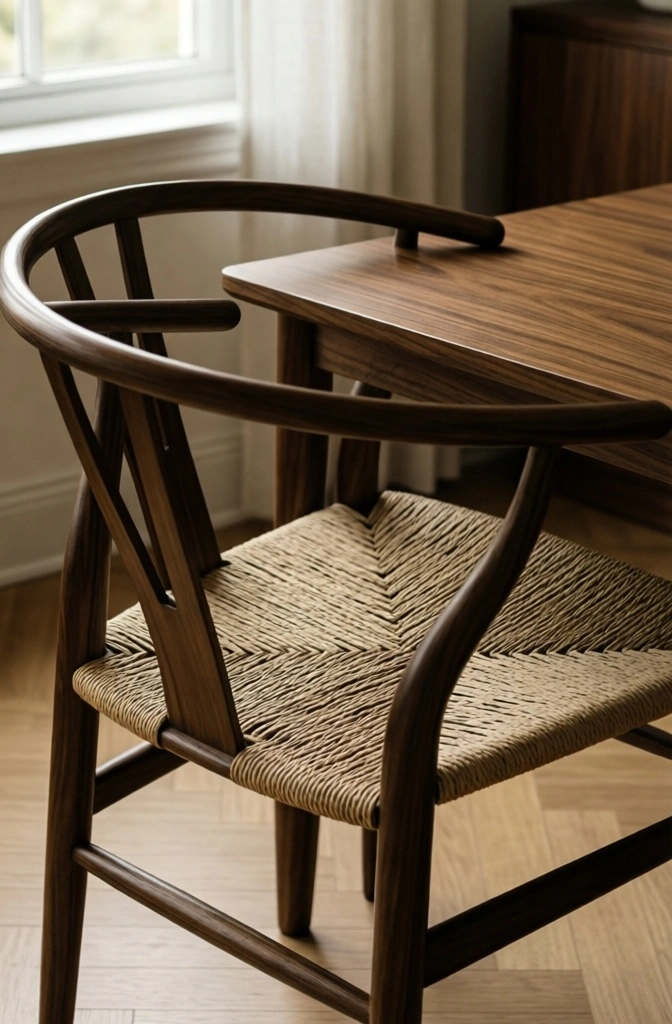
When sourcing chairs for a solid wood table, the ultimate Japandi material is Natural Paper Cord.
Iconic mid-century Scandinavian designs, most notably the Hans Wegner CH24 Wishbone Chair, utilize tightly woven paper cord for the seat.
- Tactile Warmth: Unlike cold leather or synthetic upholstery, paper cord provides a deeply organic, fibrous texture that warms up the stark lines of a minimalist room.
- Structural Breathability: The woven seat and the curved, open backrest of a Wishbone-style chair allow light and air to pass completely through the furniture. This preserves the Ma (negative space) around the dining table, preventing the room from feeling visually blocked off, a principle we heavily emphasized in our guide to small space organization hacks.
6. The Sumi-e Ink Stroke (Matte Black Seating)
If your dining table is crafted from a light, airy White Oak or Ash, the most sophisticated design move is to introduce severe, high-contrast seating.
Pairing a pale wood table with matte black stained ash chairs provides a sharp, graphic punch. In traditional Japanese art, Sumi-e is the practice of black ink wash painting. A matte black dining chair acts exactly like an ink stroke on a blank canvas. It provides a necessary focal point that anchors the floating, ethereal qualities of the light wood. We utilized this exact same high-contrast theory when styling Japandi nightstands with black hardware, proving that a touch of black is essential to ground any neutral palette.
7. The Physics of the Low-Horizon Pendant
Once the seating is curated, the dining room will still fail if the lighting is incorrect. Lighting a Japandi dining table requires strict adherence to the “Low-Horizon Rule.”
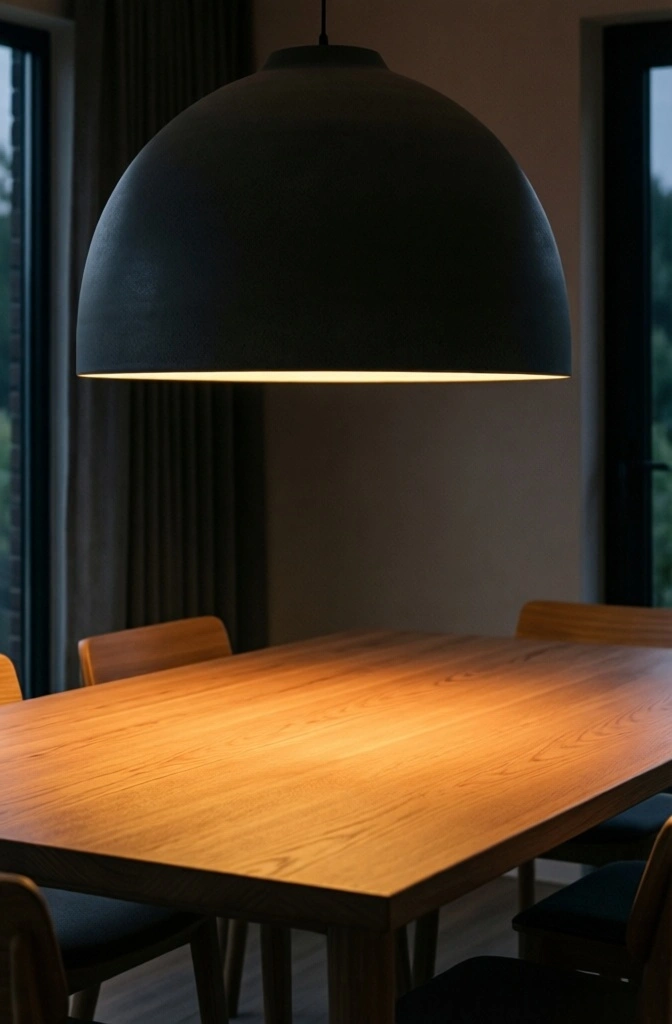
Never rely on bright, recessed ceiling lights (can lights) while eating. Overhead LEDs cast harsh, vertical shadows on the faces of your guests, highlight the pores in the skin, and subconsciously elevate the heart rate. Instead, you must hang a large, sculptural Wabi-Sabi pendant light directly over the center of the table.
- The 30-36 Inch Rule: The bottom of your pendant light must hang exactly 30 to 36 inches above the tabletop.
- The Intimacy Pool: Hanging the fixture this low serves a specific psychological function. It creates a physical canopy over the table, drawing the eye down and creating an intimate “pool” of light. The ceiling above disappears into the shadows, making the dining experience feel incredibly cozy, private, and restorative.
8. Color Temperature and Circadian Dining
Lighting is not merely an aesthetic choice; it is a biological cue. The color temperature of the bulb inside your dining pendant dictates the emotional state of the room.
Just as we engineered your sleep sanctuary in our Japandi bedroom lighting guide, your dining room must never exceed 2700 Kelvin (Warm White). In luxury residential design, the trend is pushing even warmer toward 2200K (Amber). This warm, candlelight spectrum actively stimulates the parasympathetic nervous system (the “rest and digest” state). By shifting the light to a deep, warm amber, you are literally engineering an environment that promotes better digestion, longer conversations, and a seamless transition into the evening.
Check for – high-end 2700K LED Edison bulbs or smart dimming systems
9. Washi Paper vs. Matte Ceramic Domes
When selecting the pendant fixture itself, avoid transparent glass or exposed industrial bulbs that cause visual glare.
- The Washi Lantern: For an airy, ethereal dining room, an oversized, asymmetrical Washi paper lantern diffuses the light omnidirectionally, casting zero hard shadows.
- The Ceramic Dome: For a more grounded, Dark Japandi atmosphere, a heavy, matte-charcoal ceramic dome forces the light strictly downward onto the table surface, leaving the rest of the room in moody, dramatic shadow.
10. The Zen Tablescape: The “One-Object” Centerpiece Rule
When the dining table is not actively in use for a meal, it should never become a holding zone for mail, laptops, or massive, visually noisy floral arrangements. In a Japandi home, the surface of the table itself is the primary art installation.
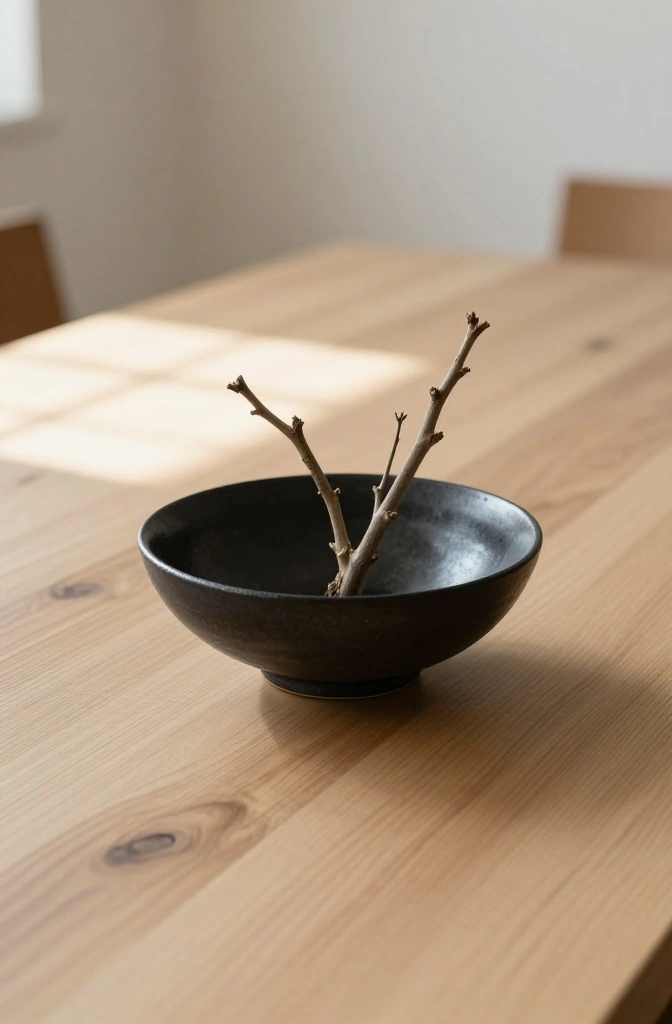
To style a Japandi table for daily life, we apply the strict “One-Object” rule established in our guide to Zen bedroom decor. A single, hand-thrown ceramic bowl with an irregular rim, or a minimalist Ikebana arrangement, is all the architecture requires.
Ikebana is the traditional Japanese art of flower arrangement, which prioritizes form, line, and Ma (negative space) over the abundance of blooms. Instead of a dozen roses, an Ikebana centerpiece uses just one or two striking, dry, sculptural branches set in a heavy, shallow pin-frog (Kenzan). This honors the empty space around the branch, keeping the room visually silent while maintaining a deep connection to organic nature.
11. Tactile Tableware: Wabi-Sabi Ceramics and Matte Flatware
When it is time to set the table for a meal, the transition must be seamless. The formal dining rules of perfectly starched white tablecloths and identical, factory-stamped fine china directly violate the Wabi-Sabi ethos. True luxury in 2026 is found in the bespoke, the handmade, and the slightly imperfect.
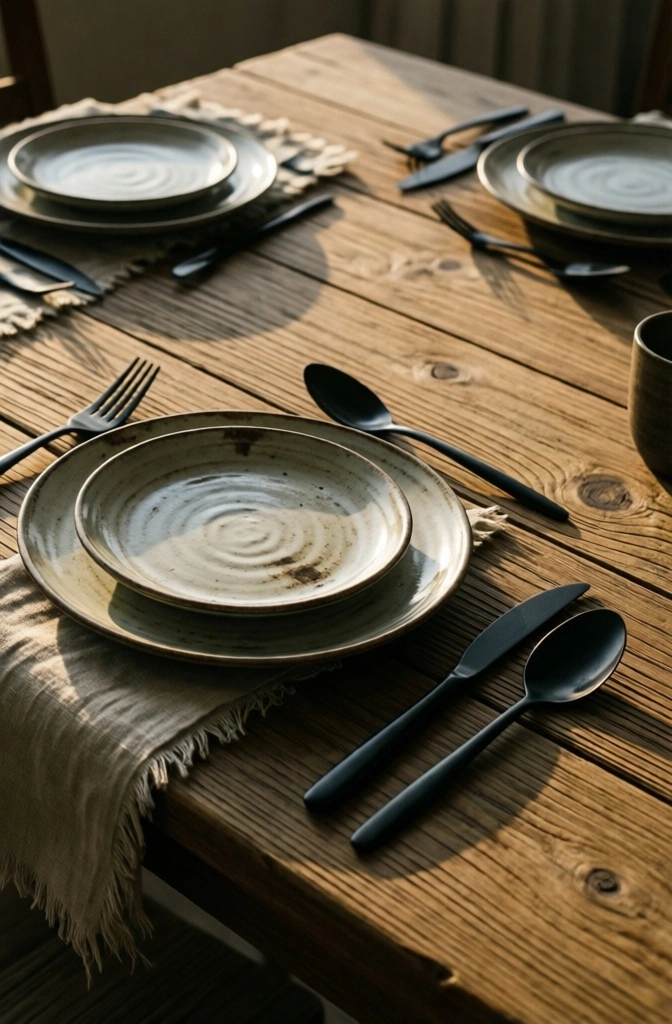
- Ceramics: Source heavy, hand-thrown stoneware plates with visible throwing lines or a slightly gritty, unglazed exterior. The variation in the glaze—where no two plates are exactly identical—reminds your guests of the human hands that crafted them.
- Flatware: Reject highly polished, reflective silverware. Opt for matte black, brushed brass, or stonewashed steel flatware. These muted finishes absorb the warm 2700K pendant lighting, preventing harsh glare from hitting your guests’ eyes.
- Linens: Abandon the full tablecloth. Allow the raw, oiled wood of your table to serve as the foundation. Use simple, un-ironed, heavy-weight linen napkins with a raw or fringed edge. Let them drape naturally across the plate.
This sensory combination of raw wood, matte metal, and rumpled linen transforms a standard dinner into a deeply grounding, tactile experience.

Conclusion: The Art of Intentional Gathering
A Japandi dining table is an architectural commitment to slow living. By investing in honest, solid timber, embracing the high-contrast tension of sculptural seating, and keeping the tabletop meticulously free of visual clutter, you create a gathering space that feels incredibly sophisticated, yet completely unpretentious. It is not a showroom for things; it is a meticulously engineered sanctuary for connection.
Frequently Asked Questions
What kind of wood is best for a Japandi dining table? Solid, matte-finished woods like White Oak, Ash, or American Black Walnut are the luxury standard. To maintain the aesthetic, avoid high-gloss laminates, cheap veneers, or heavy polyurethane finishes, opting instead for a breathable hardwax oil finish.
How do you style a minimalist dining table? Apply the “One-Object” rule. Keep the surface 80% empty and use a single hand-thrown Wabi-Sabi ceramic bowl or a minimal Ikebana branch arrangement. This preserves the room’s visual silence and honors the negative space.
What chairs go with a Japandi dining table? Never buy a perfectly matching dining set. Pair heavy solid wood tables with visually light, high-contrast seating. Hans Wegner-style wishbone chairs with woven paper cord seats or matte black stained ash chairs provide the perfect textural balance.
How low should a dining room light hang? A dining pendant light should hang exactly 30 to 36 inches above the tabletop. This specific height creates an intimate pool of warm light, draws the eye downward, and eliminates the harsh shadows caused by overhead ceiling lights.
Subscribe to Homeoration!
Get decor ideas, room inspirations & seasonal styling tips.
By subscribing you agree to receive emails & accept our Privacy Policy.