
Living rooms are often designed to be seen, not felt. Clean lines, curated shelves, and carefully chosen furniture can look impressive, yet still leave a space feeling restless. In homes where everything competes for attention, calm becomes difficult to hold onto.
This is where Japandi living room ideas quietly stand apart. Rooted in both Japanese restraint and Scandinavian warmth, Japandi interiors focus less on decoration and more on atmosphere. A Japandi living room isn’t designed to impress at first glance—it’s designed to settle you, to feel balanced and natural the longer you spend time in it.
Rather than following trends, Japandi living rooms evolve around comfort, proportion, and intention. Soft light, natural materials, and thoughtful spacing work together to create a space that feels grounded, lived-in, and quietly refined.

Subscribe to Homeoration!
Get decor ideas, room inspirations & seasonal styling tips.
By subscribing you agree to receive emails & accept our Privacy Policy.What Defines a Japandi Living Room?
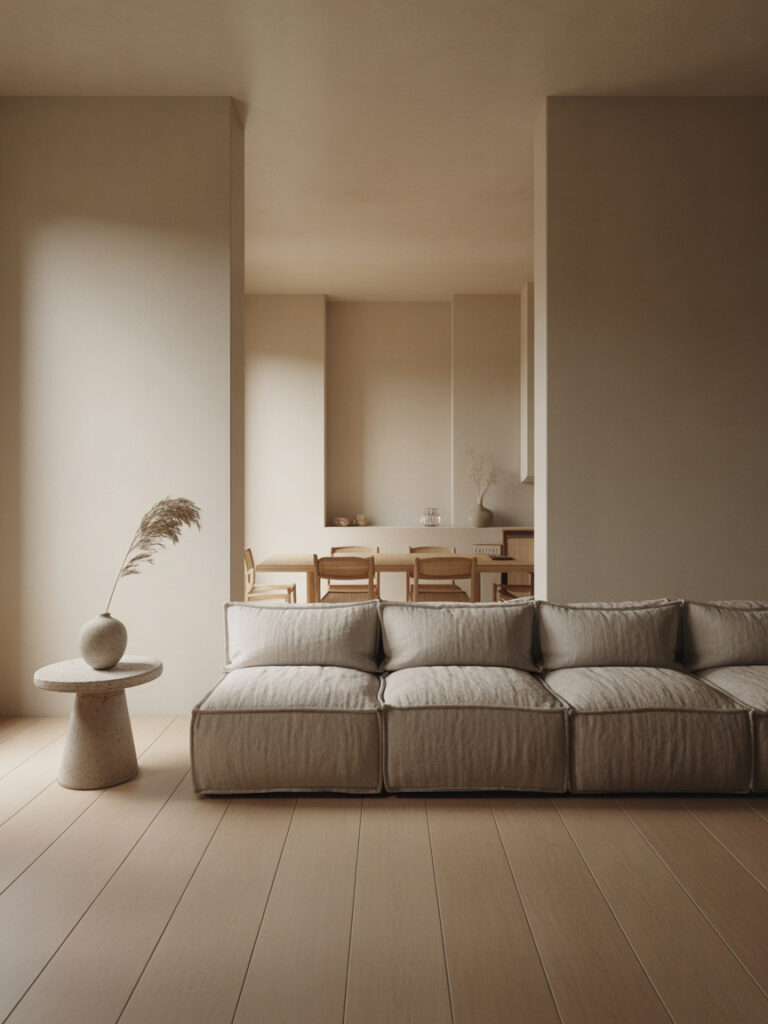
A Japandi living room is built around restraint and intention. Japandi interiors are rooted in balance and restraint, drawing from the Japandi interior design style, which blends Japanese minimalism with Scandinavian functionality.
Rather than adding decor, Japandi design focuses on removing excess. Every element has a purpose, and every material contributes to a sense of calm. Neutral tones, natural textures, and thoughtful layouts form the foundation of this style.
Japandi living room ideas prioritize comfort, flow, and visual quiet—making them ideal for modern homes that need a sense of balance.
How Japandi Living Rooms Feel Different From Minimal Interiors
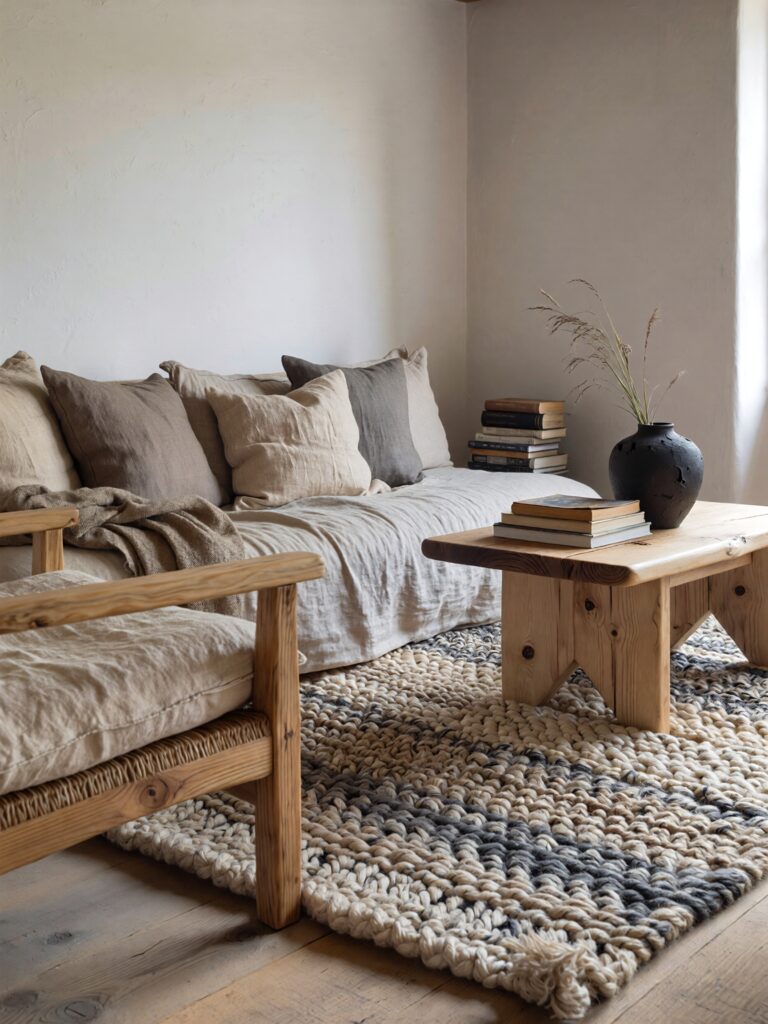
Minimal interiors often aim for visual simplicity, but Japandi living rooms focus on emotional ease. Where minimal spaces can sometimes feel stark or restrained, Japandi interiors introduce warmth through texture, material, and subtle imperfection. Wood grain is visible, fabrics crease naturally, and light is allowed to soften edges rather than highlight them. The result is a living room that feels calm without feeling empty—structured, yet deeply comfortable. Japandi living room ideas prioritize how a space supports daily life, not just how it appears in photographs.
This approach is often seen in contemporary Japandi interiors and minimalist design, where natural materials and quiet color palettes take priority.
Keep the Color Palette Soft and Neutral
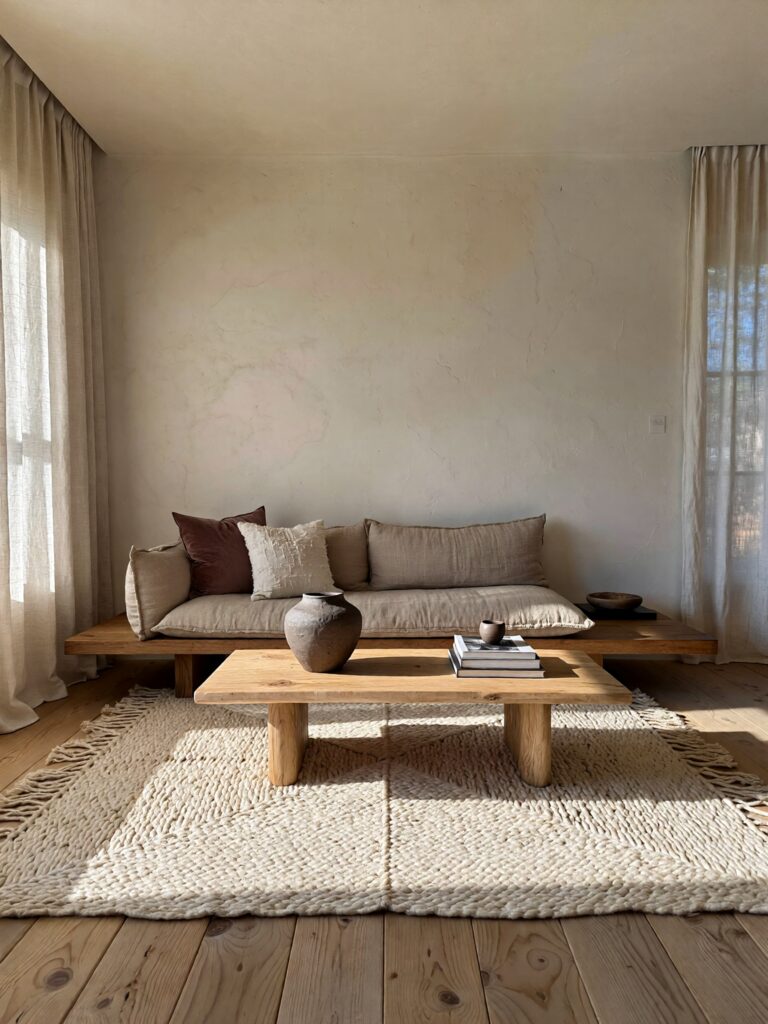
Color plays a major role in Japandi interiors.
Instead of bold shades, Japandi living room ideas rely on:
- Warm whites and off-whites
- Soft beige, sand, and taupe tones
- Muted greys with warm undertones
- Natural wood colors
These shades reflect light gently and help the space feel open and relaxed. The goal isn’t contrast—it’s harmony.
Choose Low, Functional Furniture
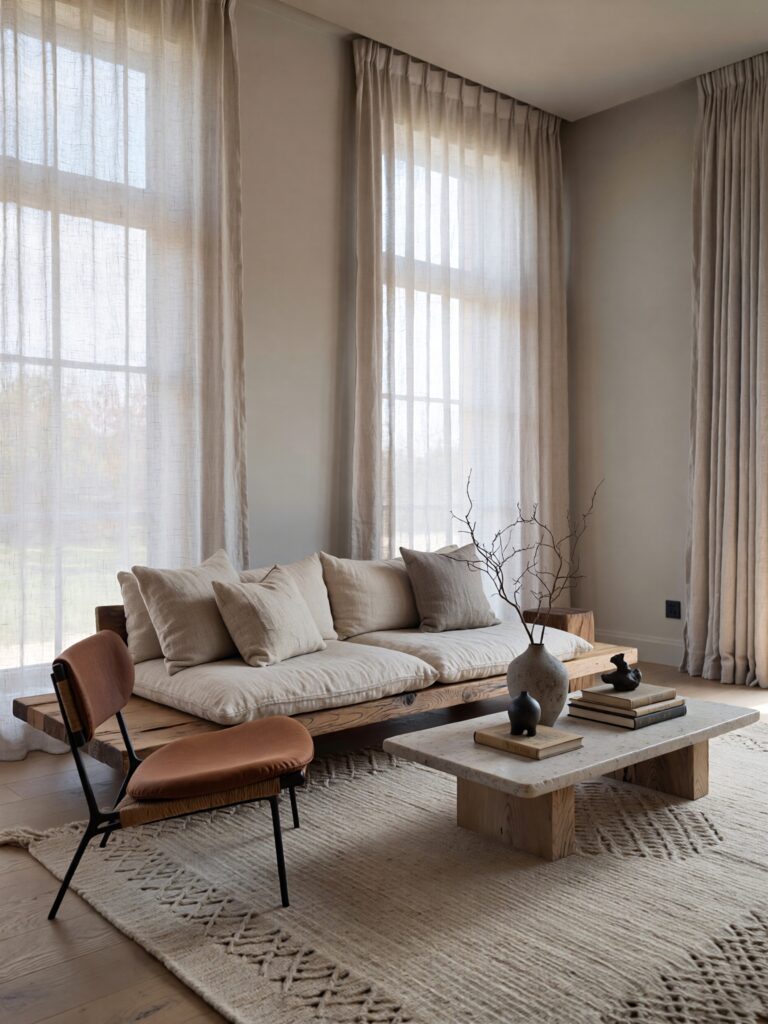
Furniture in a Japandi living room sits low and feels grounded.
Key characteristics include:
- Clean lines
- Low-profile sofas and chairs
- Natural materials like wood, linen, and cotton
- Comfortable but uncluttered forms
Japandi living room ideas avoid oversized or decorative furniture. Instead, pieces are chosen for comfort, proportion, and longevity.
Let Texture Create Visual Interest
Because color and decor are kept minimal, texture becomes essential.
Effective Japandi living room ideas often include:
- Linen or cotton upholstery
- Wool or jute rugs
- Wooden tables with visible grain
- Ceramic or clay accessories
These textures add depth without visual noise. A single textured element can bring warmth to an otherwise simple space.
Use Light to Enhance Calmness
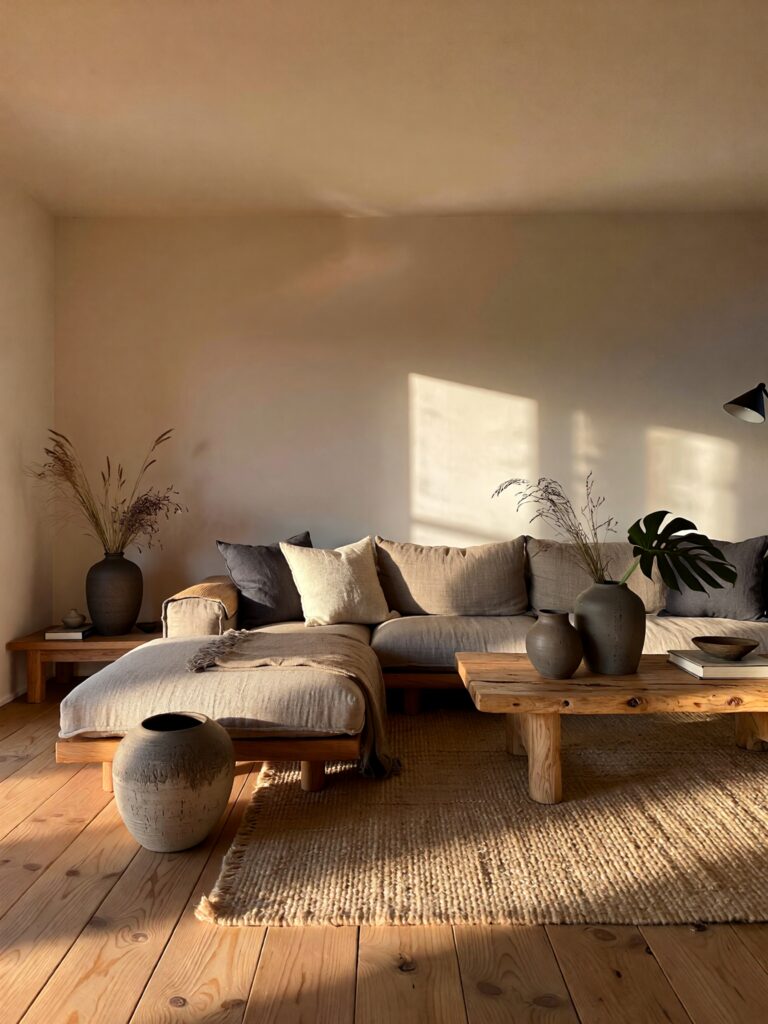
Lighting should feel natural and soft.
In Japandi living rooms:
- Daylight is maximized wherever possible
- Artificial lighting is warm and diffused
- Lamps are preferred over overhead lighting
Japandi living room ideas focus on creating a gentle atmosphere—light that supports relaxation rather than brightness.
Decorate Sparingly and With Purpose
Decor in Japandi interiors is intentional, not decorative.
Instead of filling shelves or walls, focus on:
- One or two meaningful objects
- Handmade or natural materials
- Negative space around decor
Japandi living room ideas often leave space empty. This emptiness is not unfinished—it’s calming.
Create a Balanced Layout
A Japandi living room should feel easy to move through.
Furniture placement is:
- Open, not crowded
- Centered around function
- Designed for flow and conversation
This balance helps the room feel comfortable, especially in everyday use.
Japandi Living Rooms Are About How They Feel
At its core, Japandi design isn’t about trends or visual impact.
Japandi living room ideas succeed because they:
- Reduce mental clutter
- Encourage slow living
- Create calm through simplicity
When a living room feels calm, it becomes a place to rest—not just a space to decorate.
Final Thought
Japandi living room ideas prove that a beautiful space doesn’t need excess. Through soft colors, natural textures, thoughtful furniture, and intentional decor, it’s possible to create a living room that feels balanced, warm, and timeless.
A Japandi living room isn’t designed to impress—it’s designed to be lived in.
This balance between warmth and restraint also works beautifully in bedrooms, especially in calm Japandi guest room ideas designed for rest and comfort.
Subscribe to Homeoration!
Get decor ideas, room inspirations & seasonal styling tips.
By subscribing you agree to receive emails & accept our Privacy Policy.
