
The Biological Blueprint of Light
When designing a luxury bedroom, the conversation usually begins with mattress firmness and layering organic Japandi bedding. However, if the lighting plan is flawed, the most expensive linens in the world will not save your sleep. In Japandi design, lighting is not treated merely as a decorative accessory; it is a biological tool.
We are designing a “Circadian Sanctuary.” If you are blasting your retinas with a 5000K LED ceiling light at 10:00 PM, your brain registers it as midday sun, halting melatonin production. According to sleep science experts regarding the circadian rhythm, mimicking the setting sun—bringing the light lower to the ground and shifting it to a deep, warm amber—is the key to triggering restorative sleep.
1. The “Low-Horizon” Rule
The cardinal rule of a Japandi bedroom is to abandon the “big light” in the center of the ceiling. Overhead lighting casts harsh, unnatural shadows on the face and elevates the heart rate. Instead, we implement “Low-Horizon” lighting.

Subscribe to Homeoration!
Get decor ideas, room inspirations & seasonal styling tips.
By subscribing you agree to receive emails & accept our Privacy Policy.By placing all artificial light sources below eye level—such as a floor-standing paper lantern or low-mounted wall sconces—we subconsciously signal to the brain that the day is over. This low-slung illumination pairs perfectly with the low-profile architecture of your Japandi bed frame and minimalist nightstands, creating a cohesive visual plane that is inherently restful.
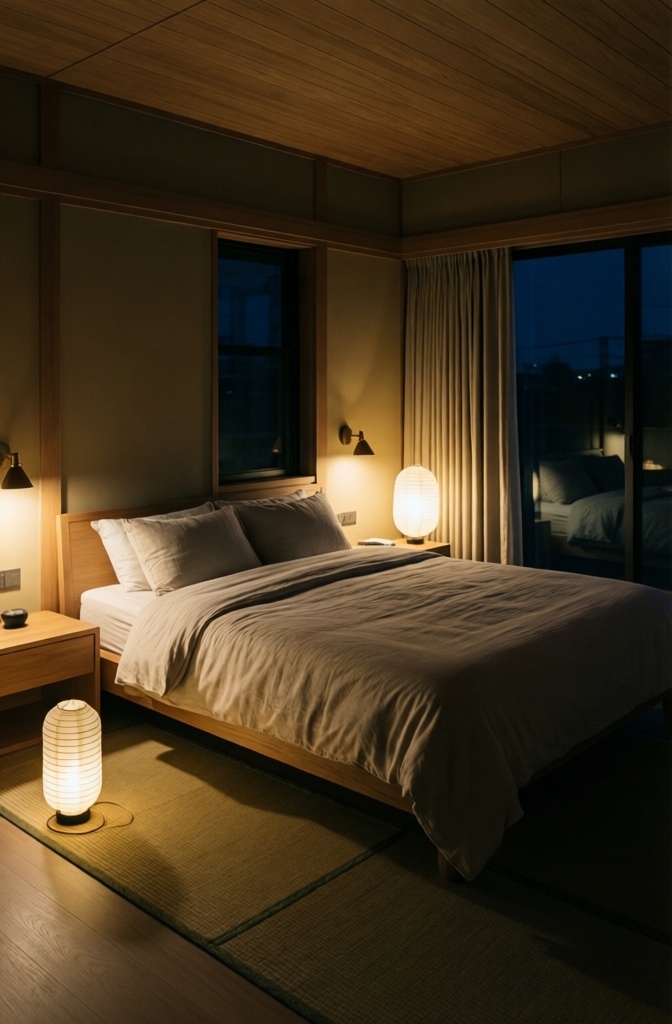
2. The Floating Moon: Washi Paper Pendants
If you must use a ceiling fixture, it must be heavily diffused. The ultimate expression of Japandi lighting is the oversized, asymmetrical Washi paper pendant, heavily influenced by the iconic Akari light sculptures by Isamu Noguchi.
Hung low in the corner of a room, a paper lantern acts like a captive moon. The textured Washi paper absorbs the harshness of the bulb, emitting a soft, omnidirectional glow that casts zero hard shadows. It embodies the Japanese aesthetic principle of In’ei Raisan (In Praise of Shadows), where the beauty of a room is found in its dim, atmospheric gradients rather than brilliant illumination.

3. The Functional Contrast: Matte Black Sconces
While paper lanterns provide ambient mood, you still need functional task lighting for reading in bed. This is where the Scandinavian influence in Japandi design truly shines.
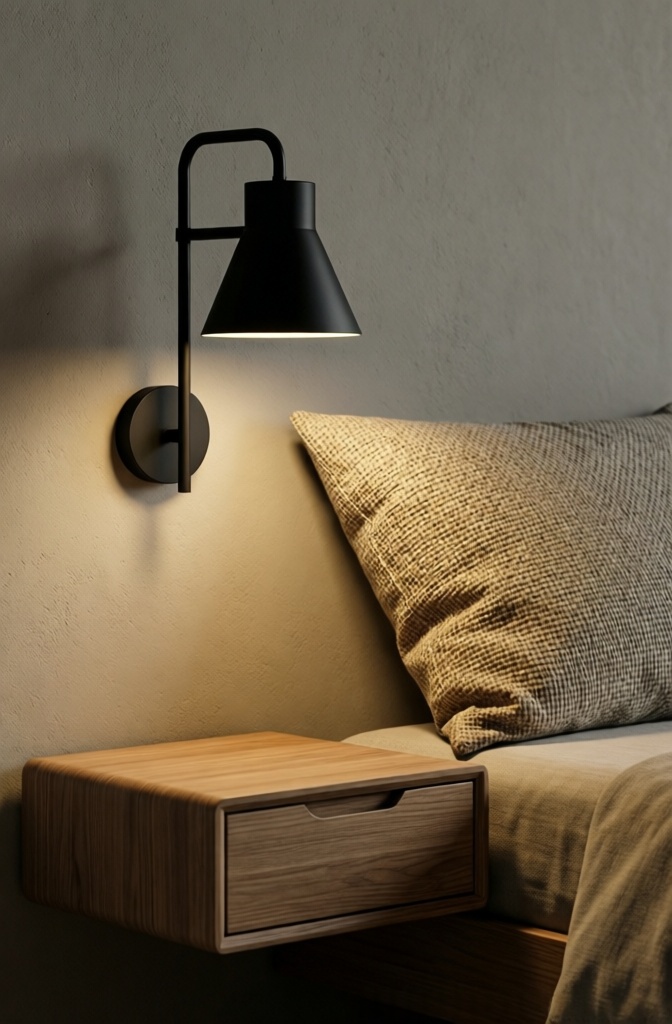
Install ultra-thin, matte black architectural sconces on the wall on either side of the bed. The sharp, blackened steel provides a beautiful, high-contrast “ink stroke” against the soft, rumpled textures of the room. More importantly, directional sconces allow you to read without flooding the entire room with light, preserving the Zen visual silence required by your partner.
4. Strict Color Temperature: 2700K or Less
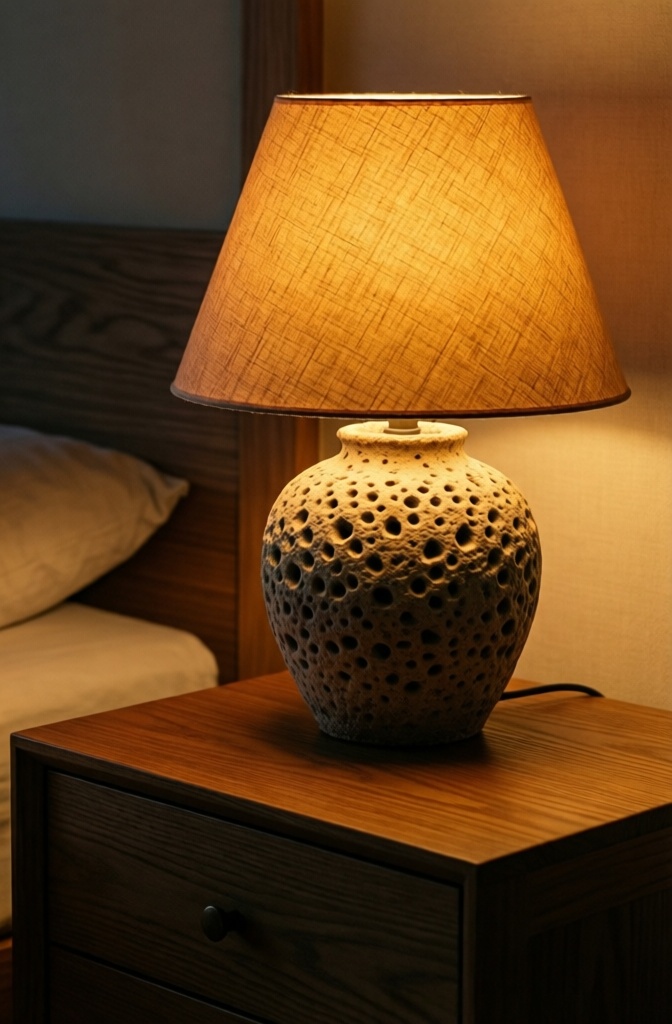
I cannot stress this enough: color temperature dictates the emotion of the room. Your bedroom bulbs must never exceed 2700 Kelvin (Warm White).
In 2026, the luxury residential standard is pushing even warmer, toward 2200K (Amber/Candlelight). This warm spectrum actively stimulates melatonin production, turning your bedroom into an active recovery zone. When sourcing bulbs, ensure they have a high CRI (Color Rendering Index) of 90 or above so that the rich tones of your walnut furniture and earth-toned linens are represented accurately, a detail often noted in high-end architectural lighting guides.
5. Hidden Illumination: The Under-Bed Glow
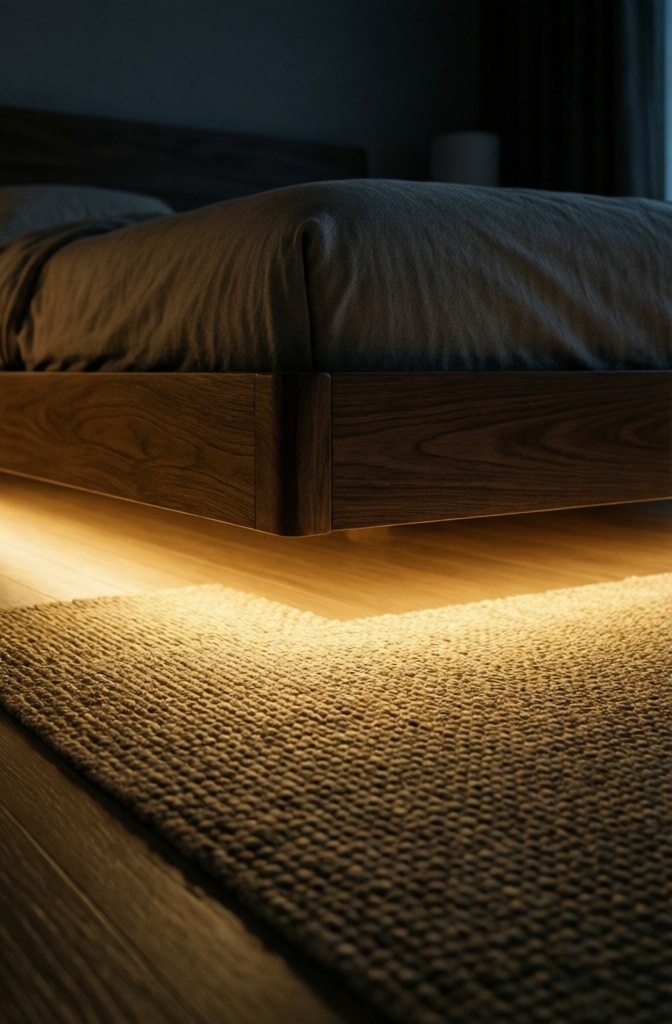
For a truly modern Japandi touch, install a dimmable, warm LED strip recessed entirely out of sight under the lip of a floating bed frame or behind a headboard.
This creates a soft, ambient wash of light across the floor. It acts as a perfect, non-intrusive nightlight if you need to wake up in the dark, and it reinforces the architectural illusion of weightlessness, making heavy solid wood furniture appear to levitate off the rug.
6. Layered Natural Light: The Morning Transition
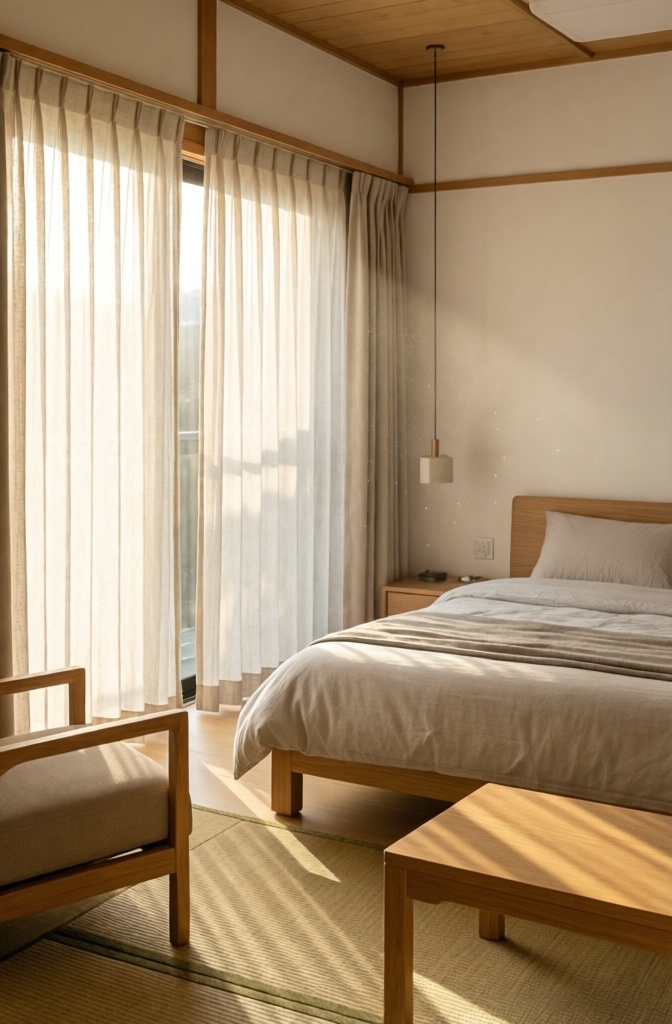
Lighting design is not just about electricity; it is about controlling the sun. To achieve that hazy, ethereal morning glow without sacrificing sleep, layer your window treatments.
Use a heavy, natural linen blackout curtain closest to the window for total darkness at night. Layer this with a sheer, unbleached linen panel on the inside. When the blackout curtain is pulled back in the morning, the sheer panel diffuses the harsh, direct sunrise into a soft, cinematic wash over the room, allowing you to wake up gently with the natural rhythm of the day.
Conclusion: The Tactile Dimmer Ritual
Smart home automation is incredibly convenient, but there is something inherently Wabi-Sabi about an analog, tactile dimmer switch. The physical act of turning a brass or matte black dial down as you prepare for bed becomes a sensory ritual. It forces you to consciously acknowledge the transition from “doing” to “resting.” By mastering your Japandi lighting plan, you don’t just decorate a room; you engineer a better night’s sleep.
Subscribe to Homeoration!
Get decor ideas, room inspirations & seasonal styling tips.
By subscribing you agree to receive emails & accept our Privacy Policy.
