
The “Slightly Imperfect” Bed
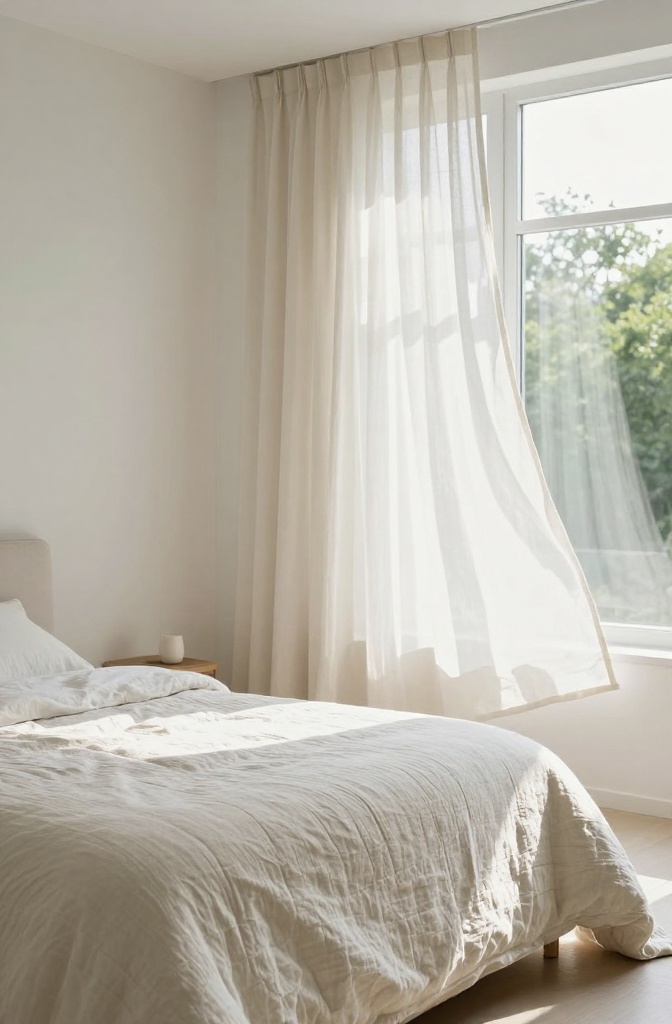
In luxury interior design, the bed is the tactile heart of the home. However, the Japandi approach to bedding radically departs from traditional Western styling. If your bed looks like a stiff, heavily ironed hotel room setup, you have missed the mark. A 10/10 Japandi bed should look like someone just stepped out of it—breathable, slightly rumpled, and impossibly soft.
This is the essence of Wabi-Sabi, the Japanese philosophy of finding beauty in imperfection. While your low-profile Japandi bed frame provides the rigid architectural structure, the bedding provides the soul. We achieve this highly sought-after aesthetic not through chaotic patterns, but through “Textural Layering”—using different weights of natural fibers in a cohesive color palette to create depth.
1. The Foundation: Stone-Washed Linen
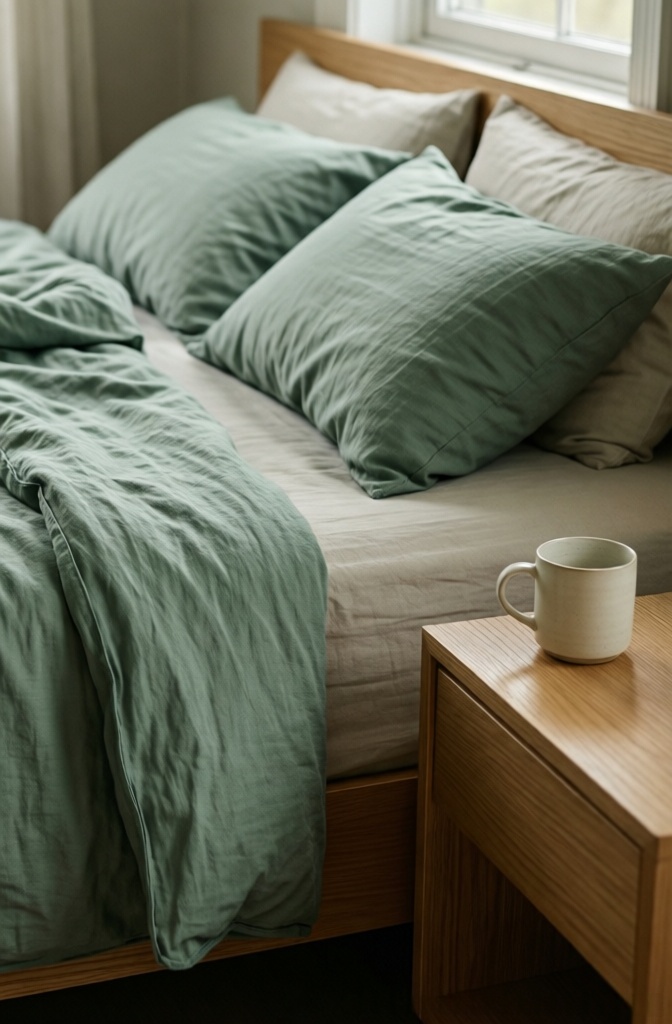
The only fabric that truly fits the Japandi aesthetic is pure, stone-washed linen. Unlike tight-weave cotton percale or synthetic blends, linen possesses a natural “slub” (a slight irregularity in the yarn) that catches the ambient warm bedroom lighting and creates micro-shadows across the bed.

Subscribe to Homeoration!
Get decor ideas, room inspirations & seasonal styling tips.
By subscribing you agree to receive emails & accept our Privacy Policy.Beyond aesthetics, linen is a functional powerhouse. It is highly breathable, naturally antimicrobial, and possesses thermoregulating properties, a fact frequently highlighted by sleep science experts regarding optimal sleep hygiene. In 2026, the color trend is moving decisively away from clinical, pure white. Instead, opt for “Bone,” “Oatmeal,” and “Unbleached Sand” tones. These warmer whites feel grounded and connect seamlessly with the organic elements used in your wider home.
2. The “Muddy” Palette: Desaturated Earth Tones
To elevate your bedroom from basic minimalism to high-end Japandi, you must master the “Muddy” palette. We are seeing a massive shift toward desaturated, heavily muted earth tones—think Gloucester Sage, Terracotta Clay, Faded Ochre, and Deep Charcoal.
- The Layering Secret: Do not buy a “bed in a bag” where the sheets match the duvet perfectly. True Japandi styling requires a high-low color contrast. Pair a light “Sand” fitted sheet with a “Deep Clay” duvet cover. This contrast provides a visual anchor for the room, making the bed the undeniable focal point, especially if you are leaning into a Dark Japandi aesthetic.
3. The Waffle-Knit Throw (Architectural Weight)
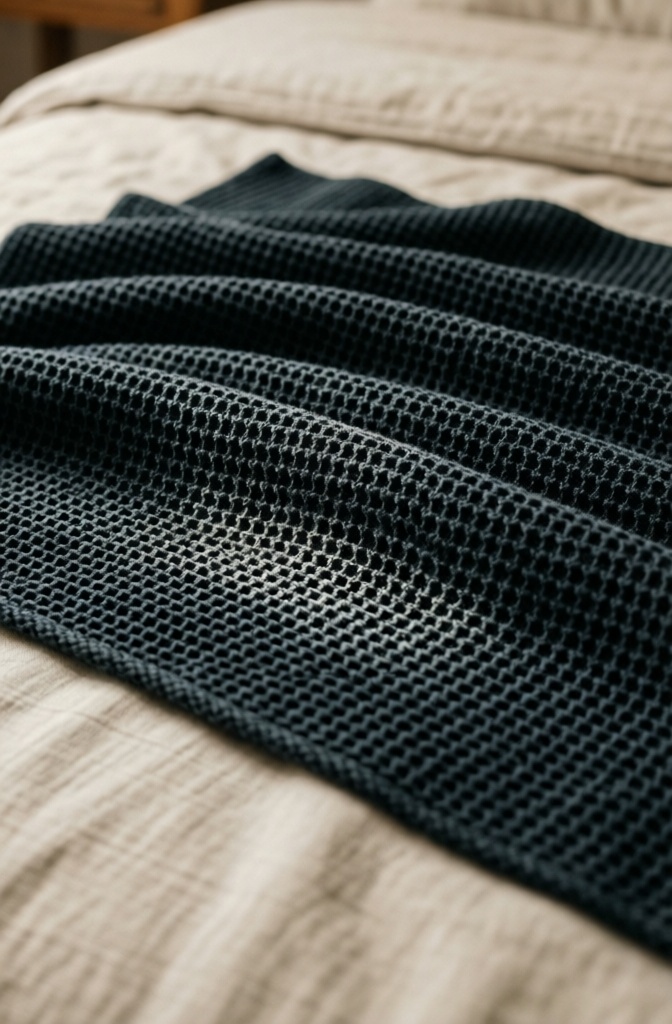
A bed styled with just a duvet often looks flat and uninspired. To add “Architectural Weight,” introduce a heavy-gauge waffle-knit throw at the foot of the bed.
The rhythmic, three-dimensional “grid” of a chunky waffle knit serves a specific design purpose: it subtly mimics the vertical and horizontal lines of the wood slats often used in Japandi wall decor. This creates a subconscious, cohesive design language that flows from your living room straight into your sanctuary.
4. The “No-Pillow-Stack” Rule
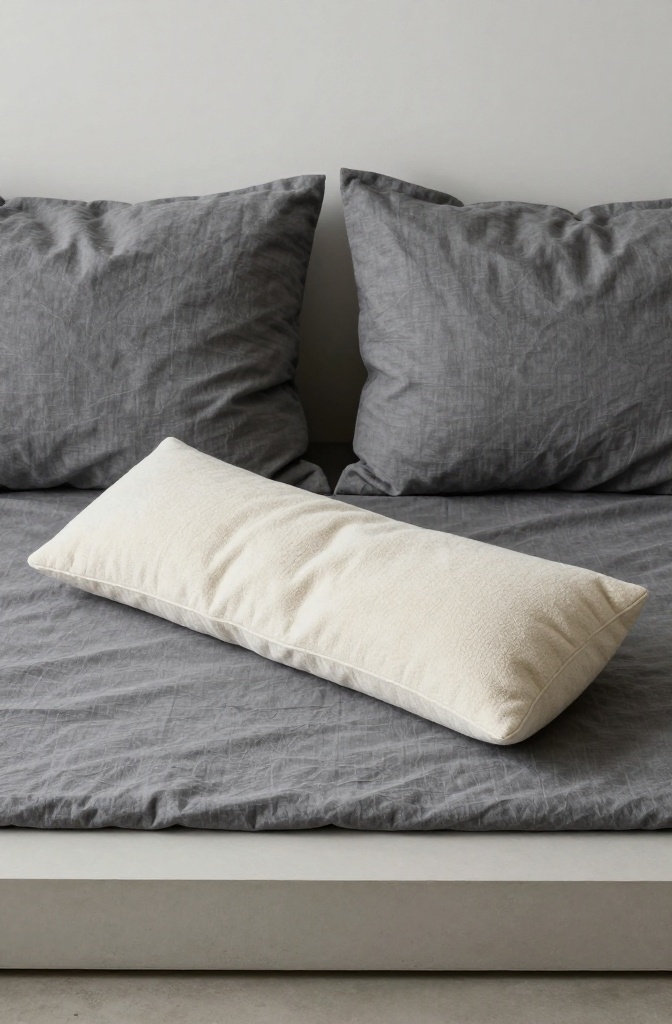
Western bedding styling often involves an avalanche of ten to twelve decorative throw pillows that end up on the floor every night. In Japandi design, we practice restraint. Limit yourself to four primary pillows: two large “Euro” shams in a heavy linen for reading, and two standard sleeping pillows hidden behind them.
If you feel the need for a decorative element to break up the color block, use a single, long lumbar pillow. Choose a fabric with extreme tactile contrast, such as raw silk, heavy bouclé, or nubby wool. This “one pillow” rule maintains the Zen visual silence required for a calming environment.
5. Hemstitched Details and Raw Edges
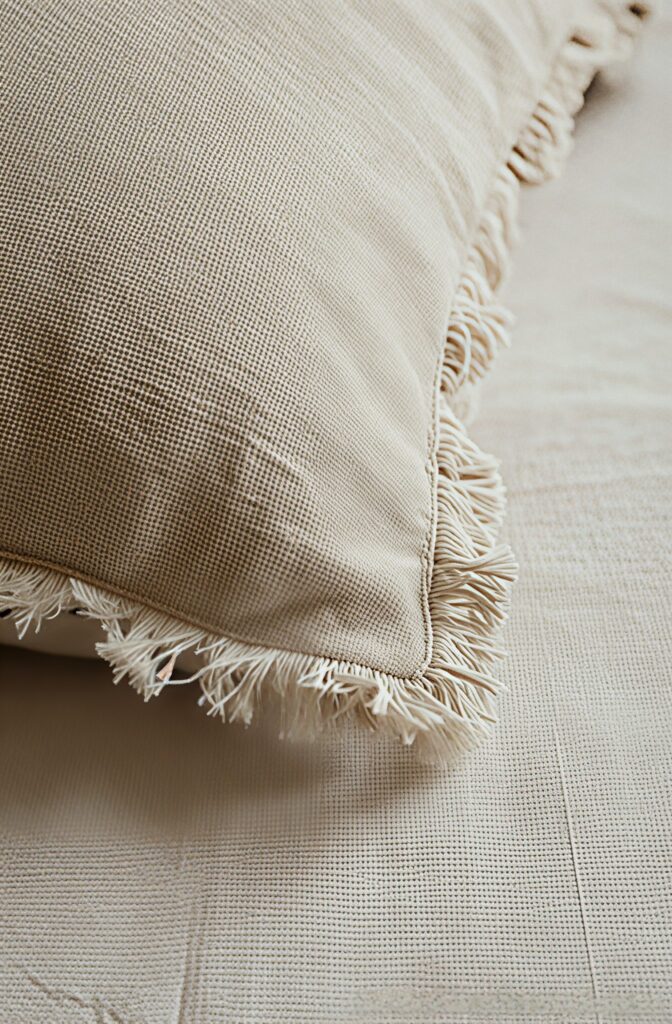
The true luxury of Japandi is hidden in the “Micro-Detail.” When sourcing your bedding, look for pieces that feature a “raw edge” fringe or a simple, traditional hemstitch.
These small, seemingly “unfinished” touches remind the sleeper of the human hands that loomed the fabric. It aligns beautifully with the ethos of authentic craftsmanship and serves as a subtle rebellion against mass-produced, perfectly laser-cut fast fashion.
6. Seasonal Layering: The Summer Coverlet
A true Japandi home breathes with the seasons. As the temperatures rise, the heavy down duvet should be retired. In its place, utilize a “Coverlet”—a thin, quilted layer of cotton or linen.
Swapping to a lightweight coverlet keeps the low-profile lines of your bed frame visible and preserves the Ma (negative space) in the room. A beautifully textured coverlet draped effortlessly over the bed ensures the space feels airy, cool, and intentionally designed, even in the dead of August.
7. The Sensory Finish: Scented Linen Sprays
Japandi is not just a visual style; it is a 360-degree sensory experience. The final step in mastering your bedding is an olfactive anchor.
Keep a minimalist amber glass bottle of linen spray on your Japandi nightstand. Look for grounding, earthy notes like Hinoki (Japanese Cypress), Cedarwood, or Sandalwood. A light mist over your rumpled linen sheets five minutes before getting into bed grounds the nervous system and creates a Pavlovian trigger that it is time to rest.

Conclusion: Sleep in the Imperfect
Mastering Japandi bedding is an exercise in letting go of perfection. By investing in high-quality, raw materials like stone-washed linen and chunky waffle knits, and embracing a muddy, desaturated color palette, you create a bed that invites you in rather than intimidating you. Let the sheets wrinkle. Let the throw blanket drape naturally. In the Japandi bedroom, comfort is the ultimate luxury.
Subscribe to Homeoration!
Get decor ideas, room inspirations & seasonal styling tips.
By subscribing you agree to receive emails & accept our Privacy Policy.
