
The Philosophy of Grounded Sleep
The transition from a standard bedroom to a restorative sanctuary begins with the foundation. In the modern home, the bedroom is no longer just a place to close your eyes; it is a dedicated space for nervous system recovery. The defining architectural element of this space is the Japandi bed frame.
Moving away from the towering, heavily upholstered headboards of traditional Western design, the Japandi aesthetic demands a return to the “Platform.” A low-profile frame is not merely a stylistic choice; it fundamentally alters the geometry of the room. It creates an illusion of higher ceilings, allows natural light to travel uninterrupted across the floor, and establishes a grounded, earthy energy that is essential for deep rest.
Why Low-Profile is Essential in Japandi Design
Maximizing ‘Ma’ (Negative Space)
In Japanese aesthetics, the concept of Ma—the intentional use of empty space—is just as critical as the physical objects in a room. A massive, bulky bed frame consumes the visual weight of a bedroom, making the space feel cramped and loud. Similar to the principles we applied to Japandi living room wall decor, choosing a low-profile minimalist bed maximizes the empty space above you. This vertical void provides visual silence, allowing the eye—and the mind—to rest before sleep.

Subscribe to Homeoration!
Get decor ideas, room inspirations & seasonal styling tips.
By subscribing you agree to receive emails & accept our Privacy Policy.The Psychological Shift of Grounding
There is a profound psychological benefit to sleeping closer to the earth. Rooted in traditional Japanese floor-sleeping culture, a low-to-the-ground bed frame creates a feeling of stability and physical anchoring. When the mattress sits just a few inches above the floor, the act of getting into bed feels like a deliberate descent into rest, rather than just climbing onto another piece of furniture.
Core Materials for a Japandi Bed Frame
The material of your bed frame dictates the “temperature” of the room. Because Japandi design limits decorative clutter, the natural grain of the wood becomes the primary art piece.
Dark Walnut: The Grounding Anchor
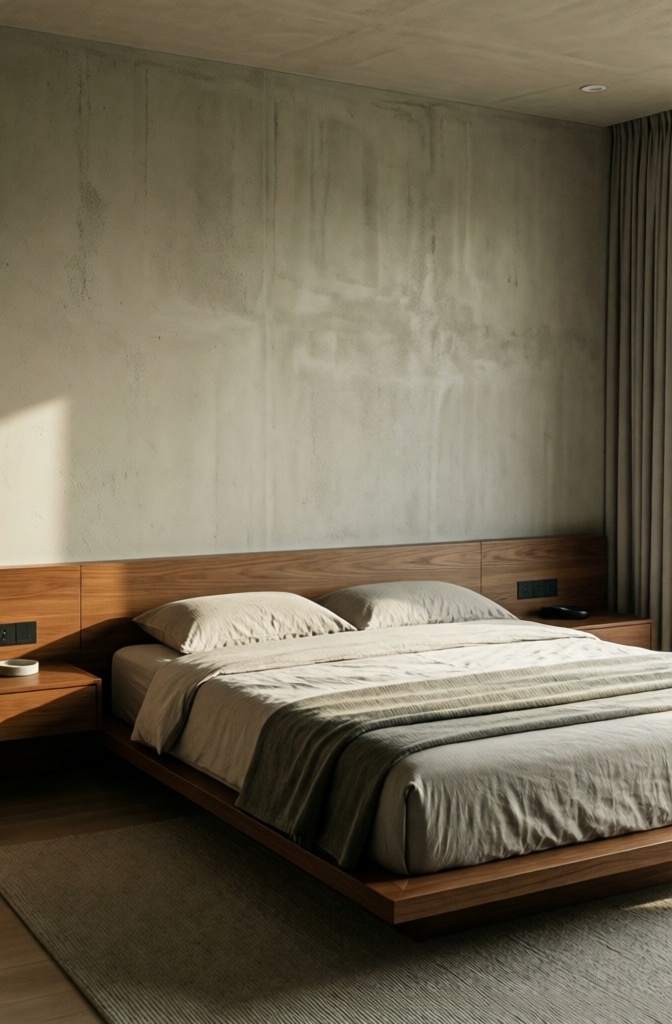
For those designing a Dark Japandi interior, a solid walnut platform bed is the ultimate anchor. Walnut offers a heavy, deeply saturated visual weight that feels expensive, permanent, and sophisticated. The rich, chocolate tones of the wood contrast beautifully against lighter, “muddy” wall textures like sand or warm greige limewash. Walnut is ideal for larger rooms or spaces with abundant natural light, as it absorbs light and creates a moody, intimate atmosphere.
Light Oak and Ash: Scandinavian Breathability
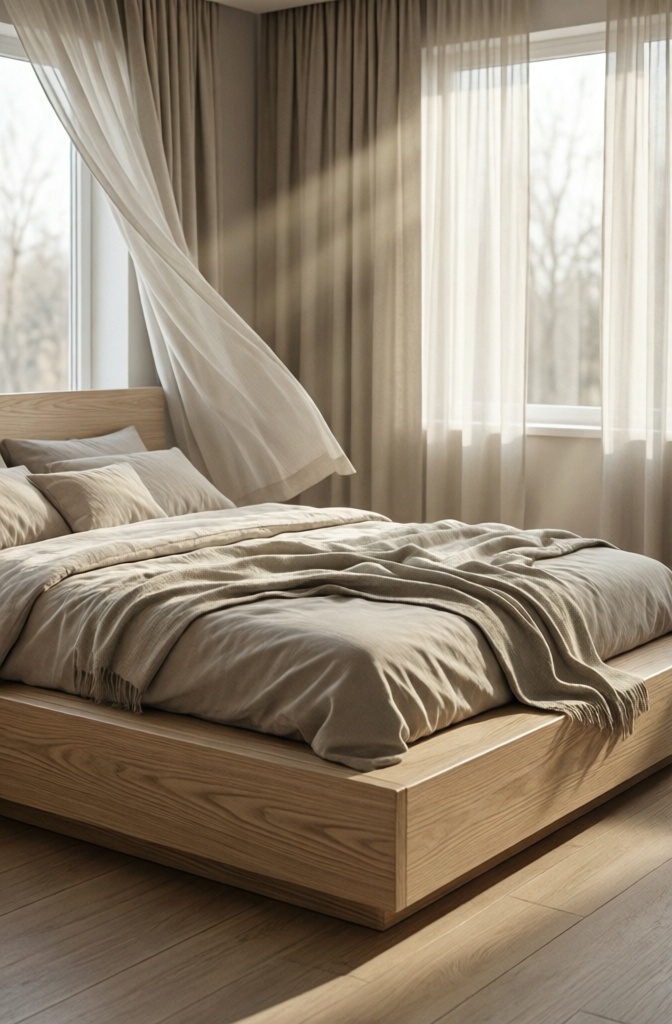
If the goal is to maximize a smaller space or lean heavier into the Scandinavian side of the aesthetic, natural light oak or ash is the superior choice. These lighter woods reflect natural light, making the bedroom feel airy, expansive, and crisp. A white oak bed frame seamlessly blends into neutral walls, effectively disappearing and making a 100-square-foot room feel like a spacious suite.
Key Architectural Styles to Consider
Not all low beds are created equal. The specific geometry of the frame determines how modern or traditional the space will feel.
The Floating Platform
The “floating” bed frame is a staple of 2026 interior design. By using deeply recessed legs or a hidden plinth base, the heavy wooden platform appears to levitate a few inches off the floor. This architectural trick introduces a sense of weightlessness to the room, beautifully juxtaposing the heavy solidity of the wood itself. It is the perfect marriage of form and function, keeping the floor line visually unbroken while providing a sturdy sleep foundation.
The Integrated Seamless Headboard
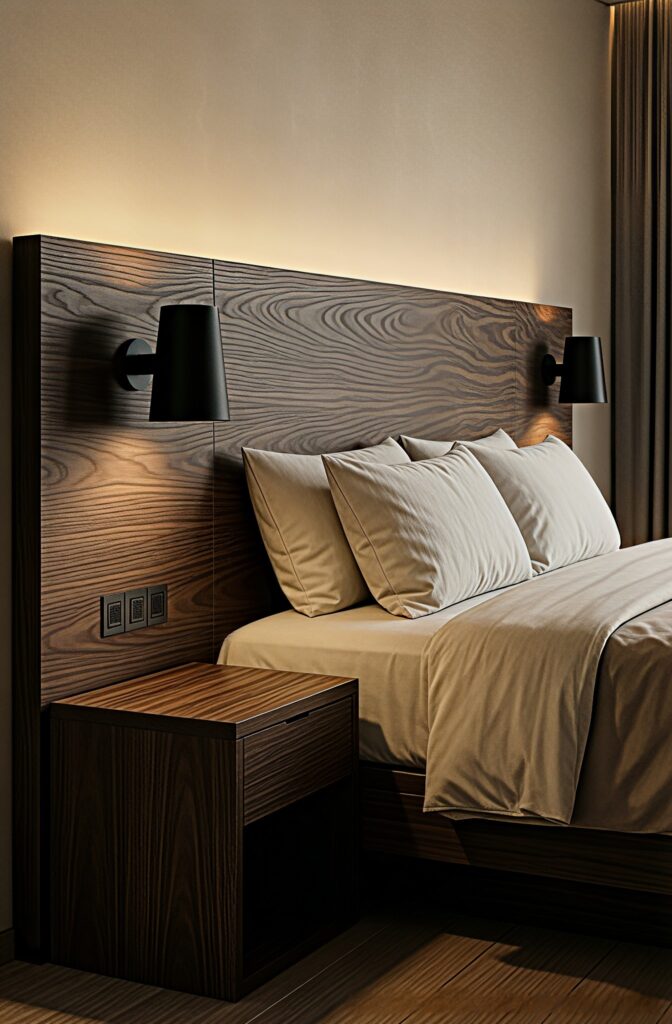
A high-end Japandi bed rarely features a separate headboard bolted onto a metal frame. The most luxurious designs feature a singular, continuous unit where the headboard extends horizontally well past the mattress, often encompassing the nightstands. This creates a seamless, linear plane across the back wall. This horizontal continuity mimics the horizon line, which is inherently calming to the human eye, and provides a “hotel suite” level of architectural polish.
The Spindle Headboard
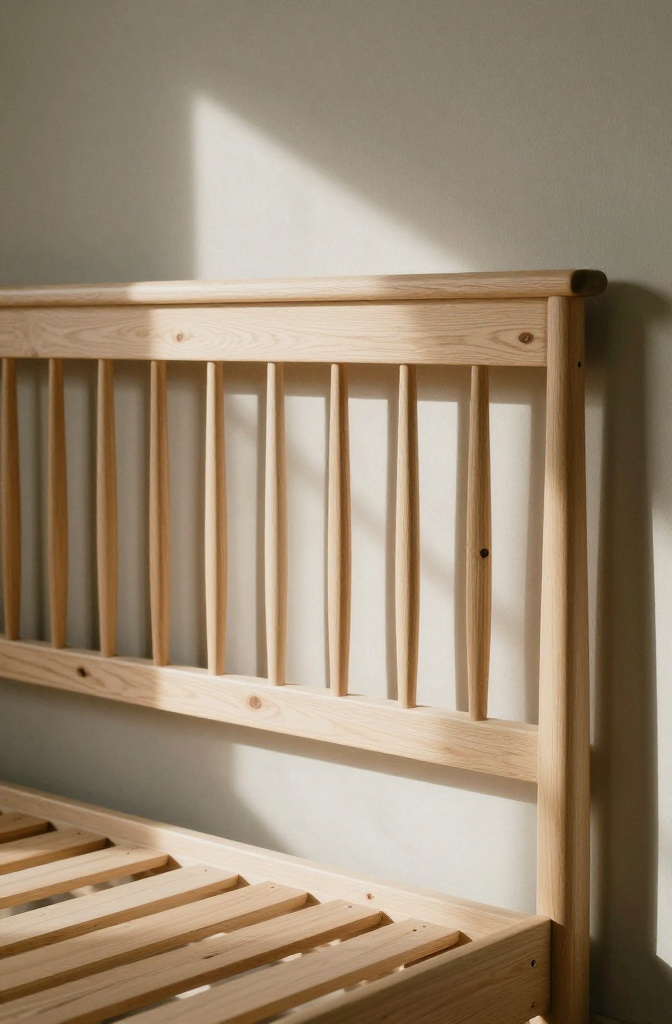
For a softer approach that nods to traditional Scandinavian craftsmanship, the spindle headboard remains a timeless choice. Featuring a series of thin, vertical wooden dowels, a spindle headboard provides rhythmic texture while allowing light and air to pass directly through the furniture. It feels organic and hand-crafted, satisfying the Wabi-Sabi desire for unpretentious, tactile materials.
Authentic Touches and Sustainable Craftsmanship
True luxury in Japandi design is found in the unseen details and the integrity of the construction.
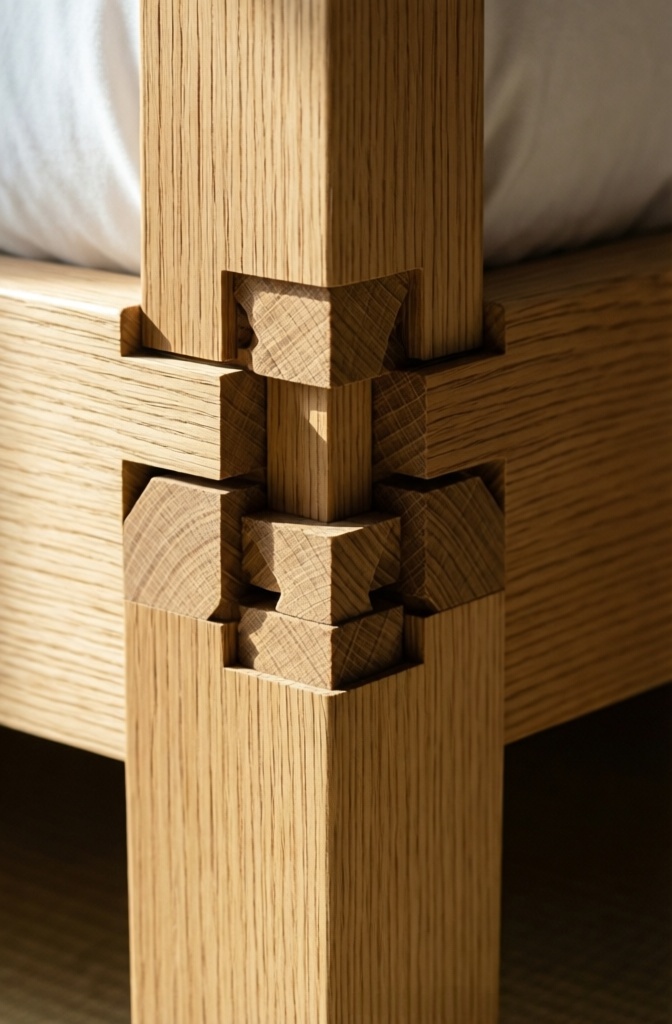
Traditional Japanese Joinery (Kigumi)
The pinnacle of a Japandi bed frame is one constructed using traditional Japanese wood joinery, known as Kigumi. This technique relies on precisely carved, interlocking wooden joints rather than metal screws, nails, or brackets. A bed built with this method is not only a masterpiece of sustainable craftsmanship, but it is also highly functional: without metal hardware, the frame will never squeak or loosen over time. It is an heirloom piece built for absolute silence.
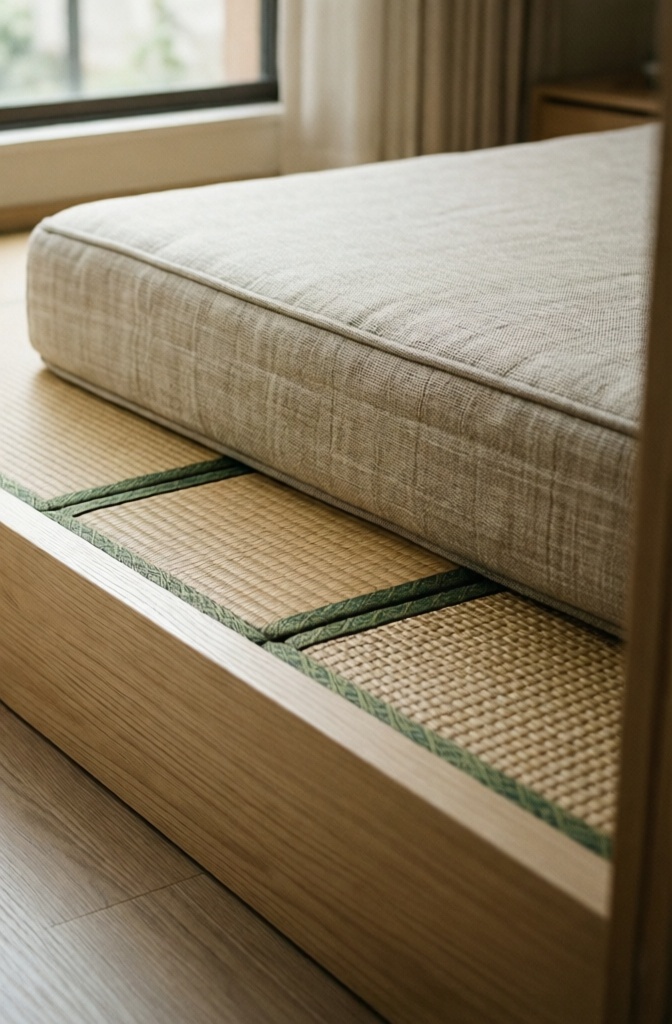
Incorporating Tatami Mats
To introduce an authentic sensory element to the bedroom, some modern platform beds are designed to hold traditional Tatami mats within the frame, sitting directly underneath the mattress. Woven from natural rush grass, Tatami mats provide a firm, breathable foundation that naturally regulates humidity. More importantly, they infuse the bedroom with a subtle, grassy, earthy scent that instantly triggers a sense of calm—a holistic approach to restorative design.
Conclusion: Laying the Foundation for Your Sanctuary
Selecting a Japandi bed frame is the most critical decision in your bedroom design process. Whether you opt for the deep grounding of a floating walnut platform or the airy craftsmanship of a light oak spindle bed, the goal remains the same: choosing intention over trend. By prioritizing low-profile architecture, authentic materials, and visual silence, you lay the literal and figurative foundation for a space dedicated entirely to rest.
Subscribe to Homeoration!
Get decor ideas, room inspirations & seasonal styling tips.
By subscribing you agree to receive emails & accept our Privacy Policy.
