
This post contains affiliate links. If you purchase through these links, Homeoration earns a small commission at no extra cost to you — it helps keep this content free.
Most people choose their plant first and their planter second. This is the wrong order.
In a minimalist home, the planter is not a container — it is an architectural object. It sits on the floor at the lowest visual plane in the room, and at that level it carries more visual weight than any cushion, throw, or decorative object placed above it. A beautiful plant in the wrong planter looks like a mistake. The same plant in the right planter looks like it was always meant to be there.
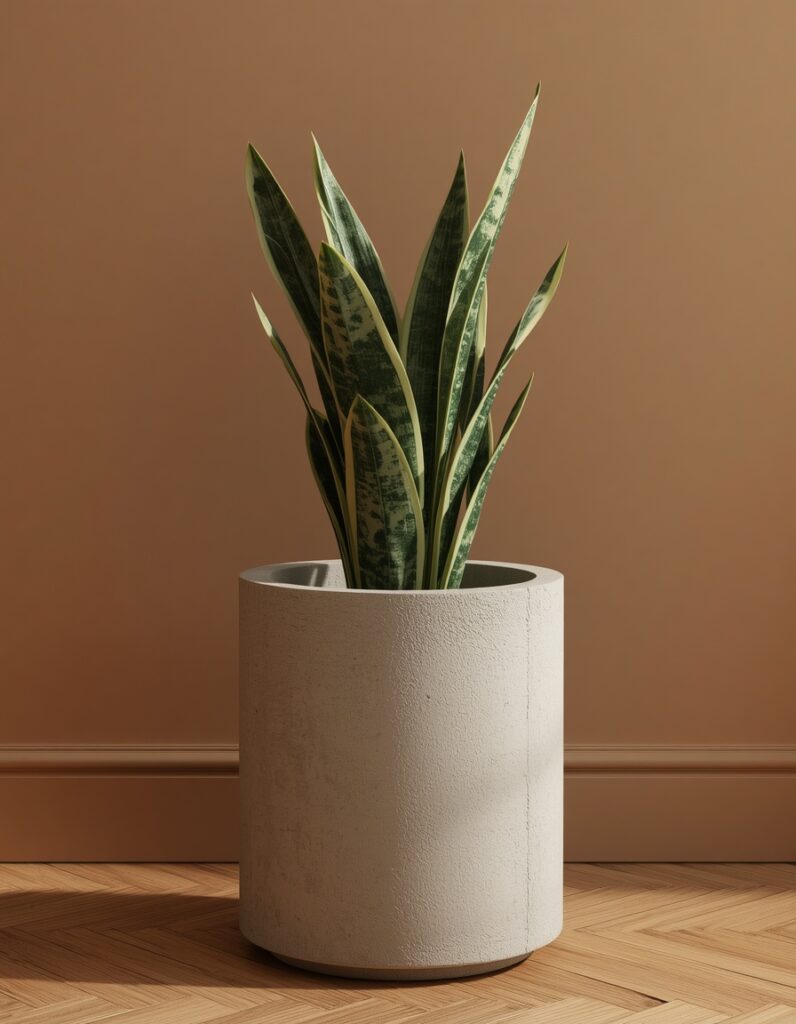
Why the Planter Matters More Than the Plant
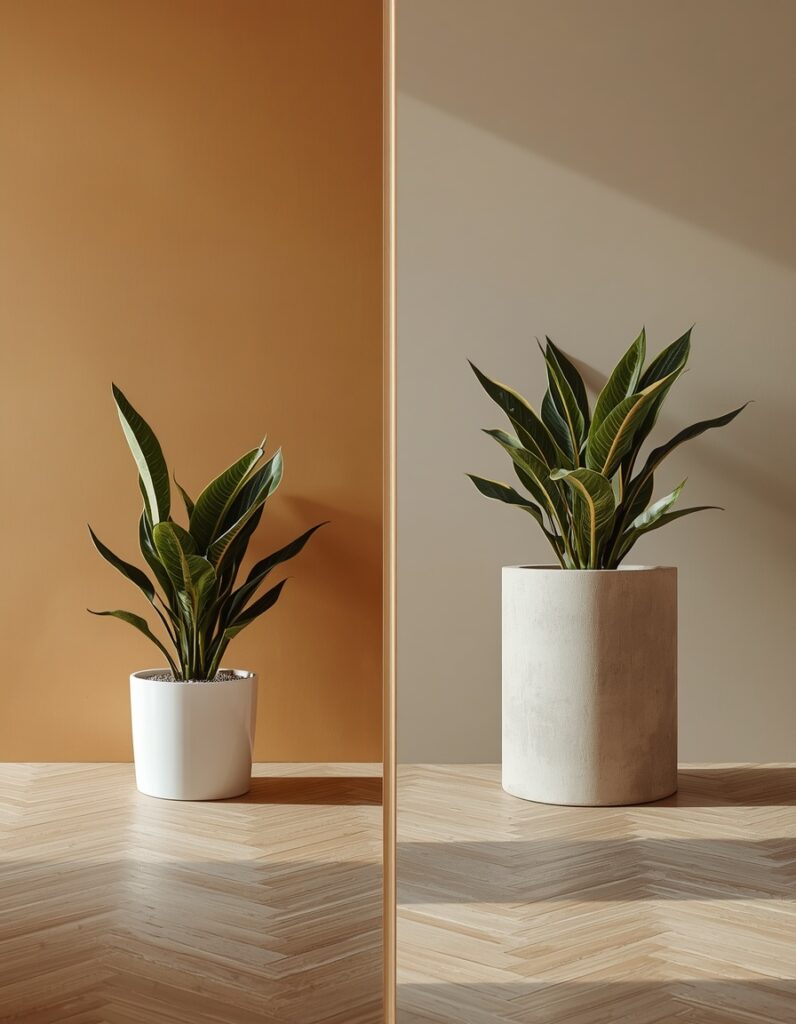
The planter determines whether a plant reads as furniture or as an afterthought.
A six-foot Ficus Audrey in its original black plastic nursery pot communicates one thing: the plant arrived recently and nobody decided what to do with it yet. The same tree in a heavy raw concrete cylinder communicates something entirely different — permanence, intention, and the specific calm that comes from an object that looks like it has always been there.
The three planter rules in a minimalist home:
Rule 1 — Material over color. The material of the planter should relate to the other natural materials in the room. Concrete reads alongside stone and limewash plaster. Terracotta reads alongside warm wood tones and raw linen. Woven seagrass reads alongside jute rugs and bamboo. The material connection is what makes a planter feel placed rather than purchased.
Rule 2 — Weight at the bottom. The visual weight of the planter should always feel heavier than the plant above it. A large, top-heavy plant in a small pot looks like it is about to fall. A correctly sized planter grounds the plant — it communicates stability and rootedness that makes the whole composition feel calm. As a rule: the planter diameter should be at minimum one-third of the plant’s total height.
Rule 3 — Matte always. Glossy planters reflect light and create visual noise — exactly what a minimalist room is engineered to eliminate. Every planter in a warm minimalist or Japandi home is matte finish. No exceptions. The material should absorb light, not perform it.
The Four Planter Materials — Complete Guide
Material 1 — Raw Concrete and Fiberstone
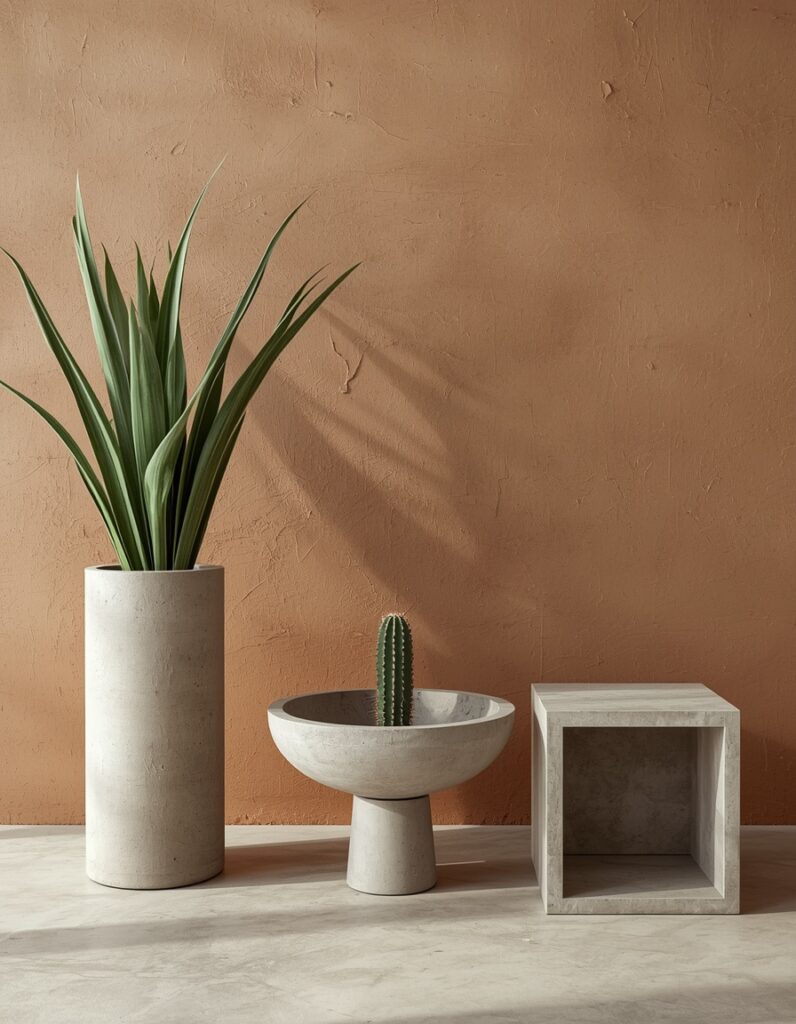
Concrete is the most architecturally Japandi planter material available. It references the natural world — stone, mineral, the earth — without being precious about it. A raw concrete planter has the specific quality of looking better as it ages. Moisture marks, subtle patina, the slight darkening at the rim where water has evaporated — these are the wabi-sabi qualities that make a concrete planter more beautiful at five years than it was on day one.
What concrete does in a room:
It anchors. A concrete planter at floor level provides the visual ballast that prevents a room from feeling like it floats. Particularly effective in rooms where all the furniture is light wood and pale linen — the concrete introduces a material density that grounds the entire composition.
It contrasts. The rough mineral texture of concrete against the delicate leaves of a snake plant or the airy canopy of a ficus creates the specific contrast that makes both elements more beautiful. Delicate against heavy. Organic against structural.
The practical consideration: solid concrete planters are extremely heavy — a 15-inch cylinder can weigh 30–50 pounds empty. For larger plants, fiberstone (a concrete-look composite) provides the same visual weight at 60–70% less actual weight. From any standing distance, fiberstone is indistinguishable from solid concrete.
Best plants for concrete planters: snake plant, fiddle leaf fig, bird of paradise, rubber plant, monstera — all architectural plants with strong silhouettes that benefit from the heavy base.
Material 2 — Aged Terracotta
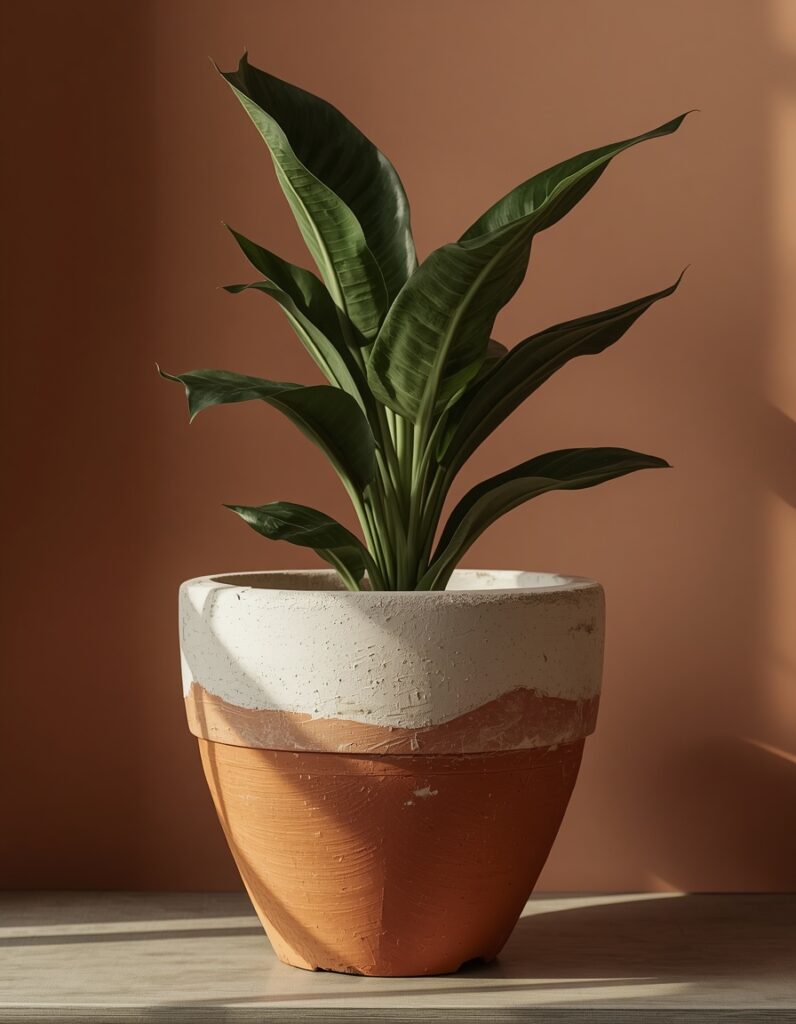
Terracotta is the oldest planter material in the world and in 2026 it is the most wabi-sabi. The Japanese aesthetic of finding beauty in age and imperfection is written into terracotta’s nature — it cannot be separated from the material. A new terracotta pot is beautiful. A terracotta pot with two years of use and the natural white mineral deposits of evaporated water is extraordinary.
The chalky patina secret: the white chalky coating that develops on the outside of a terracotta pot as it ages is not mold and not damage. It is the mineral residue from water evaporating through the porous clay walls — the same process that makes terracotta one of the best materials for plant health. The patina is the visual evidence of a living relationship between the pot and the plant. In a wabi-sabi interior it is considered beautiful. In a minimalist room it is the honest mark of use that makes an object feel permanent.
Accelerating the patina (the designer trick): if you want a new terracotta pot to look aged immediately, dilute plain white yogurt with water to a thin consistency and paint it on the outside of the pot with a brush. Place the pot in a shaded, slightly humid location for 48 hours. Moss and mineral residue will begin to develop within a week.
What terracotta does in a room:
It warms. The specific orange-brown clay tone of terracotta adds warmth to a room in a way that concrete does not. In rooms where the palette leans toward the cooler end of the warm neutral spectrum — more gray-greige than yellow-greige — a terracotta planter corrects the balance without introducing any obvious color.
It breathes. Terracotta is porous — it allows air and moisture to pass through the walls, which makes it the healthiest planter material for most indoor plants. Roots in terracotta are significantly less susceptible to overwatering rot than roots in glazed ceramic or plastic.
Best plants for terracotta: all cacti and succulents, olive trees, snake plants, herbs, and any plant that benefits from drying between waterings.
Material 3 — Matte Black Ceramic
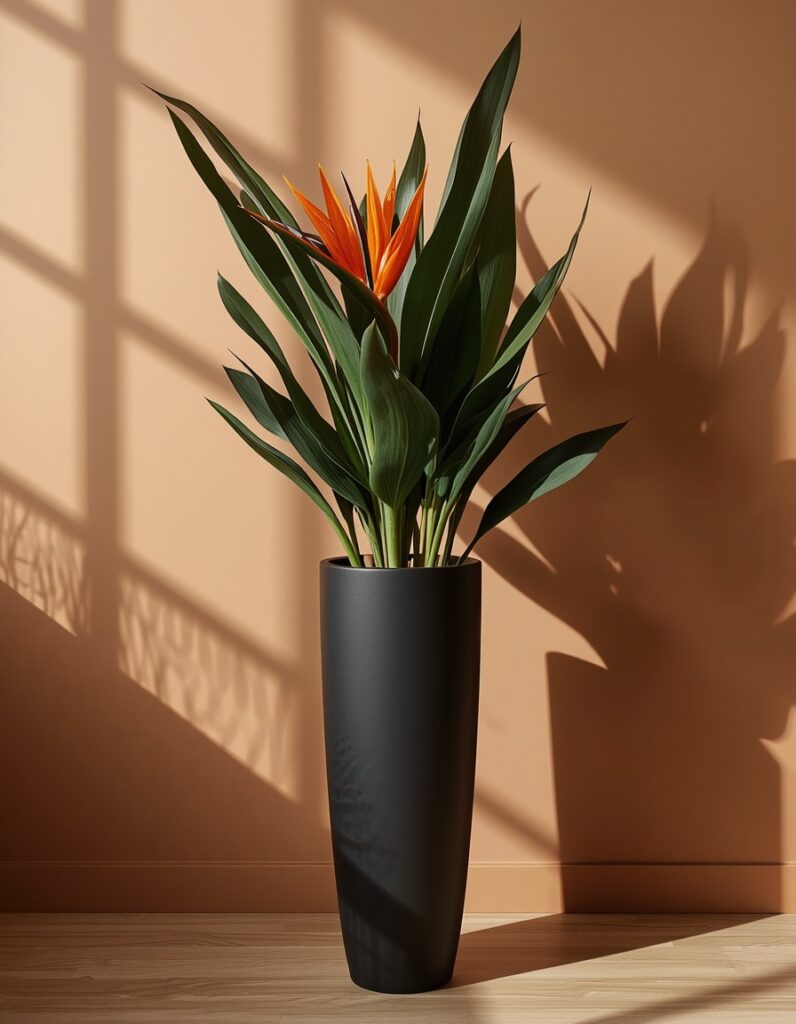
The matte black ceramic planter is the most strategically Japandi planter choice because it simultaneously serves two functions — it is a planter and a black accent. In the warm minimalist framework, 10% of the room’s visual surface should be matte black to provide the grounding anchors that prevent the warm neutral palette from floating. A matte black floor planter counts as your 10%. It introduces the black without furniture or hardware.
The dual function principle: when you place a matte black ceramic planter in a corner of a warm minimalist living room, you are making two decisions at once. You are adding a plant. And you are placing a black anchor at floor level — the most grounding position in the room. The plant softens the black. The black grounds the plant. Neither element alone has the same effect as the two combined.
The material specifics: matte black ceramic planters vary widely in quality. The critical distinction is in the surface finish — a genuinely matte glaze absorbs light the way concrete and raw terracotta do. A semi-matte or satin finish has a slight sheen that reflects light and partially defeats the purpose. When purchasing, look specifically for “matte finish” rather than “semi-gloss” or “satin” in the product description.
The sizing rule for matte black planters: because matte black reads as heavier than it is — dark colors visually advance rather than recede — the planter should be slightly smaller in diameter than a concrete or terracotta equivalent for the same size plant. A 12-inch matte black ceramic reads as visually equivalent to a 14-inch concrete cylinder. Factor this in when sizing.
Best plants for matte black ceramic: bird of paradise, monstera, fiddle leaf fig, Japanese peace lily, dark-leaved rubber plant — any plant with dramatic form and substantial leaf presence that can match the visual weight of the dark vessel.
Material 4 — Woven Seagrass and Natural Fiber Baskets
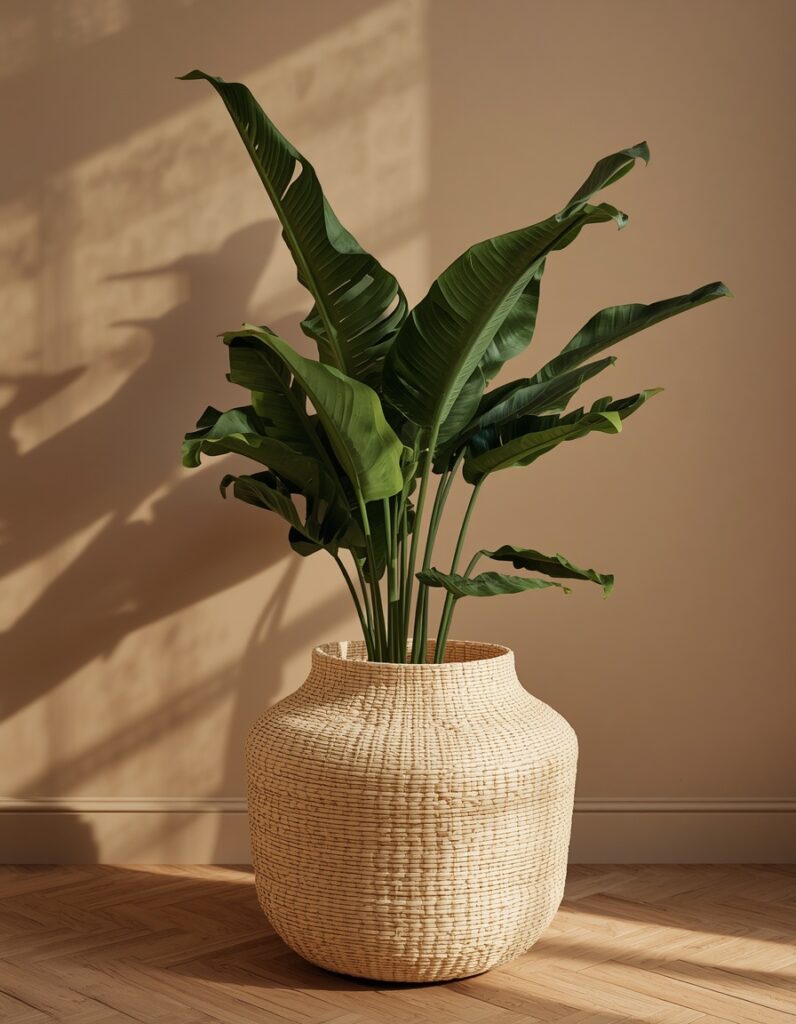
Woven seagrass and natural fiber baskets are the warmest and most tactile of the planter materials — they contribute texture at floor level in the same way a jute rug contributes texture underfoot. In a Japandi room where every surface aims to be natural and tactile, a woven seagrass planter basket is the most material-consistent choice available.
The practical structure: woven baskets are almost never watertight. They are designed to hold a standard nursery pot inside them rather than direct-planting. This is actually an advantage — it makes repotting trivial, it means the basket never gets waterlogged, and it allows you to remove the inner pot for watering without moving the basket itself.
The liner approach: place a simple plastic or terracotta saucer inside the basket before inserting the nursery pot. The saucer catches drainage water and prevents it from reaching the weave. For extra security, line the interior of the basket with a plastic bag cut to size before inserting the saucer and pot.
The texture rule for baskets: woven baskets work best when the plant inside them has structural, upright growth rather than trailing or spreading habits. A monstera or a bird of paradise in a woven basket reads as deliberate and architectural. A trailing pothos in a woven basket reads as slightly untidy. Save baskets for the plants with presence.
What woven seagrass does in a room:
It softens. Concrete and matte black ceramic planters add weight and structure — woven seagrass adds warmth and organic softness. In rooms where the other planter materials are too heavy or too architectural, a woven basket brings the texture down to something more approachable.
It scales up affordably. Large woven seagrass baskets cost significantly less than equivalent concrete or ceramic planters at the same diameter. For very large plants — seven-foot faux trees, established six-foot monstera specimens — a 20-inch woven seagrass basket is both the most cost-effective and the most visually appropriate choice.
The Planter Sizing System — Never Get This Wrong Again
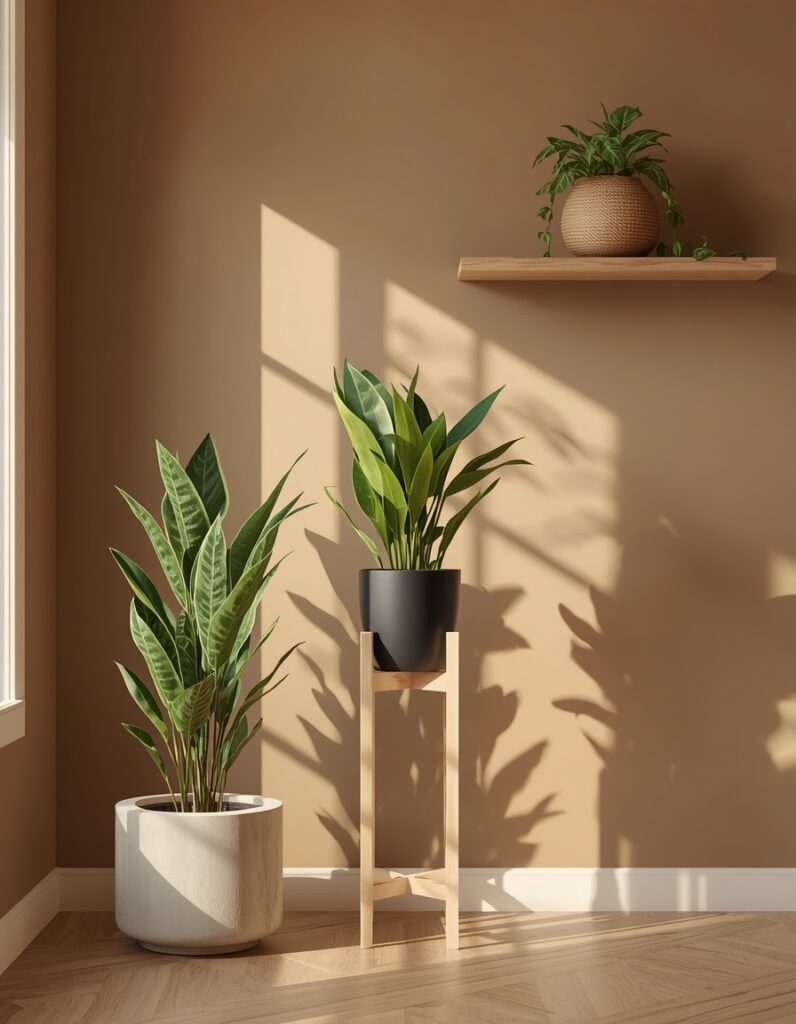
The single most common planter mistake in any room is a pot that is too small for the plant.
A tree balanced on a narrow pot looks unstable, temporary, and wrong. It undermines everything the plant was supposed to contribute to the room. The sizing rules below apply regardless of material.
The floor planter formula:
For plants 4–5 feet tall: minimum 12-inch diameter planter For plants 5–7 feet tall: minimum 14–16-inch diameter planter For plants 7+ feet tall: minimum 18–20-inch diameter planter
The shelf and console formula:
For plants 12–18 inches tall: 5–6-inch planter For plants 18–30 inches tall: 7–8-inch planter For plants 30+ inches tall: 10-inch planter minimum
The visual weight test: once the plant is in the planter, stand across the room and look at the base. If the planter looks like it could tip, it is too small. If you are unsure, go one size larger. A planter that is slightly too large reads as generous and intentional. A planter that is slightly too small reads as provisional and cheap.
The drainage rule: every planter used for a living plant needs a drainage hole. Without drainage, water accumulates at the root zone and root rot becomes inevitable within weeks. For decorative planters without drainage holes — which are common in concrete and ceramic — purchase a plain terracotta pot one size smaller than the decorative planter and use it as the inner pot. The terracotta inner pot drains into the decorative outer pot which acts as a saucer.
How to Style Multiple Planters Without Creating Clutter
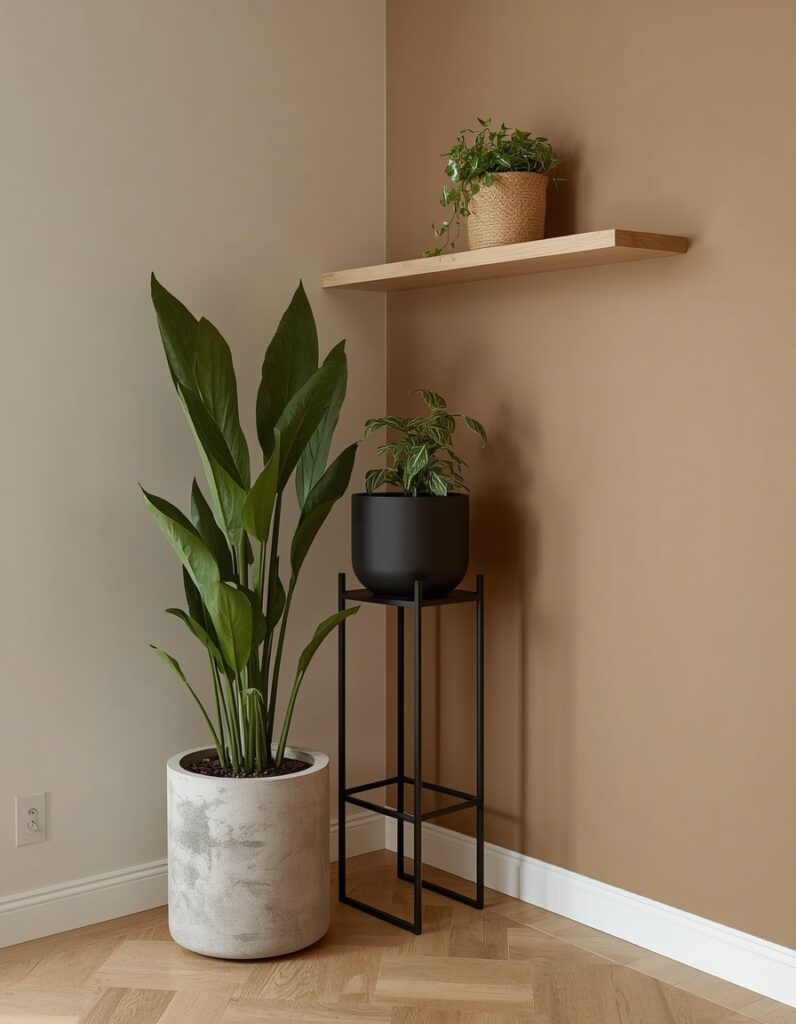
The minimalist principle for multiple planters is the same as for any collection of objects in a Japandi room — vary the heights, keep the materials related, and leave clear space between each one.
The three-height rule: when styling multiple planters in the same zone of a room, use three different height levels — floor level, knee height (on a plant stand or low surface), and eye level (on a shelf or console). This creates visual rhythm without creating visual noise. Three planters at the same height compete. Three planters at different heights compose.
The material relationship rule: all planters in the same room should share at least one material quality — the same tonal direction (warm neutrals), the same finish (matte), or the same material family (all natural fiber, or all ceramic). Mixing concrete, matte black ceramic, and seagrass in the same room works because all three are warm-toned and matte. Mixing concrete, bright glazed ceramic, and colored plastic creates visual chaos regardless of how good the plants are.
The breathing space rule: leave a minimum of 18 inches of clear floor between any two floor-level planters. The space between the planters is as important as the planters themselves. Plants that crowd each other look like a collection that grew without intention. Plants with breathing room between them look like individual design decisions.
Frequently Asked Questions
What is the best planter material for a minimalist home?
The best single planter material for a minimalist or Japandi home is raw concrete or fiberstone — it is heavy enough to anchor large plants, matte enough to avoid visual noise, and ages beautifully over time. For rooms where concrete reads as too heavy, aged terracotta provides the same organic matte quality with more warmth. Matte black ceramic works best when you want the planter to function as a black accent element within the room’s composition.
How do I choose the right size planter?
Use this formula: the planter diameter should be at minimum one-third of the plant’s total height, and visual weight at the base should always feel greater than visual weight at the canopy. For floor-level plants over 5 feet tall, use a planter with at least a 14-inch diameter. Most people chronically undersize their planters — when in doubt, size up by one increment.
Can I use woven seagrass baskets for large plants?
Yes — and for very large plants (6+ feet) woven seagrass baskets are often the best choice because they scale up affordably compared to equivalent concrete or ceramic. Always use a nursery pot inside the basket rather than direct-planting, and place a saucer inside the basket before inserting the pot to catch drainage water. The basket will remain dry, and the plant roots will have proper drainage.
The Finished Arrangement: Heavy Base, Light Canopy, Clear Space
The rule that governs every successful planter choice in a minimalist room is the same rule that governs every other object in the space — the element at the bottom of the composition should feel more permanent than the element at the top.
A raw concrete cylinder on the floor, a snake plant rising from it, the delicate leaves spreading against a warm greige wall. The concrete does not move. It has never moved. It will not move. That permanence is communicated to everything around it — the room settles.
A tall indoor tree instantly lifts a quiet corner into something memorable. Let the plant carry the space, and keep surrounding tones warm and neutral for balance. The planter is what makes that possible. It is the reason the tree looks like it was always meant to be there rather than recently delivered. Southern Creative
Start with the planter. Let the plant follow. The room resolves itself from there.
Shop This Look
All products available on Amazon US with Prime shipping.
Concrete cylinder planter — LA JOLIE MUSE Large Concrete Planter 12-inch ~$35–55 · Genuine concrete texture, matte gray finish, drainage hole. Best for snake plants, rubber plants, small fiddle leaf figs.
Fiberstone floor planter — Veradek Plastic Series Square Planter in Charcoal ~$65–120 . Concrete-look, UV resistant, light enough to move. Best for large architectural trees.
Budget concrete-look — Novelty Round Cylinder Planter in gray 12-inch ~$25–40 . Best for medium snake plants and small monstera.
Aged terracotta floor pot — Southern Patio 16-inch Terracotta Classic Planter ~$25–45 . Unglazed, classic clay, drainage hole. Ages beautifully — gets better with use.
Small terracotta set — D’vine Dev Large 10 Inch Terracotta Plant Pot ~$18–30 · For shelf and console styling. Two sizes available.
Matte black ceramic — D’vine Dev 10 Inch Ceramic Planter Pot ~$45–75 · True matte finish, drainage hole, clean cylindrical form. Functions as your room’s black accent element.
Matte black with stand — D’vine Dev Ceramic Planter with Ebony Stand ~$45–75 · Elevated version — adds structure and height variation.
Seagrass basket — LA JOLIE MUSE 10-inch Natural Seagrass Planter Basket ~$18–30 · True seagrass weave, organic color variation, honest texture.
Bamboo plant stand — Wisuce Bamboo Plant Stands Indoor 4-Tier · ~$45–70 · Natural bamboo, four graduated shelves. The most Japandi plant stand material.

