
- The Architecture of Shadow: Why Lighting is the Soul of Japandi
- 1. The Akari Legacy: The Power of Washi Paper
- 2. The Rule of Three: Layering for Depth
- 3. Integrated LEDs and the "Floating" Effect
- 4. Smoked Glass and "Dark Japandi" Tones
- 5. Biomorphic Sculptural Pendants
- 6. The 2700K Standard: Color Temperature
- 7. Matte Black Architectural Sconces
- 8. Managing Natural Light with Linen Sheers
- 9. The Glow of "Wabi-Sabi": Localized Pools
- 10. Natural Materials: Wood and Stone Bases
- 11. Sculpting with Slats
- 12. The Sunset Ritual: Smart Dimming
- Common Mistakes to Avoid
- FAQ
The Architecture of Shadow: Why Lighting is the Soul of Japandi
Japanese aesthetics has a concept called In’ei Raisan — “In Praise of Shadows,” from Tanizaki’s essay of that name. While lighting is a critical pillar, achieving a cohesive look requires balancing these glows with furniture and layout; if you are just starting your journey, I recommend bookmarking our comprehensive guide on Japandi Living Room Ideas to see how these elements unify.
For Homeoration, we approach lighting as a tool for emotional regulation. A well-lit Japandi living room shouldn’t feel like a showroom; it should feel like a soft exhale at the end of a long day. If you have a single “big light” in the center of your ceiling, you aren’t living in a Japandi space—you’re living in an office. Let’s dismantle that and rebuild with intention.
1. The Akari Legacy: The Power of Washi Paper
The cornerstone of any Japandi Living room lighting scheme is the paper lantern. Originally popularized by Isamu Noguchi, these “light sculptures” provide the ultimate diffused glow.
Takeaway: To keep it Japandi, choose a specimen with a “Standard” trunk — a single, clean wooden stem — rather than a bushy one.
2. The Rule of Three: Layering for Depth
To achieve a professional editorial look, you must layer your light at three different heights:
- The High Layer: Subtle architectural downlights or a sculptural pendant.
- The Mid Layer: Wall sconces or eye-level table lamps on sideboards.
- The Low Layer: Floor lamps and integrated LEDs near the skirting boards. This vertical variety mimics the way natural light filters through a forest canopy.
3. Integrated LEDs and the “Floating” Effect
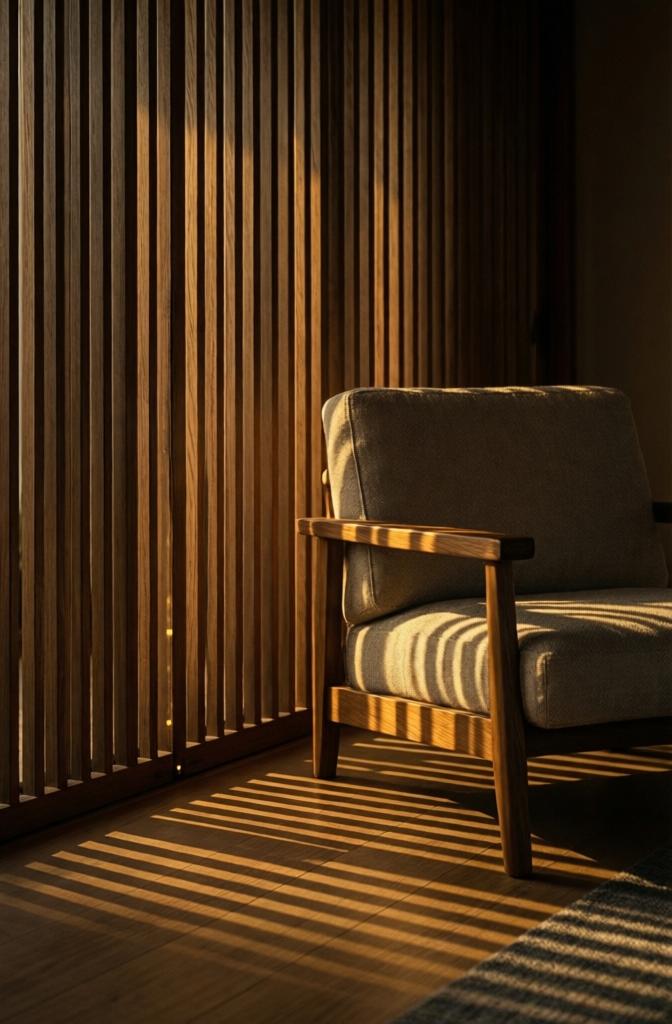
In 2026, we are seeing a move toward “invisible” lighting. By hiding LED strips behind oak wall slats or under floating walnut cabinetry, you create a soft wash of light that highlights the wood grain without the glare of a visible bulb. This is the hallmark of Sensory Japandi.
4. Smoked Glass and “Dark Japandi” Tones
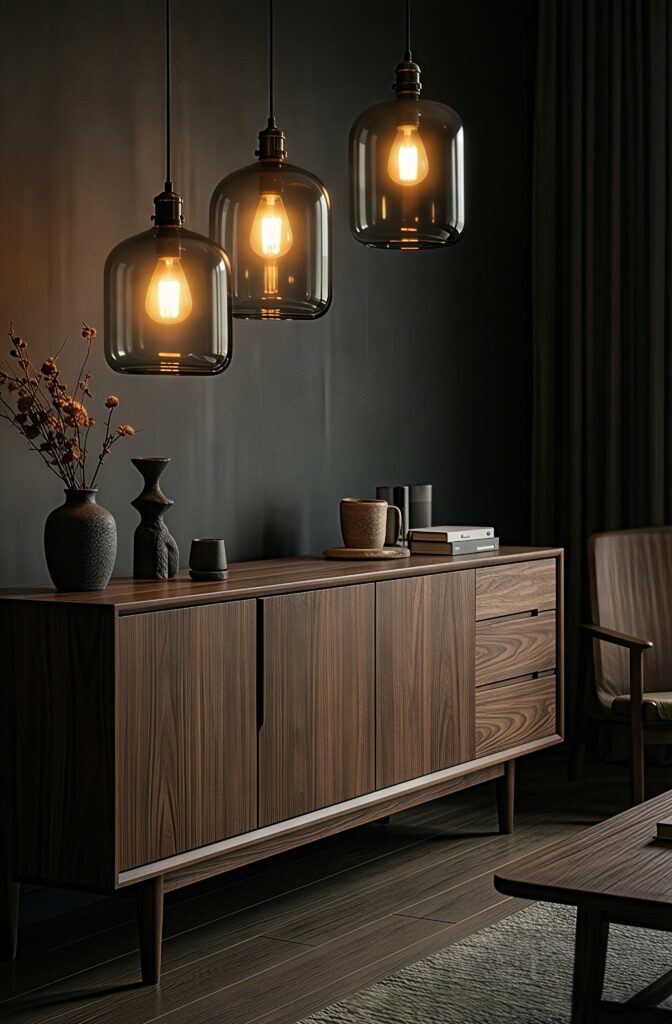
For those following the moodier path of the aesthetic, traditional white paper can sometimes feel too high-contrast. Instead, look for smoked glass pendants or bronze-tinted fixtures. They maintain the minimalism but add a layer of sophisticated depth that pairs perfectly with the walnut and charcoal accents we detailed in our exploration of Dark Japandi Living Room Ideas.
5. Biomorphic Sculptural Pendants
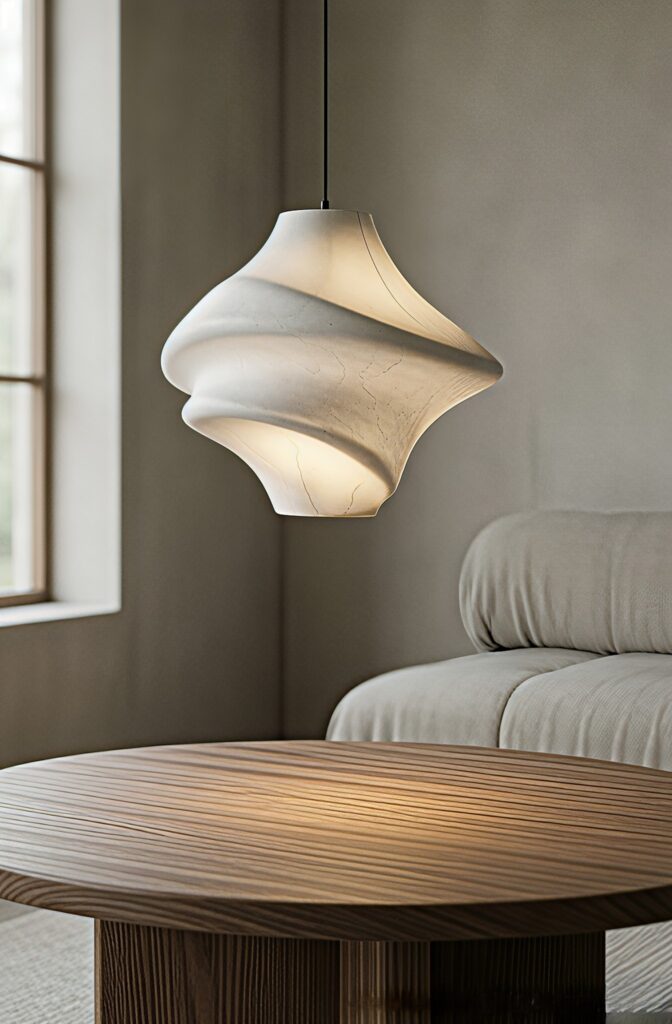
The 2026 trend is moving away from rigid geometric shapes toward fluid, organic forms. A pendant light that looks like a floating cloud or a weathered river stone becomes a focal point of Ma (negative space). This shift toward ‘soft-modernism’ is something we are seeing more of in the latest minimalist projects featured on Dezeen, where light fixtures are treated as primary architectural sculptures.
6. The 2700K Standard: Color Temperature
If your bulbs are “Daylight White” (5000K+), your Japandi room will feel cold and hostile. I insist on 2700K (Warm White). This mimics the orange hue of a sunset or a candle flame, which signals to the brain that it is time to produce melatonin and rest.
7. Matte Black Architectural Sconces
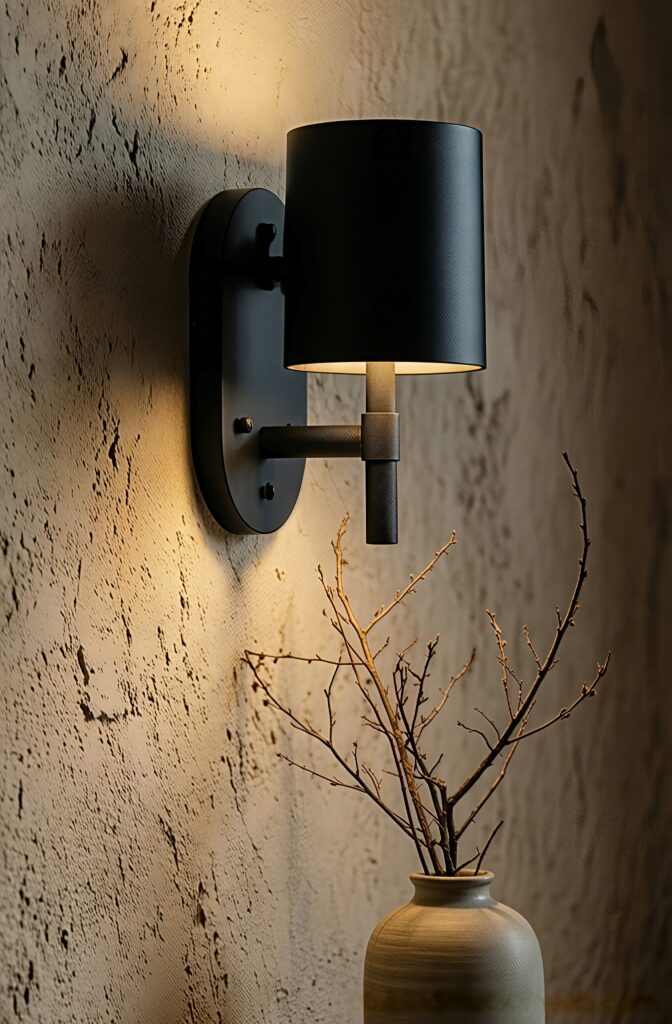
To add a touch of Japanese Modernism, use matte black sconces with thin, spindly arms. They act like ink strokes on a limewash wall—functional, minimal, and visually sharp. They are the perfect functional companion to Japandi Living Room Wall Decor Ideas, as they draw the eye toward art or textures without cluttering the floor space.
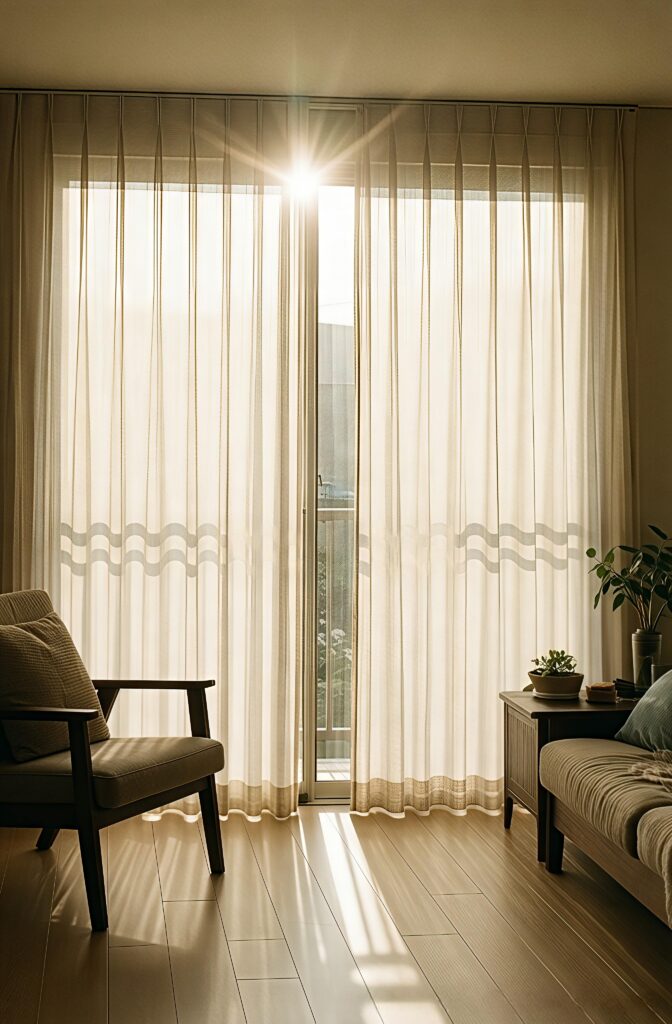
8. Managing Natural Light with Linen Sheers
Lighting doesn’t stop when the sun comes up. To achieve that hazy, ethereal Japandi look, use floor-to-ceiling linen sheers. They act as a giant diffuser for the sun, softening the harsh shadows of the outside world and creating a consistent “glow” throughout the day.
9. The Glow of “Wabi-Sabi”: Localized Pools
Instead of trying to light the whole room evenly, create “islands” of light. A pool of light over the coffee table, a soft glow by the armchair, and darkness in the corners. This creates a sense of mystery and privacy within an open-plan living room.
10. Natural Materials: Wood and Stone Bases
Your fixtures should be as tactile as your furniture. Look for table lamps with heavy travertine bases or oak-turned stems. When the light hits these natural materials, it emphasizes their “imperfections”—the pores in the stone or the rings in the wood.
11. Sculpting with Slats
If you have a slatted wood wall (a Japandi staple), place a floor lamp behind or beside it. The way the light “combs” through the slats creates a rhythmic shadow pattern that adds immense architectural value to the room for a very low cost.
12. The Sunset Ritual: Smart Dimming
Technology should serve the soul. I recommend smart dimmers that automatically lower the light intensity as the evening progresses. By 9:00 PM, your Japandi living room should be at 10% brightness, lit primarily by low-level lamps to prepare your mind for sleep.
Common Mistakes to Avoid
- The “Big Light” Syndrome: Using only a central ceiling fixture. This flattens the room and kills the mood.
- Exposed Bulbs: Glare is the enemy of calm. Always shield the bulb with paper, fabric, or frosted glass.
- Mismatching Temperatures: Mixing 3000K and 5000K bulbs in the same room creates a visual “vibration” that is unsettling.
FAQ
Q: What type of lighting is best for a Japandi living room?
Answer:Japandi living rooms rely on layered lighting — never a single bright overhead source. The ideal setup combines: (1) a warm pendant light as the focal point, ideally in paper, washi, or natural rattan, (2) a floor lamp in a warm corner to create ambient glow, and (3) small table lamps or candles at lower levels to add intimacy. Wall sconces with warm-toned bulbs also work well.
Q: What color temperature should Japandi lighting be?
Answer: Always use warm white bulbs in the 2700K to 3000K range for a Japandi living room. Cool white or daylight bulbs (4000K to 6500K) create a clinical feel that contradicts the warmth Japandi aims for. LED bulbs at 2700K in a paper pendant or linen shade create the soft amber-toned glow characteristic of authentic Japandi interiors.
Q: Should a Japandi living room avoid overhead ceiling lights?
Answer: Harsh overhead lighting — especially recessed downlights at full brightness — works against Japandi’s calming atmosphere. If you have ceiling lights, use a dimmer switch and keep them at 30 to 50 percent intensity in the evenings. The preference in Japandi design is for light that comes from multiple lower sources rather than one bright central point above.
Q: What pendant lights work best in a Japandi living room?
Answer: The best Japandi pendant lights are made from natural materials: washi paper, rattan, bamboo, or linen shades. Look for simple geometric forms — dome, globe, or elongated cylinder shapes — without decorative metalwork or industrial elements. IKEA SINNERLIG, IKEA KNIXHULT, Muuto, and Bloomingville all offer Japandi-appropriate pendants at various price points.

