

Japandi Living Room Furniture: How to Choose Pieces That Feel Calm and Intentional
Japandi living room furniture is often described as “minimal,” but minimal does not mean empty. It means considered. Every piece should contribute to balance, texture, and proportion.
In Japandi interiors, furniture carries visual weight. Too heavy, and the room feels crowded. Too light, and it feels unfinished. The key lies in choosing grounded forms, natural materials, and thoughtful spacing.
Before selecting individual pieces, it helps to understand how layout affects furniture placement. If you haven’t already, explore our guide on Japandi Living Room Layout Ideas to see how arrangement influences calm.
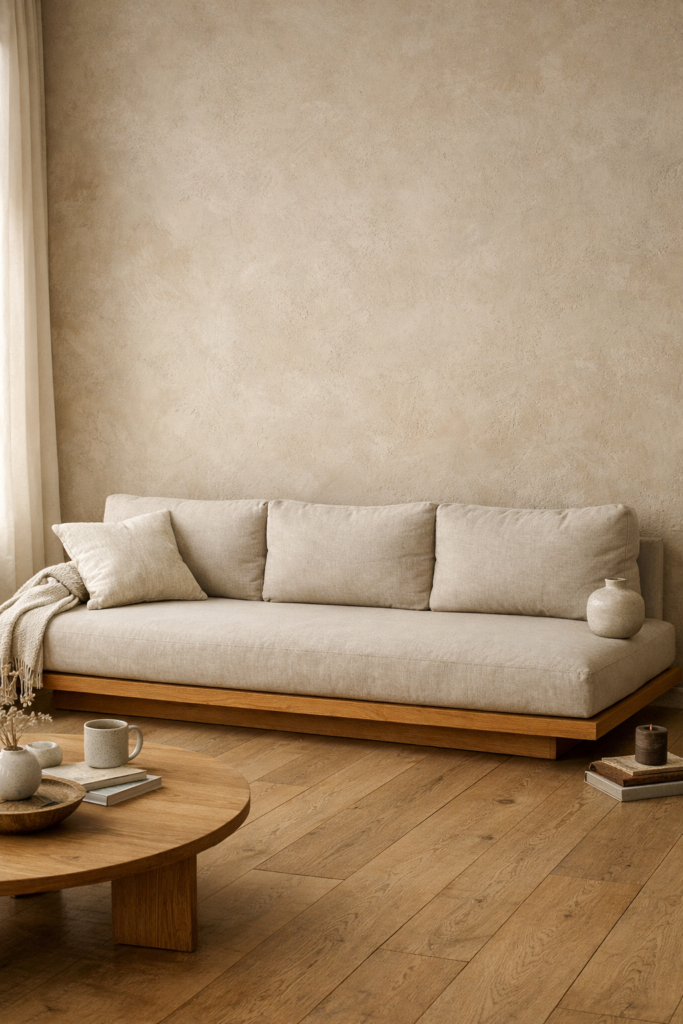
1️⃣ The Japandi Sofa: Low, Structured, and Neutral
The sofa is the anchor of the living room.
What defines a Japandi sofa?
- Low-profile silhouette
- Clean, straight lines
- Neutral upholstery (linen, cotton, textured blends)
- Exposed wooden base or subtle legs
- Structured cushions rather than overly plush
A low sofa keeps the room visually grounded and allows light to move freely above it, making the space feel larger.
What to avoid:
- High backs
- Thick rolled armrests
- Deep button tufting
- Glossy velvet fabrics
Small Room Tip:
In compact spaces, choose a slim two-seater rather than an oversized sectional. You can expand seating later with lightweight chairs.

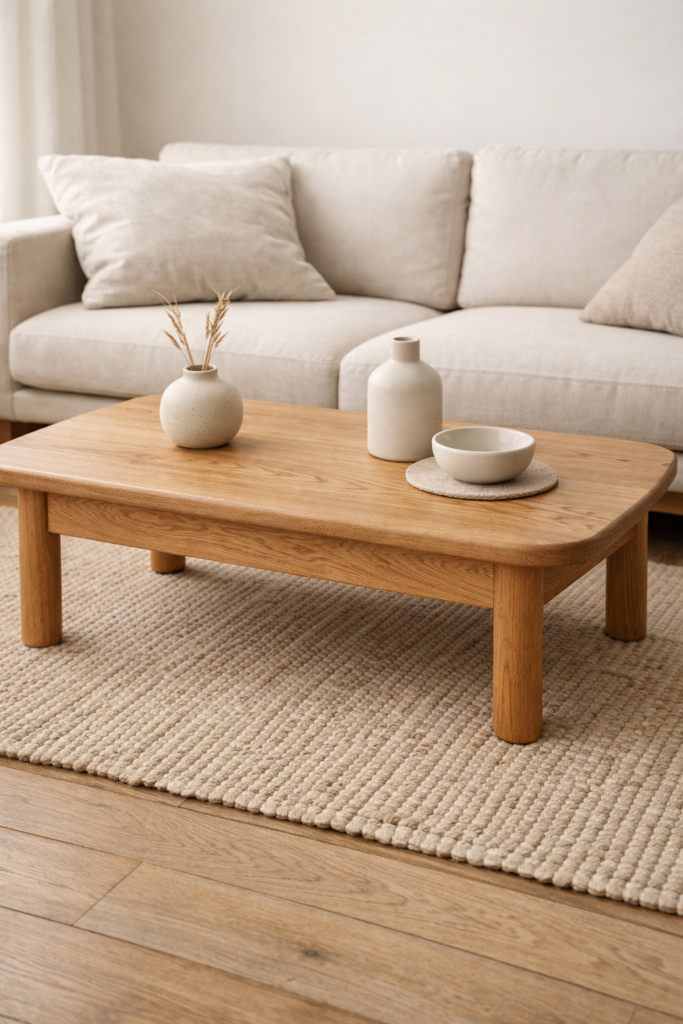
2️⃣ Coffee Tables: Solid, Simple, and Material-Focused
Japandi living room furniture relies on material honesty.
The coffee table should feel handcrafted rather than decorative.
Ideal choices:
- Solid oak or walnut
- Softly rounded corners
- Matte stone slab tops
- Low rectangular or oval forms
Wood grain should be visible. Texture matters more than shine.
Mixing Wood Tones
You can mix light oak and medium walnut — but keep undertones consistent. Warm woods with warm woods. Avoid cool grey-toned wood with warm beige interiors.
For color harmony, refer to our Japandi Living Room Color Palette Guide.
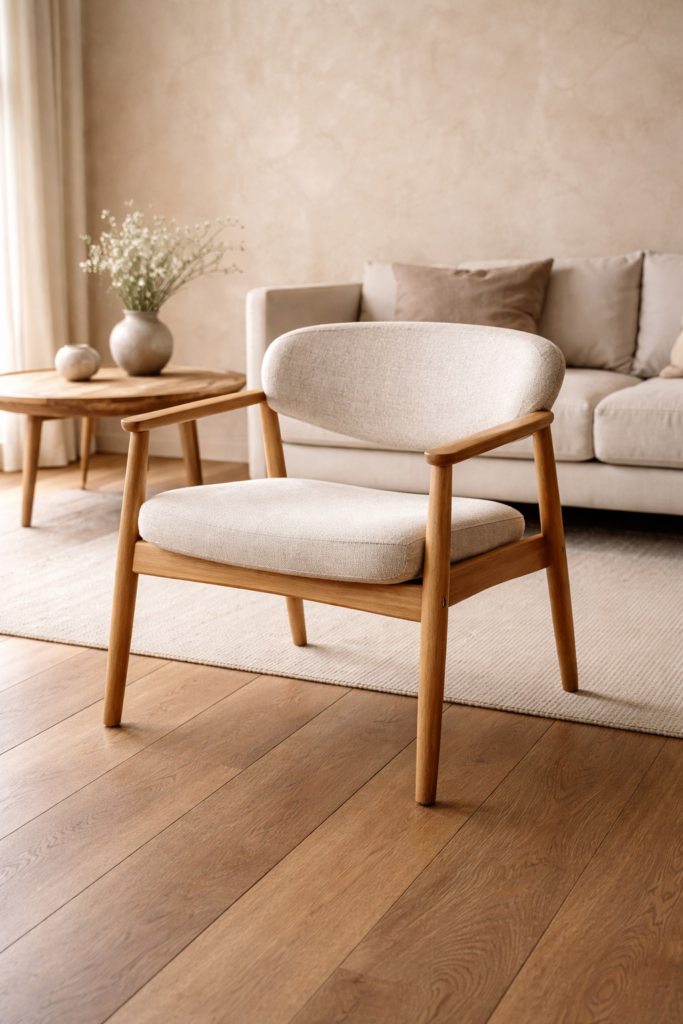
3️⃣ Accent Chairs: Lightweight but Balanced
Accent seating adds rhythm to the room.
Look for:
- Slim wooden frames
- Neutral linen cushions
- Organic, curved shapes
- Low arms
Chairs should visually support the sofa, not compete with it.
Placement Tip:
Place chairs at slight angles rather than perfectly parallel. Subtle asymmetry creates organic balance.
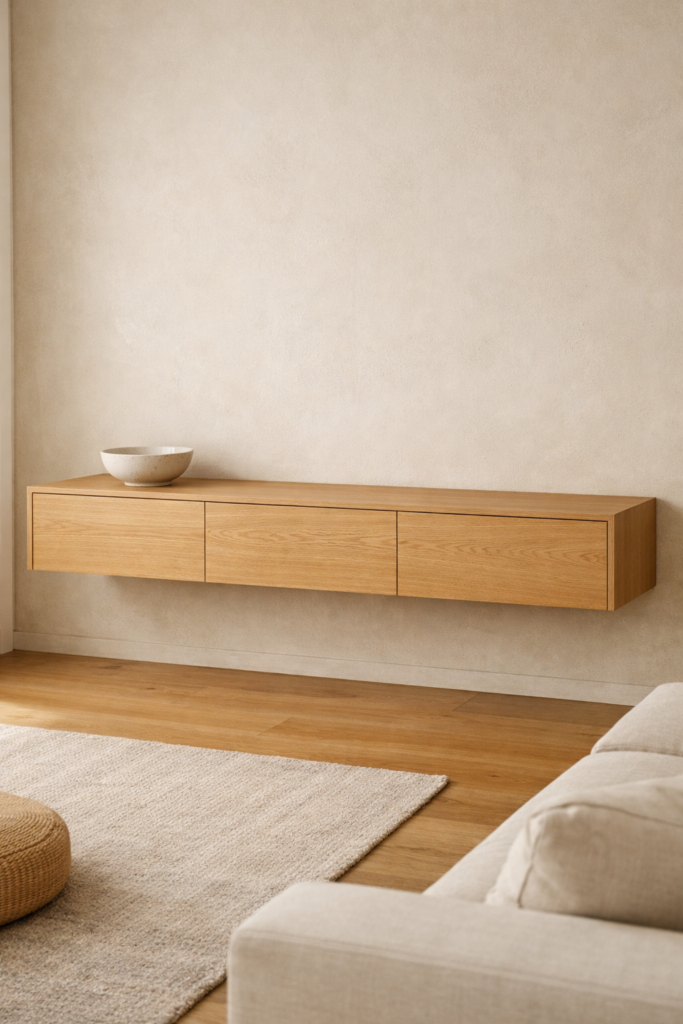
4️⃣ Storage: Hidden, Handleless, and Functional
Storage in Japandi interiors is intentionally quiet.
Best storage options:
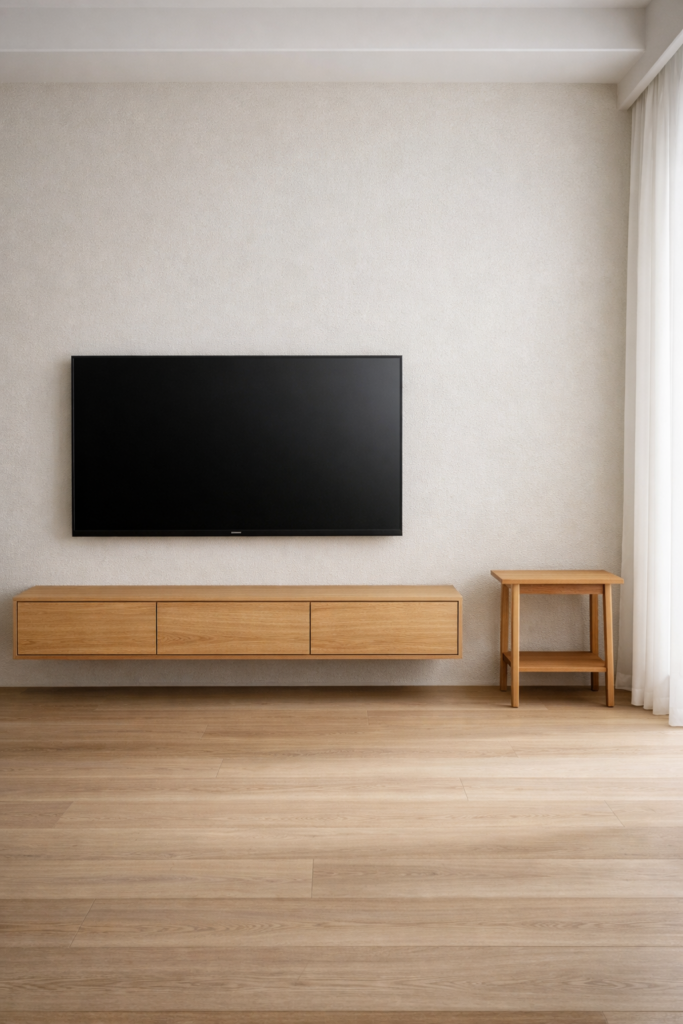
- Floating wooden consoles
- Handleless cabinets
- Built-in units painted in wall tone
- Low sideboards in natural wood
Open shelving should be minimal and curated — a few ceramic objects, not a display wall.
Avoid:
- Ornate carvings
- Shiny lacquer finishes
- Visible metal hardware
Minimal hardware maintains visual softness.
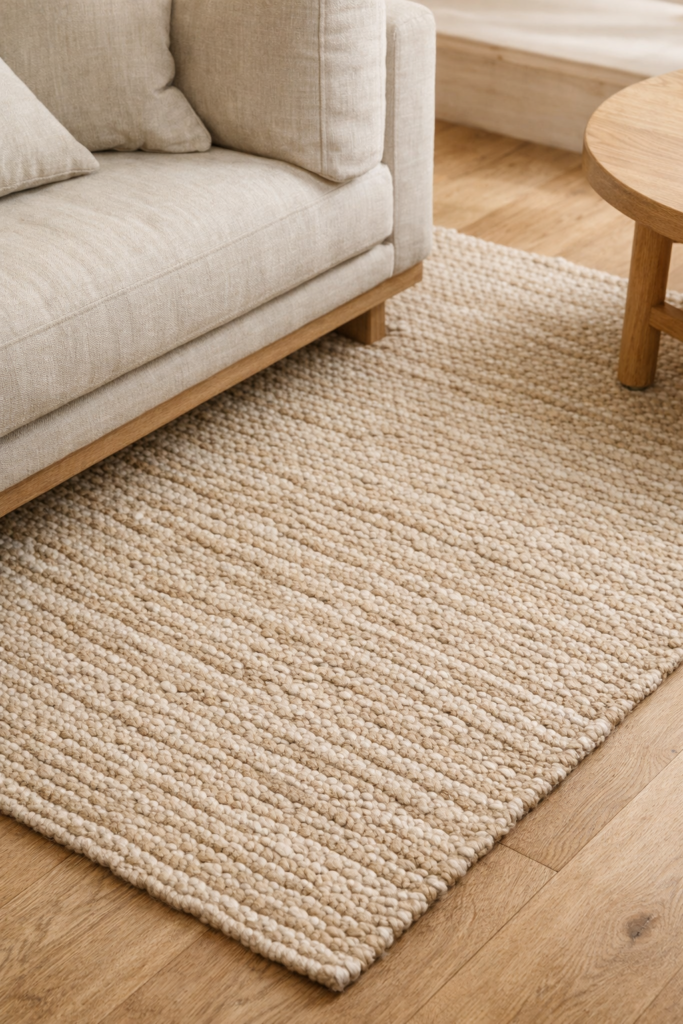
5️⃣ Rugs: Texture Over Pattern
Rugs define zones and soften wood floors.
Choose:
- Neutral woven wool
- Jute blends
- Low-pile textures
- Subtle tonal variations
Japandi favors tactile depth over bold design.
Proportion Rule:
The rug should extend under the front legs of the sofa and chairs to visually unify seating.
6️⃣ Lighting: Soft and Atmospheric
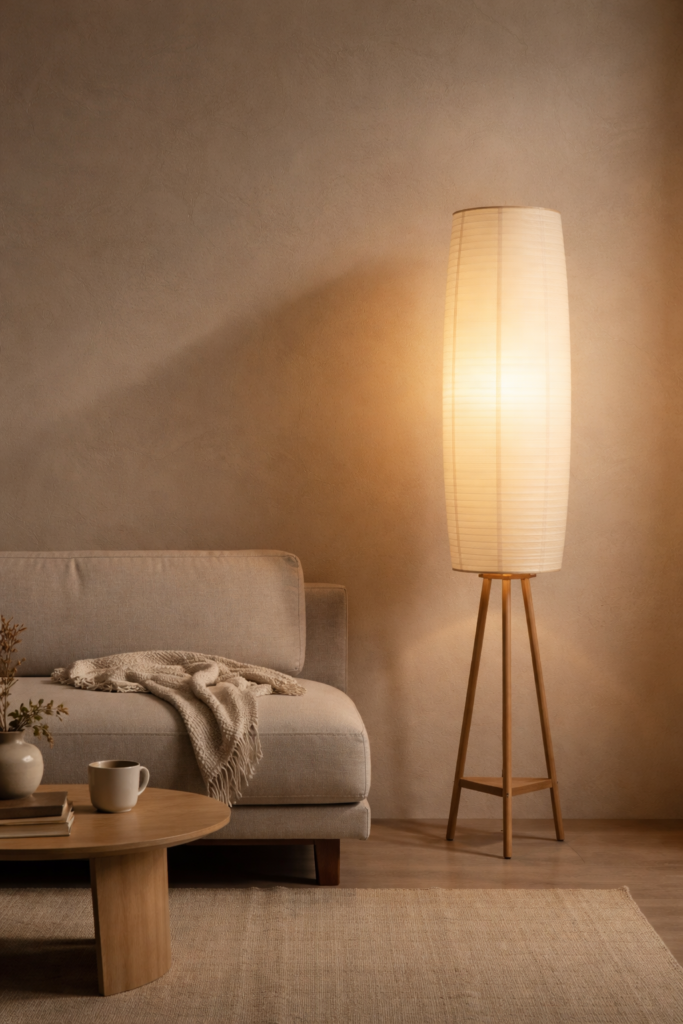
Lighting completes Japandi living room furniture selection.
Good options:
- Wooden base floor lamps
- Paper or fabric shades
- Soft warm bulbs (2700K–3000K)
- Minimal sculptural forms
Lighting should create gentle shadow gradients rather than harsh brightness.
Natural light remains the primary source. Arrange furniture to enhance it.
7️⃣ Optional Additions: Minimal Media Units & Side Tables
While not always essential, certain supporting pieces help complete the room:
- Low wooden TV unit mounted close to wall
- Slim side tables with rounded edges
- Minimal bench seating
Avoid over-accessorizing. Japandi furniture thrives in breathing space.
How to Choose Japandi Furniture for Small Living Rooms
Small rooms require stricter editing.
- Limit large anchor pieces to one or two
- Choose lighter wood finishes
- Maintain consistent palette
- Avoid bulky sectional sofas
- Keep walking paths clear
Japandi design works especially well in small spaces because it values restraint.
If space is limited, also read our Small Japandi Living Room Ideas guide.
Common Mistakes When Buying Japandi Furniture
- Choosing furniture that is too dark for the room size
- Mixing too many wood finishes
- Buying oversized sectionals
- Adding decorative furniture instead of functional pieces
- Over-layering accessories
Calm comes from editing, not accumulation.
How Japandi Furniture Differs from Scandinavian
While both styles share simplicity:
- Japandi feels more grounded
- Scandinavian feels lighter and brighter
- Japandi uses deeper wood tones
- Scandinavian often leans whiter
Understanding this distinction prevents style confusion.
Japandi’s influence is often highlighted in contemporary architecture and interior features on Dezeen.
Frequently Asked Questions
What defines Japandi living room furniture?
Low-profile, neutral-toned pieces made from natural materials with minimal ornamentation.
Is Japandi furniture expensive?
Not necessarily. Simplicity and material honesty matter more than branding.
Can I mix Scandinavian and Japandi furniture?
Yes, but keep wood tones and proportions consistent to maintain harmony.


