

Minimal interiors are often associated with light colors and airy spaces. While this approach works well for many homes, it doesn’t suit everyone. Some spaces feel more grounded, intimate, and comforting when deeper tones are introduced.
This is where dark Japandi living room ideas stand out. By combining the simplicity of Japanese interiors with Scandinavian warmth—while embracing darker palettes—Japandi design creates living rooms that feel calm, balanced, and quietly powerful rather than heavy or dramatic.
What Defines a Dark Japandi Living Room?
A dark Japandi living room is not about making a space feel moody or closed in. Instead, it focuses on depth, contrast, and restraint.
Rather than bright whites, the palette shifts toward:
- Charcoal and warm grey tones
- Deep taupe and muted brown
- Dark-stained or smoked wood
- Soft black used sparingly
These elements create a grounded atmosphere while still maintaining openness and balance.

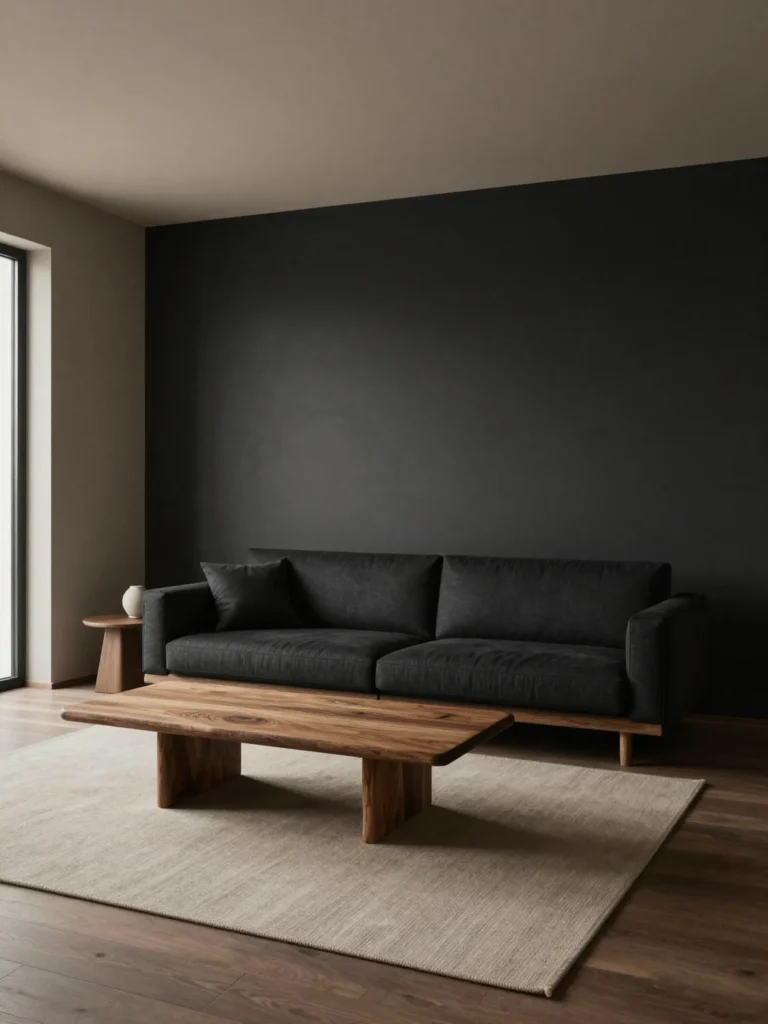
Dark Japandi interiors draw inspiration from the broader Japandi design philosophy, which balances Japanese restraint with Scandinavian warmth.
Why Dark Japandi Living Rooms Feel Calmer Than Bright Ones
Bright interiors can sometimes feel exposed or unfinished, especially in larger or open-plan spaces. Dark Japandi living room ideas counter this by adding visual weight and comfort.
Deeper tones absorb light gently, reducing glare and creating a sense of enclosure without clutter. When paired with natural textures and minimal decor, darker palettes often feel more restful than stark white rooms.
Choosing the Right Dark Color Palette
The key to dark Japandi design is balance. Colors should feel soft and natural, never harsh.
Effective dark Japandi living room ideas often include:
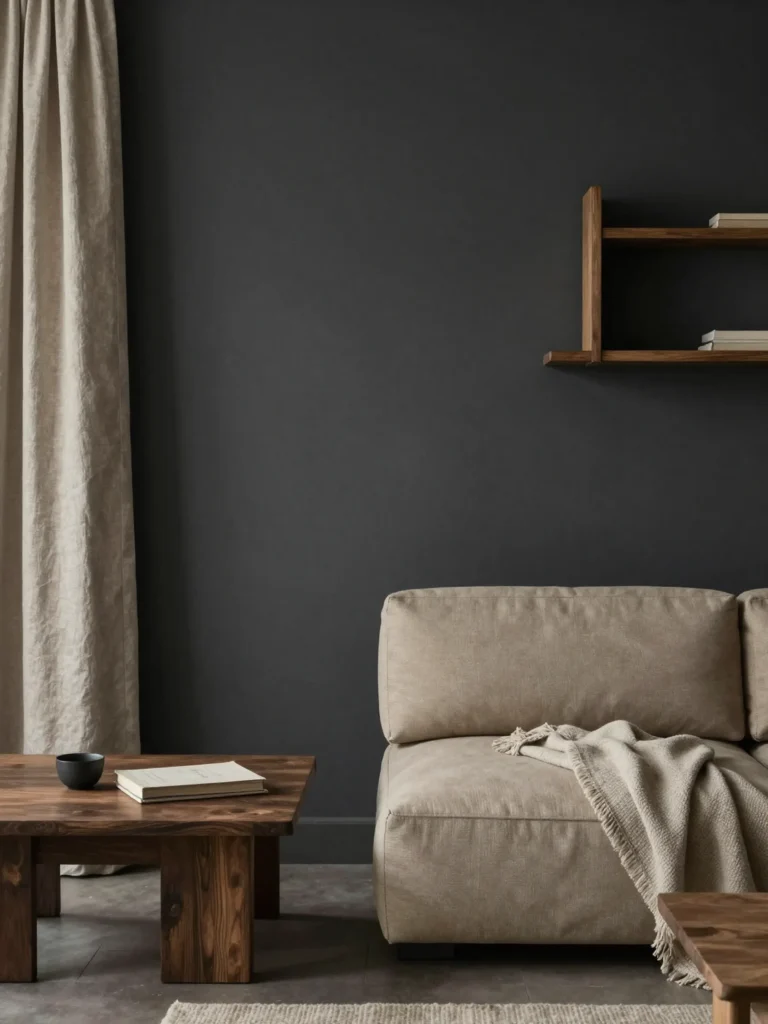
- Warm charcoal walls with visible texture
- Deep beige or stone-colored upholstery
- Natural wood in darker finishes
- Soft off-white or linen accents for contrast
This combination prevents the space from feeling flat or overly heavy.
Furniture That Grounds the Space
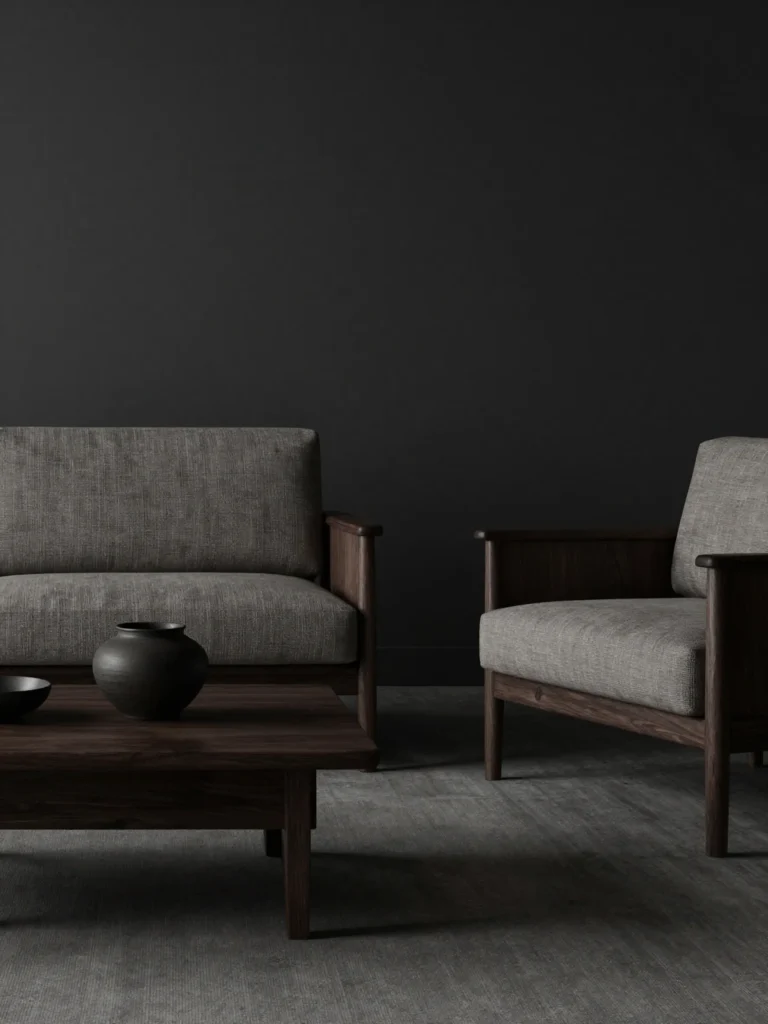
Furniture in a dark Japandi living room should feel low, solid, and intentional.
Look for:
- Low-profile sofas in neutral or textured fabrics
- Simple wooden coffee tables with visible grain
- Clean-lined seating without ornamentation
Keeping furniture visually grounded helps the room feel stable and calm rather than crowded.
These grounding principles also apply beautifully to bedrooms, especially in calm Japandi bedroom ideas designed for rest and balance.
Using Texture to Add Warmth in Dark Spaces
When working with darker tones, texture becomes essential.
Dark Japandi living room ideas rely on:
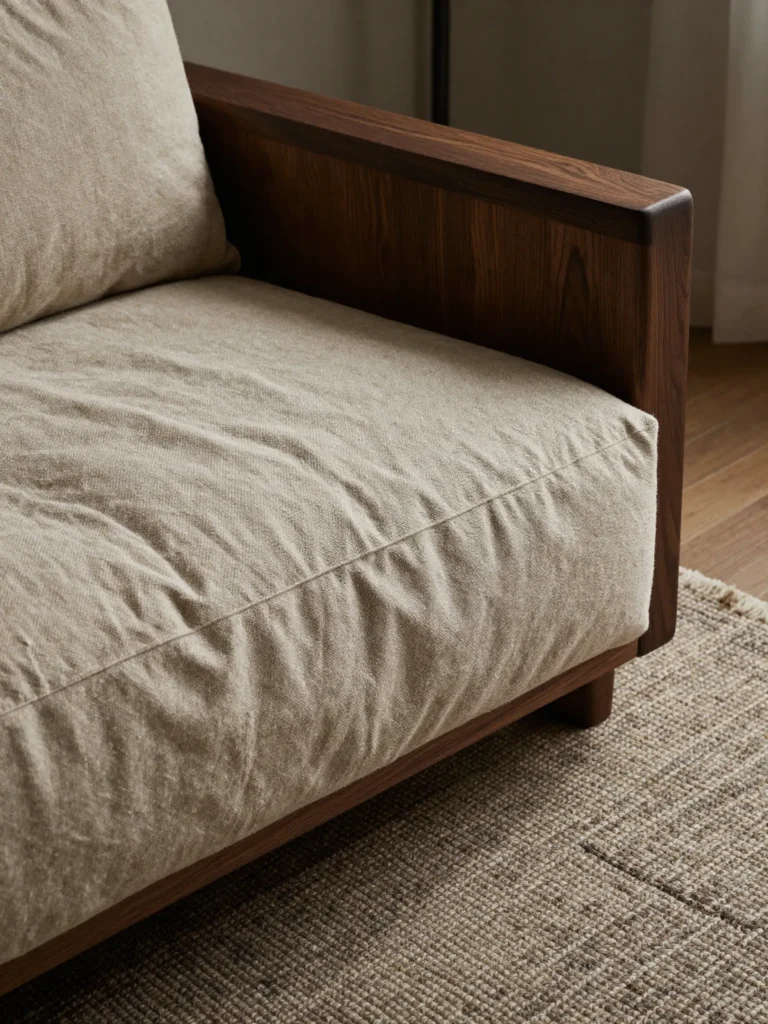
- Linen or wool upholstery
- Matte ceramic or clay accessories
- Textured rugs in muted shades
- Natural wood with visible imperfections
Texture prevents dark spaces from feeling cold and adds subtle visual interest without decoration.
Lighting Makes or Breaks Dark Japandi Interiors
Lighting plays a critical role in dark Japandi living rooms.
Instead of bright overhead lights, focus on:
- Warm table lamps
- Soft floor lighting
- Gentle daylight filtered through curtains
Thoughtful lighting ensures the space feels intimate and calm rather than dim or heavy.
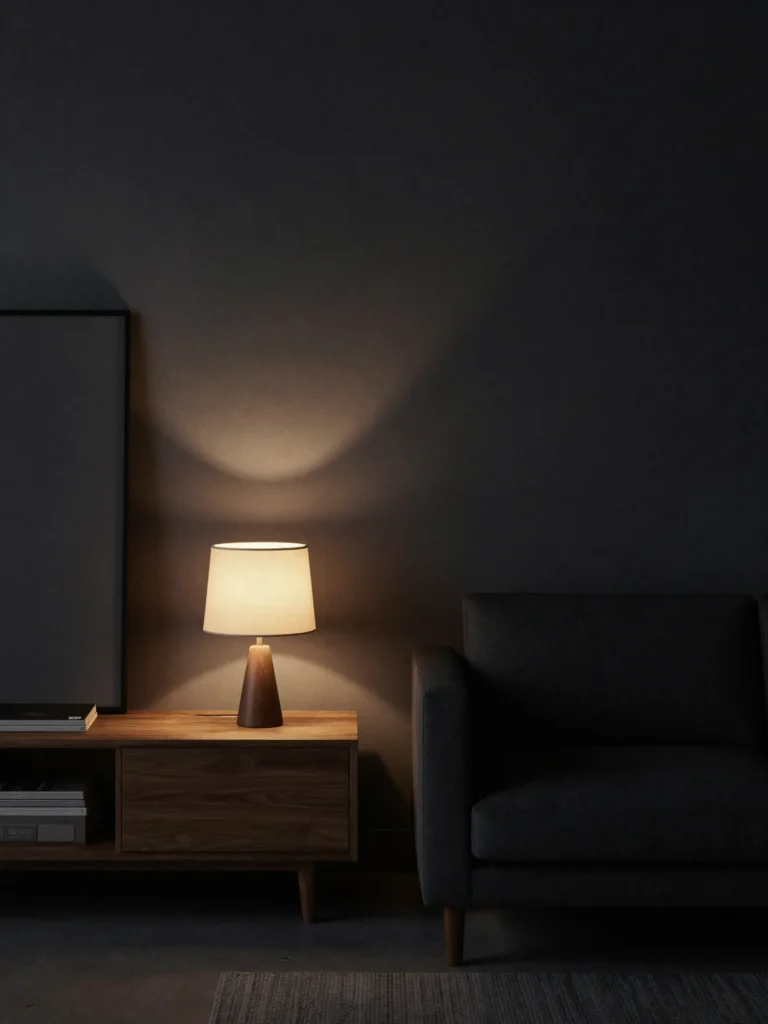
Creating a comfortable living space often depends on understanding how lighting shapes mood, similar to guidance around a healthy home environment.
Dark Japandi Living Rooms Are About Balance, Not Drama
Dark Japandi living room ideas succeed because they avoid excess. The focus is never on bold statements or decorative trends, but on creating a space that feels grounded, quiet, and comfortable to live in every day.
Through restrained color choices, natural materials, and intentional lighting, dark Japandi interiors offer a calm alternative to both stark minimalism and overly styled living rooms.
Final Thought
Dark Japandi living room ideas show that minimal spaces don’t need to be light to feel peaceful. When depth, texture, and balance are handled thoughtfully, darker interiors can feel even more calming than bright ones—timeless, warm, and deeply inviting.


