
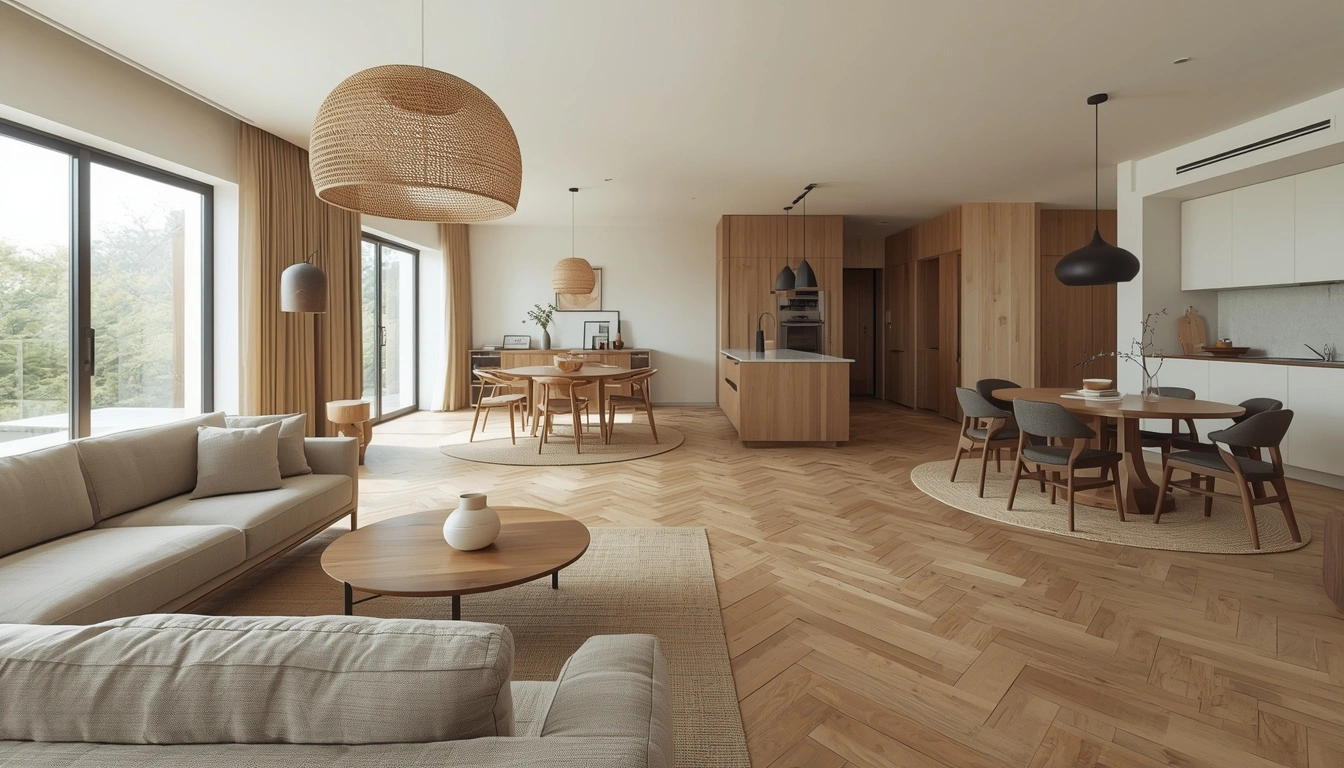
The open plan living room is the most popular floor plan in American homes and the hardest to get right in a Japandi interior.
The problem is specific. Japandi design is built on defined, considered spaces—rooms that feel resolved and complete within their own boundaries. An open plan living room has no boundaries. The kitchen bleeds into the dining area, the dining area bleeds into the living zone, and the result is often a large space that feels neither here nor there. Spacious but directionless. Open but somehow unsettled.
The answer is not walls. Building walls in an open plan defeats the purpose of having one—the light disappears, the flow stops, and the sense of connected living that makes open plans worth having is lost.
Subscribe to Homeoration!
Get decor ideas, room inspirations & seasonal styling tips.
By subscribing you agree to receive emails & accept our Privacy Policy.The Japandi answer is zoning—the deliberate use of rugs, lighting, furniture arrangement, material transitions, and one or two architectural elements to create distinct, resolved areas within a connected space. Zones that feel complete without being enclosed. Boundaries that the eye reads without the body feeling them.
This guide covers the complete Japandi open plan zoning system for 2026—the specific tools, the exact dimensions, the product picks, and the room-by-room application that makes a large connected space feel like several considered ones.
Table of Contents
Why Open Plan and Japandi Are a Natural Match—and Where It Goes Wrong
The tension between open plan living and Japandi design is more apparent than real. Both philosophies share the same core value—intentional, uncluttered space where every element earns its place. The difference is scale. Japandi principles were developed primarily for individual rooms. Applying them to a connected, multi-zone space requires one additional layer of thinking: how do you create the sense of a resolved room when the room has no walls?
The answer that most open plan Japandi interiors get wrong is trying to make the entire space feel like one unified Japandi room. This produces the most common open plan failure—a large, calm, minimal space that feels like a hotel lobby rather than a home. Beautiful but empty. Considered but cold.
The correct approach is the opposite. The open plan space should contain several distinct Japandi rooms that happen to share airspace. The living zone should feel like a complete Japandi living room. The dining zone should feel like a complete Japandi dining room. The kitchen should feel like a complete Japandi kitchen. Each zone is resolved on its own terms, and the transitions between them are managed through material, light, and level changes rather than walls.
The most sophisticated open plan interiors in 2026 let one philosophy lead in each zone—Scandinavian warmth for the living room, where comfort matters, and Japanese discipline for the kitchen, where function rules. This zone-specific approach is what separates a great open plan Japandi interior from a merely good one.
The Six Zoning Tools—and How to Use Each One
Tool 1: The Rug (The Most Powerful Zoning Device Available)
A rug defines a zone more effectively than any other single element because it works on the floor plane—the surface that determines how a space is read and navigated. A rug tells the eye and the body simultaneously: this area is different from the area around it.
In a Japandi open plan, each zone that requires definition gets one rug. The living zone gets the largest rug—an 8×10 or 9×12 in natural wool or jute-wool blend with the front legs of every seating piece sitting on it. The dining zone gets a round rug centered under the dining table—the round shape is specifically Japandi, softening the rectangular dining table and distinguishing the zone from the more angular living area.
The rules for Japandi open plan rugs:
- Size up in every zone: The single most common mistake in open plan spaces is rugs that are too small. A rug that is too small makes the furniture look like it is floating in the middle of the floor rather than being anchored to a zone. In an open plan, an undersized rug destroys the zone definition entirely—the furniture reads as belonging to the general space rather than to a specific area.
- Material consistency across zones: All rugs in an open plan Japandi space should be in the same material family—natural fiber—and the same tonal family—warm neutral. Different materials or tonal directions between zones create visual competition rather than cohesion.
Affiliate Picks
- nuLOOM Rigo Hand Woven Jute Area Rug 8×10. ~$200–350. The most widely used natural fiber rug for Japandi living zones. Woven jute, warm natural tone, honest texture.
- Safavieh Natural Fiber Collection Round Jute Rug 6ft. ~$85–140. Round format for the dining zone, centered under the table, 6 feet minimum for a standard four-person table.
Tool 2: Pendant Lighting (Zones from Above)
Lighting is the most architecturally sophisticated zoning tool because it creates psychological boundaries without physical ones. A pendant light centered over a dining table tells the brain—even before any conscious thought—that this specific area has a different function from the space around it.
In a Japandi open plan, each zone gets its own pendant or statement light source centered directly above its primary furniture. The living zone gets a sculptural pendant or rattan chandelier centered over the coffee table or seating area. The dining zone gets a pendant—or two pendants in a linear arrangement for a rectangular table—centered directly above the dining table surface.
The rules for Japandi open plan Lighting:
- The height rule for pendants in open plan spaces: Hang dining pendants 30–34 inches above the table surface. This is low enough to create the intimate, zone-defining effect without blocking sightlines across the open plan. In rooms with ceilings higher than 9 feet, add 3 inches per additional foot of ceiling height.
- The material rule: All pendant fixtures in a Japandi open plan should be in the same material family—woven rattan, paper, or natural wood—even if they are different shapes. Material consistency between zones creates cohesion; material variation between zones creates competition.
Affiliate Picks
- Stone & Beam Boho Rattan Woven Pendant Light ~$85–140. For the living zone. Organic form, warm diffused light, genuinely Japandi in character.
- 16 inch Black and Gold Pendant Light 1 Pack ~$80–120. For a rectangular dining table—hung in a linear arrangement.
Tool 3: Furniture Arrangement (Zones Through Composition)
The arrangement of furniture creates invisible walls. A sofa with its back to the dining area is more effective at defining a living zone than most physical partitions—it creates a clear rear boundary to the seating area without blocking any light or view.
The Japandi open plan furniture arrangement rule: Every zone should have a clear front, back, and two sides defined by furniture placement—even in the absence of walls.
- For the living zone: The sofa defines the rear boundary of the zone, facing into the zone toward the coffee table and the focal wall. The coffee table anchors the center. Two chairs or a chaise extend the zone on either side. The sofa back—rather than a wall—signals where the living zone ends and the circulation space begins.
- For the dining zone: The dining table is the center, the chairs surround it on all four sides, and the pendant above anchors it vertically. The zone needs no other boundary—the pendant and the round rug beneath it do the work.
- The critical dimension: Leave a minimum of 36 inches of clear floor between the back of the sofa and the nearest dining chair. This circulation corridor is what makes the zones feel separate—not walls, but breathing room between the defined areas.
Tool 4: Material Transitions (Zones Through Surface Changes)
In a Japandi open plan, the floor material transition between zones is one of the most architecturally resolved zoning tools available. Where the kitchen meets the dining and living area—the boundary where hard tile or stone transitions to wood—is a natural zone marker that costs nothing because it is built into the floor plan.
Where the floor material is consistent throughout (in apartments or homes where the same material runs across the entire open plan), the rugs create the material variation that the floor does not provide. One jute rug in the living zone, one natural fiber rug in the dining zone, one bamboo mat in the kitchen transition area—each surface change signals a zone change without any vertical element.
Wall treatment can also create zone definition in open plans where the budget allows. A slatted wood feature wall behind the sofa—the Japandi TV wall from post #10—marks the living zone’s rear boundary architecturally. A limewash plaster treatment on the kitchen wall in a slightly deeper tone than the living zone walls creates a subtle but real material distinction between the two areas.
Tool 5: The Slatted Room Divider (The Japandi Partition)
For open plan spaces where more physical zone definition is needed—where the living and dining zones need more separation without losing the open connection—the slatted wood room divider is the most authentically Japandi solution available.
A freestanding slatted oak divider—vertical slats in the same material as the rest of the Japandi interior—allows light and air to pass through while creating a visual boundary that reads as architectural. A wooden or slatted divider separates zones without killing light or flow. When used in an open-plan space, the seating area can blend into dining or work areas while maintaining the warm wood and simple patterns that feel intentional.
The Japandi slatted divider is not placed to block the view entirely—it is placed to partially screen one zone from another, creating a sense of separation while maintaining the sense of connection. Positioned at the sofa’s end—running perpendicular to the sofa rather than parallel to the sightline—it marks the edge of the living zone without cutting off the dining zone from view.
Affiliate Pick
Room Divider Screen 6 Panel Folding Wood Slat in Walnut ~$120–200. A 6-panel folding slatted divider in natural wood finish. Freestanding, repositionable, no installation required. The most accessible Japandi room division solution in the US market.
Tool 6: Level Changes and Step Platforms
The most architecturally resolved open plan Japandi interiors use a subtle level change—a single step platform that raises the living zone 4–6 inches above the surrounding floor—to create zone definition through the floor plane rather than any vertical element.
This is the most Japanese of the zoning tools—traditional Japanese interiors use level changes extensively to signal spatial transitions, drawing from the tradition of the raised tatami platform that marks the most considered area of a room.
In a US open plan home this typically requires a renovation—a carpentry build of a platform deck in the living zone. But the effect is transformative and completely distinct from any other zoning approach. The raised living zone is visually separated from the dining and kitchen areas by the step, the level change creates a natural boundary for the rug, and the elevated position of the seating makes the zone feel deliberately enclosed without any walls at all.
For renters or those without renovation budgets: a tatami mat platform (search “Japanese tatami mat platform” on Amazon, $120–250) provides a similar level change at the seating area without permanent construction.
Zone-by-Zone Application
Living Zone
The living zone is the warmest, most textile-rich zone of the open plan—the Scandinavian half of Japandi leads here. A deep-seated linen sofa, a wool rug, a chunky merino throw, a rattan pendant, and multiple warm light sources at 2700K create the hygge quality that makes an open plan feel like it has a heart.
The rear boundary of the living zone—behind the sofa—is the most important design decision in the entire open plan. Three options in ascending order of effect: a console table behind the sofa (simple, inexpensive, creates a visual rear wall), a slatted wood room divider (stronger zone definition, more architecturally Japandi), or a full slatted TV wall (most resolved option, transforms the living zone from defined to architectural).
Affiliate Pick
Prepac Floating Entertainment Center in Espresso ~$150–220. Wall-mounted console that keeps the floor beneath clear—the most Japandi TV console option for open plan living zones where floor clearance matters most.
Dining Zone
The dining zone is the most transitional area—it belongs to both the living and kitchen zones and serves as the connector between them. In Japandi open plans the dining zone should be the most edited of the three—fewer objects, cleaner surfaces, a single pendant rather than a cluster, and a round table whenever the space allows.
The Japandi dining zone formula: one round or oval solid oak table, wishbone chairs or cane dining chairs on all sides, one natural fiber round rug underneath, one pendant above at 32 inches from the table surface, and nothing else. No sideboard unless the space genuinely requires one. No decorative objects on the table beyond one small ceramic vessel. The dining zone is the breathing space between the warmth of the living area and the function of the kitchen.
Affiliate Pick
- Christopher Knight Home Linnea Round Dining Table in Natural Oak ~$280–380. Round form, solid oak surface, Japandi proportions. The most versatile open plan Japandi dining table in the US mid-range market.
- Wood Dining Chairs Set of 4 in Light Natural ~$250–300. Clean-lined wooden dining chair with slight Scandinavian character. Pairs with the round oak table directly.
Kitchen Zone
The kitchen is where Japanese discipline leads in a Japandi open plan—functional, edited, and entirely free of the decorative accumulation that the living zone allows in small doses.
The connection between the kitchen and dining zone is managed through material consistency. If the kitchen has warm white upper cabinets and natural wood lower cabinets—the two-tone approach from the Japandi kitchen guide—the dining zone continues with the same warm wood tones in the dining table and chairs. The palette flows from zone to zone rather than changing abruptly.
The kitchen counter that faces the open plan—the island or peninsula—is the transition element between the kitchen and dining zones. In a Japandi open plan this surface should be kept completely clear during non-cooking hours. It is not a display surface, not a catch-all, not a home for small appliances. A clear counter facing the open plan is the single most important visual element in maintaining the calm of the connected space.
The Open Plan Japandi Color Strategy
Color in a Japandi open plan follows the same warm undertone principles as individual rooms—but requires one additional rule for the connected space.
- The 80/20 rule for open plan color: 80% of the palette should be identical across all zones—the same warm white or greige on the walls, the same wood tone family in the furniture, the same natural fiber in the textiles. 20% of the palette can vary by zone—a sage green accent cushion in the living zone, a terracotta ceramic on the dining table, a muted natural linen blind in the kitchen. The 80% consistency is what makes the open plan feel like one home. The 20% variation is what makes each zone feel distinct.
- The ceiling rule in open plans: The ceiling always stays the same color across the entire open plan—warm white without exception. A ceiling color change between zones in an open plan creates a visual interrupt that makes the space feel like separate rooms rather than connected zones. The ceiling is the one continuous surface that should never signal a zone boundary.
Lighting the Open Plan: The Complete System
The current trend in open-plan layouts is to create distinct areas for lounging, dining, and working using rugs, lighting, and the arrangement of furnishings instead of walls. At least two different light sources for each zone add to the separation—a floor lamp by the sofa and a pendant over the dining table help anchor each zone visually.
The complete Japandi open plan lighting system:
- Living zone: One sculptural pendant centered overhead + one arc floor lamp behind the sofa + one or two table lamps on consoles or side tables. All at 3000K. Never the overhead light alone.
- Dining zone: One or two pendants at 32 inches above the table surface. A single candle cluster on the table when occupied. No additional light sources needed—the pendant defines and completes the zone.
- Kitchen zone: Undercabinet LED strip lighting in warm white 2700K for task function + one pendant above the island if one exists. The kitchen should be slightly brighter than the living and dining zones—it is a functional space—but never fluorescent or cool white.
The three lighting temperatures must be consistent across all zones at 3000K. A cool-white kitchen and a warm-white living zone destroy the sense of connected calm that makes an open plan Japandi interior work.
Frequently Asked Questions
How do you zone an open plan living and dining room without walls?
The six most effective zoning tools in a Japandi open plan are: a large natural fiber rug anchoring each zone, pendant lighting centered over each area, furniture arrangement with the sofa back defining the living zone boundary, material transitions between floor surfaces, a slatted wood room divider if more physical definition is needed, and a level change platform for the most architecturally resolved result. Used in combination, these tools create zones that feel as defined as walled rooms without losing any natural light or spatial flow.
How big should the rug be in an open plan Japandi living room?
In an open plan, the living zone rug should be larger than you think—an 8×10 or 9×12 as a minimum for a standard living area. The front legs of every seating piece should sit on the rug. An undersized rug is the single most common mistake in open plan zoning—it makes the furniture look like it is floating in the general space rather than belonging to a specific zone. For the dining zone, use a round rug with a minimum 6-foot diameter for a four-person table, large enough that all chair legs remain on the rug when pulled out.
Can Japandi work in a small open plan apartment?
Yes—and Japandi actually thrives in smaller open plan spaces because the philosophy of intentional editing is directly suited to limited square footage. In a small open plan, use rugs as the primary zoning tool (they work at any scale), keep the furniture low-profile to maintain sightlines across the full space, and limit each zone to the minimum furniture required—sofa, coffee table, and rug for the living zone; table and chairs only for the dining zone. The Japanese principle of ma—intentional negative space—makes small open plans feel larger rather than smaller when correctly applied.
The Finished Space: Several Rooms, One Home
The best open plan Japandi interiors do something that most open plan spaces fail to achieve. They feel simultaneously expansive and intimate. You are aware of the full connected space—the light, the flow, the sense of possibility—and simultaneously aware that you are sitting in a specific, considered, complete place.
That is what zoning without walls produces when it is done correctly. Not a compromise between openness and definition. Both things, fully realized, at the same time.
Start with the rug. It is the fastest, least permanent, and most effective zoning tool available. Put it down in the living zone and see how immediately the zone declares itself. Then add the pendant above the dining table. Then position the sofa so its back faces the dining area.
Three decisions. No walls. One open plan that finally feels like home.
🛍️ Shop This Look
All products available on Amazon US with Prime shipping.
- Living zone rug — nuLOOM Rigo Hand Woven Jute Area Rug 8×10 ~$180–280 ·Natural fiber, warm tone, honest weave. Anchors the living zone definitively.
- Dining zone rug — Safavieh Natural Fiber Round Jute Rug 6ft · ~$85–140 · Search “Safavieh natural fiber round rug 6ft.” Round format centers under the dining table. Keeps all chair legs on the rug when pulled out.
- Living zone pendant — Stone & Beam Boho Rattan Woven Pendant Light · ~$85–140 · Search “rattan pendant light natural woven.” Organic form, warm diffused 2700K light. The most Japandi pendant for a living zone.
- Dining zone pendants (pair) — Kira Home Bali Pendant Light in Black · ~$120–180 for pair · Search “Kira Home pendant light matte black set of 2.” Hung in linear arrangement over rectangular dining table at 32 inches above the surface.
- Dining table — Christopher Knight Home Linnea Round Dining Table · ~$280–380 · Search “Christopher Knight round dining table natural oak.” Round form, solid oak, Japandi proportions.
- Dining chairs — Rivet Mid-Century Dining Chair in Natural Wood · ~$85–120 each · Search “Rivet dining chair natural wood.” Clean-lined, Scandinavian character, pairs with round oak table directly.
- Slatted room divider — Room Divider Screen 6 Panel Folding Wood Slat · ~$120–200 · Search “room divider folding wood slat panel.” Freestanding, repositionable, defines the living zone edge without permanent installation.
- Arc floor lamp — Brightech Sparq Arc Floor Lamp Matte Black · ~$85–120 · Search “Brightech arc floor lamp matte black.” Positions over-shoulder reading light behind the sofa. Living zone anchor.
- Under-cabinet lighting — Govee LED Strip Lights Warm White 2700K · ~$22–35 · Search “Govee LED strip lights warm white undercabinet.” Kitchen zone task lighting matched to living zone temperature.
- TV console (floating) — Prepac Floating Entertainment Center · ~$150–220 · Search “Prepac floating TV stand espresso.” Wall-mounted, floor clear beneath, living zone focal wall anchor.
(Disclaimer: This post contains affiliate links. If you purchase through these links, Homeoration earns a small commission at no extra cost to you—it helps keep this content free.)
Subscribe to Homeoration!
Get decor ideas, room inspirations & seasonal styling tips.
By subscribing you agree to receive emails & accept our Privacy Policy.